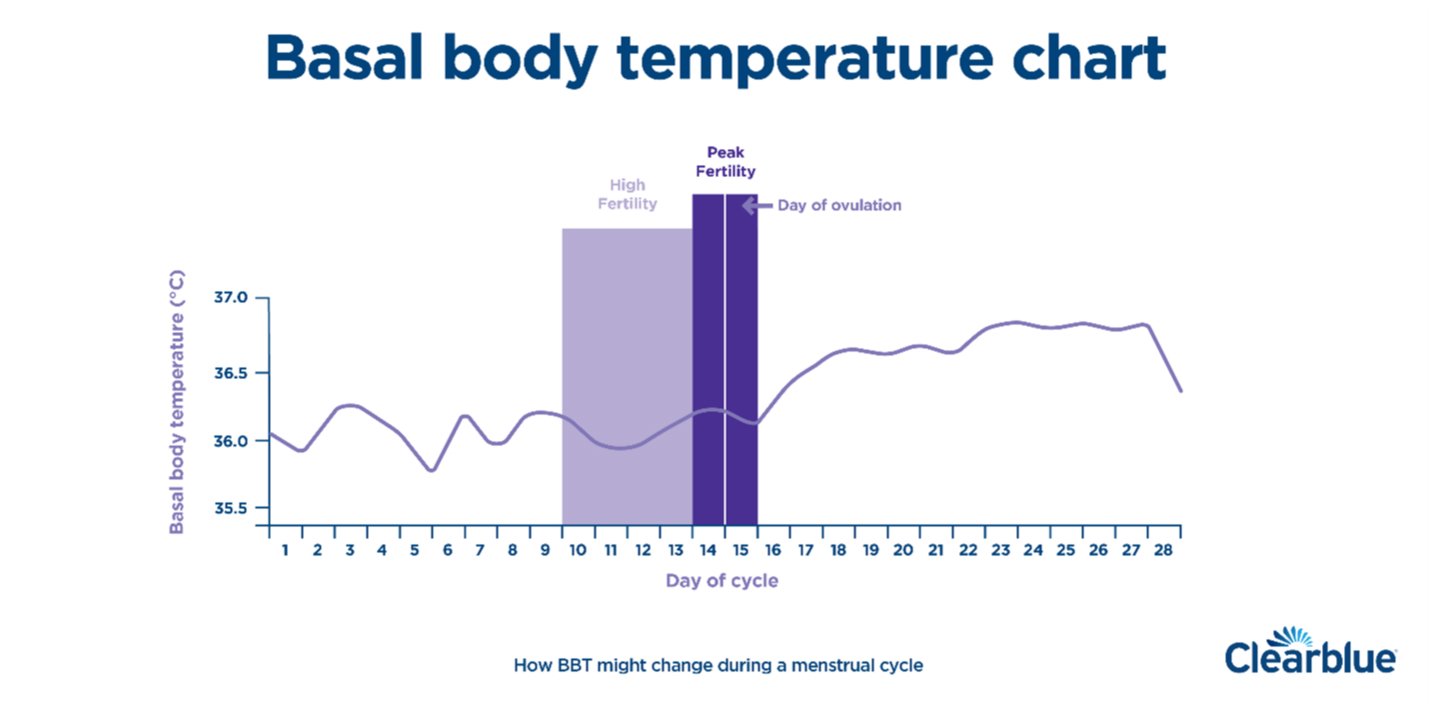
Basal body temperature
31
MENTIONS
10
EPISODES
8
PODCASTS
Search complete. 31 mentions across 10 episodes found for "Basal body temperature".
Sep 29, 2026

Haley SmithHOST
There's so many reasons why that day of when ovulation happen- happens, um, can change.
Haley SmithHOST
So that's where body literacy, tracking your cervical mucus, tracking your BBT, getting really comfy confirming your ovulation is going to be step one, so then you can test progesterone seven days after your unique ovulation.
Haley SmithHOST
And that's important because we know that progesterone does, in a healthy cycle, have this crescendo effect.
Haley SmithHOST
It's gonna start lower.
6 MINS LATER
Haley SmithHOST
But that would be [laughs] like, you know, the gold standard of you're testing your hormones literally every day of your cycle at multiple points to get that, to see that true fluctuat- true fluctuating pattern.
Haley SmithHOST
Um, but anyways, now with all this said, you know, no testing is perfect, and that's why I really appreciate also having the fertility awareness integrated in my practice because tracking your menstrual cycle in this, um, diagnostic way, it's giving us daily feedback on your fertility.
Haley SmithHOST
We're seeing, are you spotting? How long is your luteal phases? What is your BBT doing? These are all context clues that we are getting straight from your body on a daily basis to let us know how hormones are fluctuating and how they're doing.
Haley SmithHOST
Again, nothing is perfect.

Vicki ShahadeHOST
But if you ovulate on cycle day 12, if you ovulate on cycle day 18, cycle day 22, if day 21 doesn't make sense so you really just want to make sure that you're getting progesterone evaluated relative to your actual ovulation not a random calendar day and so again the goal is that you're testing seven days post peak and that peak day is the last day of your fertile cervical mucus last day of anything clear stretchy slippery You can also potentially use your LH surge if you're not so great with cervical mucus.
Vicki ShahadeHOST
You could use a BBT shift potentially too, or if there's other appropriate tracking.
Vicki ShahadeHOST
But the most important thing is that you're taking that data that you have, whether it's cervical mucus, LH surge, BBT, and talking with your doctor and saying, what day should I be testing progesterone based on this information? Because I wouldn't want you to get worried about a progesterone number if it's not actually being timed correctly after when you ovulated.
Vicki ShahadeHOST
Because one test isn't always the whole story.
Vicki ShahadeHOST
So one blood draw gives us a snapshot.
Vicki ShahadeHOST
So don't build your entire fertility identity around one poorly timed number.
Vicki ShahadeHOST
We want to be looking at the patterns over time.
Vicki ShahadeHOST
And that's why I'm so constantly talking about cycle tracking and proper cycle tracking, because you will be able to tell what your progesterone is likely doing by looking at your luteal phase length, by looking at your fluctuations in BBT month after month after month.

Corinne AngelicaHOST
I've had clients that start spotting like right after they ovulate all the way up until they get their period, right? So it totally depends on your level of low progesterone and how, you know, low it actually is.
Corinne AngelicaHOST
But that's a sign of low progesterone and of this weak ovulation for the the purposes of this actual question, your BBT not staying high for 11 to 14 days.
Corinne AngelicaHOST
So again, when you ovulate and we are producing progesterone now from that leftover follicle, that's the corpus luteum, your basal body temperature numbers should stay high for three days in a row.
Corinne AngelicaHOST
That confirms ovulation, right? They have to be 0.3 to 0.5 degrees higher than the previous six temperatures for three days in a row to confirm ovulation.
Corinne AngelicaHOST
If it was strong ovulation, we will have, and you have strong progesterone levels because of it, you will have that higher number stay high for 11 to 14 days before you either get your period or before, well, if you get pregnant, then they're just going to stay high because that's just your progesterone levels are staying high when you're pregnant, and that's why that BBT is high.
Corinne AngelicaHOST
So if you are having, you know, three days in a row of that higher temperature, but then it dips down or it even dips down sooner than 11 to 14 days of eluteal phase, that is a sign of weak ovulation, right? So it's really just signs of low progesterone or signs of weak ovulation.
Corinne AngelicaHOST
If you have really heavy or long periods, like periods that are seven days or longer, or they're really heavy, like you need to change your cup or your tampon or your pad multiple, multiple times a day, every hour, every two hours.
Vicki ShahadeHOST
I see this a lot.
Vicki ShahadeHOST
But what we actually discovered when we looked at her cycles is that she was really relying way too heavily on BBT and LH testing, and she was not, you know, baby dancing at the right times.
Vicki ShahadeHOST
Once she started learning her fertile cervical mucus though, then she was.
Vicki ShahadeHOST
She actually had a, a luteal phase that was not long enough.

CharlieHOST
When we're looking at what the fertility awareness method actually is, it's using...
CharlieHOST
Your cervical mucus, it's using basal body temperature and it's using cervical positioning, cervical height changes.
CharlieHOST
Now, two of those things which you have already within you.
CharlieHOST
nobody can take that away from you you've already got your cervical mucus it's yours now when we look at basal body temperature all that requires is for you to buy what at most 12 12 pound for a thermometer you see what i'm getting at here and then you're like okay well why then why have we not been why someone taught us this then if it's so freely accessible Well, girlfriends, I'm going to let you ponder that thought.
CharlieHOST
If you want my opinion, just my opinion completely, that's what we hear on the podcast.
CharlieHOST
I think, well, because it's free, no one profits from it, do they? No one profits from you or everybody here knowing the fertility awareness method.
6 MINS LATER
CharlieHOST
It's like, oh my gosh, I cannot wait to see where this progresses to, right? with what they're finding.
CharlieHOST
So cervical mucus is one of the key ways that we see our fertile and infertile faces.

Alisa VittiHOST
So if you're wearing a tracker, please have a look at how long and how many deep sleep phases you have per night, because that's really gonna impact your cycle.
Alisa VittiHOST
And I would go ahead and start tracking your cycle either with BBT, basal body temperature, thermometer, or using, like, a urine met- metabolite device like a Mira device or something to that effect, because it's gonna really show you where your ovulation levels are, where your progesterone levels are, and if you're getting the nice, perfect kind of hormonal pattern that we wanna see for optimal fertility, and your sleep is directly tied to that.
Alisa VittiHOST
So when you don't sleep enough, right, now we're not making as much melatonin, our cortisol levels are higher, and when that starts to happen, we're now dysregulating ovulation fundamentally, and this is a, a big issue.
Alisa VittiHOST
Then, of course, when we don't get enough sleep, we also have increase in ghrelin neurotransmitters that are secreted throughout the day and less sensitivity to leptin, so that means you're gonna be hungrier, hangrier, and l- feeling less satisfied, so you're gonna overdo carbohydrate exposure, which is then gonna throw off your blood sugar, and it's gonna impair ovarian health, right? So it's all so consistent.

Michelle OravitzHOST
Um, we, we kinda talked about the ovulation kind of beyond apps and predictions.
Michelle OravitzHOST
You were saying that it's important to really understand BBT charting, I think is amazing.
Michelle OravitzHOST
I think even if people...
Michelle OravitzHOST
You know, there are so many other tools, but even if people could use those tools, I always say at least do it for a couple of months, 'cause I feel like it just gives you so much information, and it's so old school.
Michelle OravitzHOST
Yeah
Robyn SrigleyGUEST
... constantly be focused on numbers.
Robyn SrigleyGUEST
And BBT is a pattern as well, right? We don't need to focus on, "Uh-oh, this day is this random temperature that I don't normally see." Well, what is the-
Michelle OravitzHOST
Right

Mackenzie SoderquistGUEST
And I was also using a TempDrop, which is an armband you wear to track your basal body temperature.
Mackenzie SoderquistGUEST
It's great.
Mackenzie SoderquistGUEST
Instead of tracking manually, like at the same time every morning, it just tells you your BBT.
Mackenzie SoderquistGUEST
But I was getting so much information and needing to track every single part of my cycle that I was like, I can't do this anymore.
Mackenzie SoderquistGUEST
I need a break.
Vicki ShahadeHOST
So why am I not pregnant?" [laughs] And that's where I start to ask very different questions.
Vicki ShahadeHOST
So when, you know, I talk to women, if you were to come to me and you were to say, like, "I'm tracking my ovulation," I would assume you're probably going to say to me that you're tracking, and I'm air quoting here, "tracking" ovulation because you get a positive LH test, or you have an Inito or a Mira monitor and that confirms ovulation for you, or you get a BBT rise, or because your cycles are regular, that 28- to 30-day window, or some app said that you ovulated, or maybe you've had the most, the, the biggest one that can confirm it, maybe you've had a progesterone blood draw.
Vicki ShahadeHOST
And all of those things can tell us useful information, but they still are not telling the whole story of your cycle.
Vicki ShahadeHOST
You can have an LH surge and still have questions about the ovulatory process because LH does not confirm it.
11 MINS LATER
Vicki ShahadeHOST
When did you start noticing more of that fertile quality cervical mucus? What was your most fertile day? Did you have a day where all day long you were noticing clear, stretchy, slippery? Amazing.
Vicki ShahadeHOST
That's a really great sign.
Vicki ShahadeHOST
If you track BBT, when did your temperature rise? And then how many days until your next period? So kinda start there.
Vicki ShahadeHOST
There's more things we can dive into.

HannahHOST
And you're then waiting for your bleed to come or that positive pregnancy to confirm that the egg actually has been released.
HannahHOST
So can we just move on then and talk a little bit about basal body temperature and why that can be so helpful now? for PMOS? Because obviously what we've talked about so far is that, you know, predicting ovulation, but let's talk about the second half and BBT.
HannahHOST
So what's happening there?
KatyGUEST
Yeah.
KatyGUEST
So I like to think of cervical mucus as like your crystal ball.
KatyGUEST
You're looking into the future of like, it's on the horizon.
KatyGUEST
Whereas BBT is like, it's just the visuals I have in my head.
KatyGUEST
You're in the lab currently clipboard and you're like, yes, tick ovulation has happened.