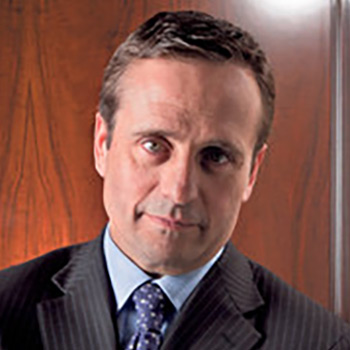
Barry C. Knapp
39
APPEARANCES
9
PODCASTS
Oct 23, 2026


Kelly EvansHOST
Barry, it's great to have you here and would love to just kind of break down how you're thinking about it.

Barry KnappGUEST
I found your framing of the move yesterday being close to or around the same as the Silicon Valley Bank.
Barry KnappGUEST
You know, my broader thesis on the Fed's policy has been the balance sheet has been overly accommodative and has clearly contributed to money flowing into private credit, money flowing into NEO, cloud providers.
Barry KnappGUEST
all sorts of places, and helping facilitate this build-out to some extent with the questions about whether it's created some malinvestment and money's gone some places perhaps it shouldn't, while rate policy, on the other hand, is exceedingly tight and getting tighter.
Barry KnappGUEST
So, What I was hoping they would do this year, they being the Fed, would be to start rebalancing policy.


speaker_0HOST
So talk to us about sort of how you see the stage set as we go into what could be, you know, kind of a coin flip meeting maybe next week.
Barry KnappGUEST
Yeah, I was, I was having the same issue with what day it is a little bit [laughs] earlier as well.
Barry KnappGUEST
But, um, yeah, no, we, we started our note this week with dusting off the Fed policy, uh, tightening playbook, and we've looked at every business cycle going back to World War II, uh, and what happens at the point when the Fed stops easing, typically in response to a recession.
Barry KnappGUEST
Um, and how does the equity market respond to that relative to how does the bond market respond to that? I recall getting to BlackRock after 25 years at Lehman and Barclays in 2014, and the bond, uh, professionals I was working with being absolutely convinced that the tightening, the taper in that po- in that case, was absolutely priced in the market, and I told them, "No, no, no.
Barry KnappGUEST
The way the equity market works with res- respect to these things is it typically has a, we'll call it a volatility shock related to these inflection points in Fed policy." So from World War II through the taper tantrum, those were generally worth about 8 to 10%.
Barry KnappGUEST
There was a fairly small standard deviation around that, even in periods where the Fed hiked aggressively versus passively.
speaker_0HOST
Mm-hmm.
Barry KnappGUEST
Oh, I would look at prices received from the various Fed surveys, which are headed down and say this is not the issue.
Barry KnappGUEST
And from it's we've almost gotten to the point where it's a political expediency kind of an argument.
Barry KnappGUEST
That's now been effectively pinned on President Trump because of tariffs and because of the Iran war and the energy price effect.
Kelly EvansHOST
But in other words, you think that Warsh might hike here to keep long-term rates down?

speaker_2UNKNOWN
I'll be back.
Barry KnappGUEST
So I've argued in, in my writing that the near-term catalyst for the move higher in rates is probably a little bit less to do with the Fed's def- or the, um, the Treasury Department's deficit or the government's deficit, and I'll, I'll get back to that in a minute because I'm, I'm by no means suggesting that that's not the issue.
Barry KnappGUEST
All I'm suggesting is that recently, um, it hasn't been swap spreads, you know, swaps getting increasingly, uh, rich or Treasuries cheap.
Barry KnappGUEST
It's really been more about all this, uh, financing that's coming out of the hyperscalers that's really driven that.
Barry KnappGUEST
Now- The, the widening of credit spreads by hyperscalers, the increase in the underlying risk-free rate, we're talking about 10-year real now, and even their stock prices declining suggests you're gonna have some slowing of CapEx that'll take some pressure off.
Barry KnappGUEST
But next year is a real big question about the issue you just raised, Kel, which is we're gonna hit the debt ceiling.


21 MINS LATER
Barry KnappGUEST
Went to the courthouse and talked to them about, you know, Abattoir and the property that he bought.
26 MINS LATER

Meribah KnightHOST
Nate Fisher is the head of New Founding, the man at the top of all of this, who Diana found also goes on a lot of podcasts.
Barry KnappGUEST
To build that city on the hill, or set an example, or, or come together in ventures that can actually shape the country.

Barry KnappGUEST
Um, I, I would tell you just from m- my experiences and, and of course my biggest clients are big institutional money managers, and I talk to them.
Barry KnappGUEST
I've been talking to them about this for years since even before Kevin Warsh was nominated about how we needed to get to this.
Barry KnappGUEST
So there's been something of a, call it almost a sword of Damocles hanging over the Treasury market now, which really intensified in October of 2023.
Barry KnappGUEST
If you recall, in August of '23, Treasury s- then Treasury Secretary Yellen decided she wanted to extend the duration of what they were issuing, so she was gonna issue another 500 billion of coupon securities, meaning notes and bonds.
Barry KnappGUEST
And the market pushed back, and 10s went to f- 10-year Treasuries went to 5%, 10-year real rates went to 2.5%.
Barry KnappGUEST
And her reaction to it was to say, "Okay, we're gonna just issue bills." A third of all of the issuances is in Treasury bills.
12 MINS LATER
Barry KnappGUEST
You know, my brand is it's never different this time, right? But there's something that's clearly very unique in the structure of the market in as much as we've never had this big a spread between individual equity vol and index vol, right? So the VIX EQ relative to the VIX.
Barry KnappGUEST
Um, we are in a period where with tech and tech related and the AI theme in particular, we're getting vol up or price up vol up.
Barry KnappGUEST
Um, that's what happened at the, at the end of the tech boom in the late nineties into 2000.
Barry KnappGUEST
I can remember the divergence in that case was between NASDAQ and S and P. I was in equity derivatives at that time at Lehman brothers.
11 MINS LATER

Trevor HallHOST
So maybe talk about that disconnect between market expectations and where you think the fundamental driver needs to be for a general CapEx boom that doesn't have to hang its hat on just AI data center buildup.


Chris SnookHOST
You know, what shaped the man and his worldview as it relates to markets, business, and everything in between? Just give us kind of the backstory so we know a little bit more about, well, when we're listening to the frameworks, what helped shape those?
Barry KnappGUEST
Hopefully I won't go too far field here, but I'm the son of a professor of electrical engineering at the University of Connecticut.
Barry KnappGUEST
So I grew up in a town where 80% of the kids in my high school were university kids.
Barry KnappGUEST
I think I always had a healthy degree of skepticism, cynicism about ideas that were being put forward.
Barry KnappGUEST
But I went to college thinking I was going to play pro soccer, not be an economist or macro strategist.
1 HR 10 MINS LATER
Chris SnookHOST
How do you think about that as it relates to just... it's there, so I'm going to use it, and why take counterparty risk I don't have to, or is there something more signaling about that that you pay attention to?


Marley KaydenHOST
How do you, or at least how does the Fed tighten conditions in areas that aren't going to affect other parts of the market, or at least the economy that really need, uh, the policy help the most? Uh, because I know that you've argued it's via tightening the balance sheet and not through rates.
Barry KnappGUEST
I mean, this is a story that really can be traced back to, um, the way the Fed eased, which was primarily using their balance sheet, and so that created a lot of accommodation for long-term fixed rate, high quality borrowers.
Barry KnappGUEST
They tightened using the rate policy, and that was really the origins of the K-shaped economy.
Barry KnappGUEST
So if you are a small bank, um, you struggle with a higher policy rate, um, if you are a small business, same story, if you're a household without assets.
Barry KnappGUEST
So anyway, so here we are, uh, you have Fed officials, FOMC participants like Neel Kashkari saying, "Hey, the AI build-out is clearly, uh, inflationary." Now, I absolutely disagree.
Kelly EvansHOST
Um, or, or what's, are there important shifts happening in the market right now, Barry?
Barry KnappGUEST
Well, financial conditions clearly tightened after Warsh's press conference last week, but I think the market really got this wrong.
Barry KnappGUEST
Uh, I, my, my tendency is to think people viewed this within the lens of the Powell, Yellen, Bernanke Fed, which if you had a dot plot that moved, uh, towards rate hikes, you would've assumed, "Okay, there's going to be rate hikes." But, um, uh, you know, there's a couple important things that happened.
Barry KnappGUEST
First of all, uh, when asked about pr- policy broadly, uh, Kevin Warsh talked about policy being uneven.
Barry KnappGUEST
This is a, a concept you and I have talked about for years now, that the Fed's balance sheet is providing accommodation.
Barry KnappGUEST
Uh, there's also accommodation being provided for long-term fixed rate borrowers, like hyperscalers, from tax policy.
Barry KnappGUEST
Uh, if that's your concern about the source of inflation, the way to address it is with the balance sheet, not with rate policy, because when talking about rate policy, um, conditions are actually tight, as evidenced by, uh, things that are going on in the housing market.
Barry KnappGUEST
It's now 1.2. Um, last quarter, we got a 1.4% contribution from CapEx and only a 90 basis point contribution from consumption.
Barry KnappGUEST
That's to GDP, even though consumption is four and a half times as big as CapEx.
Kelly EvansHOST
... people are taking their yea- 7,800, 8,000, and this is built on the back of earnings numbers that we haven't seen ever except for coming out of a recession or basically in the late '90s.
Kelly EvansHOST
Um, Barry, why do you think a- and to what extent do you think that we should cut rates at this point?
Barry KnappGUEST
Uh, I, because I think, in essence, I, I think that we should cut 50 basis points.
Barry KnappGUEST
I believe that the policy rate setting is about 50 basis points too restrictive, but the balance sheet's providing 50 to 75 basis points of accommodation.
Barry KnappGUEST
So i- if I had my druthers, and, and, uh, Governor Moran detailed this in his recent paper that he constructed with some Fed, uh, staffers, as well as the speech that he gave a couple of weeks ago at, in, in Miami, um, you have to make the transition slowly.
Barry KnappGUEST
First of all, you will boost small bank, regional bank return on equity above where it needs to be to completely reopen the small bank credit channel.
5 MINS LATER
speaker_0HOST
I know you're not in the camp that we should be seeing rate hikes, but just talk us through your perspective, how you see things currently.
Barry KnappGUEST
If you decompose the Treasury 2s, 10s benchmark curve into the inflation component of it and the growth component of it, you see virtually identical price action to what happened a year ago where the break-even curve got deeply, deeply inverted, meaning, yes, there was going to be some near-term price impact of a year ago it was tariffs, now it's energy, but the forward expectations were much, much lower than the current expectations.
Barry KnappGUEST
So in essence, viewing inflation as something of a transitory shock, whereas the real rate component of it steepened out dramatically.
Barry KnappGUEST
And that this decomposition, not to get too wonky about all this, is basically was telling you a year ago that tariffs were a much bigger risk to growth than they ever were to inflation.
Barry KnappGUEST
All the economically sensitive cyclical sectors got absolutely hammered following Liberation Day.
speaker_0HOST
I'm just wondering then if you are talking about a growth shock, what is the prescription here? is it to cut rates or something else because then what about all the other tailwinds like we were talking about with tax policy and 700 billion dollars worth of capex from a couple of hyperscalers and you know obviously everything else that we were going to be seeing this year as far as a more sort of fiscal support
Kelly EvansHOST
How can we be persuaded that that would make a, this problem, Barry, worse right now, when people are worried about inflation and want the Fed to do something?
Barry KnappGUEST
Um, it definitively would make things worse and exacerbate the K-shaped, uh, economy that the Fed's asymmetric policy, easing primarily through their balance sheet and then tightening primarily through rate policy, really kicked off.
Barry KnappGUEST
Certainly the tariffs exacerbated that, and a per- persistent energy shock would, uh, further exacerbate that dynamic, which is, in essence, pressure on households that live paycheck to paycheck, small banks relative to large banks, you know, businesses that are more leveraged borrow at a floating rate versus those borrowing at a fixed rate.
Barry KnappGUEST
So, um, what Warsh is getting at, and Moran, uh, released a paper with Fed staffers about yesterday-
Barry KnappGUEST
Oh, there's no doubt that, uh, longer term rates are at least 50 to 75 basis points below where they would be otherwise in the absence of the Fed's $6.5 trillion of holdings.
Barry KnappGUEST
You could measure that through the three-month tenure curve, which is a rough proxy for bank lending.


Melissa LeeHOST
What, what is the Fed, what are most economists getting wrong when they think of the oil shock and the ripple effect as inflationary as opposed to something else like deflationary?
Barry KnappGUEST
Um, you know, 1973, the OPEC embargo pushed the economy into a deep recession, what at the time was the deepest recession we'd had since, uh, the Great Depression.
Barry KnappGUEST
'79 was a contributor, the second embargo was a contributor to the '80 recession, and then, uh, '81 after that.
Barry KnappGUEST
Um, you know, in 2022, we saw inflation bottom within, overall, three months of the Russian invasion.
speaker_0HOST
What's going on in your mind when you look at the markets and the economy here?
Barry KnappGUEST
I wrote a note right before it started, just before I made a trip to New York, expecting to talk to clients about what I was characterizing as not so hot.
Barry KnappGUEST
This idea, which had been the consensus view that growth was going to broaden out, led by capex in areas other than Gen AI, in part because of the tax incentives of the one big beautiful bill act, and that we'd get a bit of a recovery in consumption because of the fading effects of last year's three adverse aggregate demand shocks, right? So lower immigration, a sharp reduction in the growth rate of government spending and tariffs, of course, an increase in the effective tariff rate from two and a half percent last February to 12 percent by November.
Barry KnappGUEST
If you then throw on top of that a fourth fiscal adverse aggregate demand shock, which is an increase in the price of oil and a Federal Reserve that is on the verge of being fooled twice, right? A year ago, the Fed got the tariff story completely wrong.
Barry KnappGUEST
They thought this will increase the rate of inflation, which in the short run, maybe it does, but there's a whole The San Francisco Fed even wrote about this.
speaker_0HOST
Is there any way to tell how many jobs will be lost because of AI?
speaker_0HOST
season but let's move on now and focus on some of the other developments joining us now is barry knapp managing partner at ironsides macroeconomics always lovely to speak to you barry first and foremost just wanted to get your takeaways from what we heard from one of the longest state of the union addresses in history i think a lot of the conversation this morning seems to be around the fact that in fact it was light on substance what were your takeaways
Barry KnappGUEST
My primary takeaway from a macro perspective is his very measured response to the SCOTUS or Supreme Court decision on tariffs.
Barry KnappGUEST
I suspect and I had a couple of calls over the last few days and people were expecting something more of a rant and of course only four of the justices showed up and Notably, Gorsuch didn't show up, was probably the primary architect, although Roberts wrote the decision.
Barry KnappGUEST
And it actually is consistent with our view on trade policy, which is if you look at our customs receipts, they averaged about $30 billion from July through November on a monthly basis.
Barry KnappGUEST
You look at the various inflation measures, and we're going to get import prices.
speaker_0HOST
Barry, where does that leave the path for future rates?

Trevor HallHOST
Why? What's the background and what do you see this being an ultimate good thing for the United States?
Barry KnappGUEST
Of the various talking heads, pundits that are regulars on CNBC, Fox Business, Bloomberg, I would put myself in the forefront of those that have been critical of the Fed's use of the balance sheet.
Barry KnappGUEST
And That criticism began in 2010 when Kevin Warsh notably didn't dissent against the launch of QE2, but he...
Barry KnappGUEST
In the transcripts that have now been released, there was a long article about this, note about this from Claudia Assam.
Barry KnappGUEST
Last night, she posted on Twitter, she sent the note around about the use of the balance sheet all the way back to 2010.
Barry KnappGUEST
I don't want to go into everybody's criticism, but Claudia Assam's criticism reminded me of in the spring of 2010, I had been convinced by our head of research, a US economist, Larry Kanter, that we were having a fairly symmetrical, typical V-shaped recovery.
16 MINS LATER
Trevor HallHOST
And so what are going to be the challenges for Warsh to be pragmatic in how he approaches this job, but also have to deal with the powers that be out of the White House?
Kelly EvansHOST
I don't know if that's Fed-related or at this point if it's just highly volatile as a trade.
Barry KnappGUEST
Now, the dollar had a structural break with the market-implied Fed policy path on Liberation Day.
Barry KnappGUEST
If you graph that near-term forward spread, the three-month rate, 18 months forward, less than spot three-month rate, sort of a proxy for expectations around what the Fed's going to do, it was super closely correlated in 22, 23, 24, early 25.
Barry KnappGUEST
And the The movement in the dollar now is, I think, the start of a secular change, the structural overvaluation of the dollar that, in a lot of ways, is attributable to our so-called trading partners' currency policies.
Barry KnappGUEST
There's all sorts of examples, things like Taiwanese insurance companies not having to mark their currency fluctuations on foreign bonds to mark the market.
Kelly EvansHOST
And why is it changing, Barry? What happened with Liberation Day? Was it the tariffs?

Barry KnappGUEST
Well, it's reasonable to expect that we're going to get a broadening out of earnings, that we're going to get a broadening out of capital investment this year as four things happen.
Barry KnappGUEST
One is the corporate tax incentives from the One Big Beautiful Bill Act start to cause CapEx to improve or recover beyond just Gen AI, right? Immediate expensing of Equipment, building a factory, all those sorts of things should start to contribute to broader capex and a recovery in the manufacturing sector.
Barry KnappGUEST
The other three things that should contribute to broader earnings growth next year but are not going to be evident this quarter is a fading of the effects of what I'm calling the three adverse aggregate demand shocks.
Barry KnappGUEST
It's a little bit of a reference to the San Francisco Fed paper about what tariffs really have done over the last 100 years.
Barry KnappGUEST
Oh, you know, I suppose you could have expected some sell-off in crude as a consequence of, you know, a couple hundred thousand barrels coming online in a few months and maybe six to eight hundred thousand within a year.
Barry KnappGUEST
And so I think the Venezuelan situation was really a non-event for equities in general.
Barry KnappGUEST
And the theme today is The same theme that's been persistent for the last month or so, which is this whole run it hot thesis and the idea that growth is going to reaccelerate and broaden out in 2026.
Barry KnappGUEST
We got an ISM survey that was weaker than expected, but all that did was translate into a rally in the belly of the Treasury curve and expectations that the Fed is going to wind up providing some more stimulus on the rate policy side.
speaker_0HOST
What are your expectations for the Fed moving forward? Because it seems like we keep pushing any further rate cuts off in 2026.
Barry KnappGUEST
Yeah, I think we need to step back on this whole Fed discussion and get a little broader perspective on it.
Barry KnappGUEST
When the Fed eased during the pandemic, they had the policy rate at 1.5% when the pandemic started.
Barry KnappGUEST
They then purchased the equivalent of 250 basis points more of rate cuts in terms of the longer duration assets that they you know that they bought.
Barry KnappGUEST
So treasuries and mortgage backed securities that had a profound effect on the housing market and it had a profound effect on allowing the federal government to be able to finance all the stimulus that they financed.
6 MINS LATER
speaker_0HOST
What are your expectations? Are we going to see another double-digit gain for equities in 2026 and extend this bull run to four years?
Scroll for more appearances