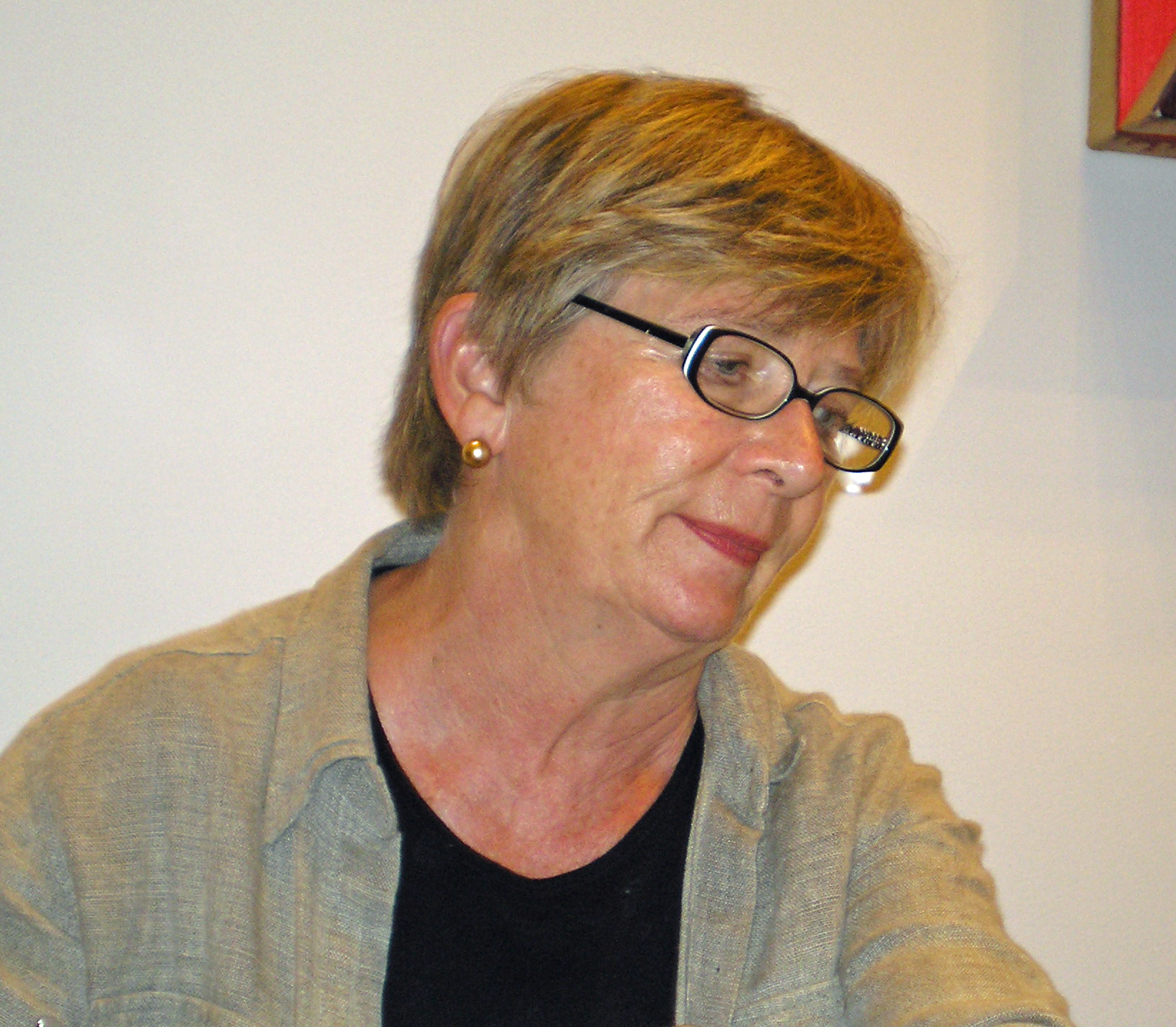
Barbara Ehrenreich
American authorWikipedia
44
MENTIONS
26
EPISODES
25
PODCASTS
Search complete. 44 mentions across 26 episodes found for "Barbara Ehrenreich".
Oct 30, 2026

Damian HarmonyHOST
Studs was cool when it came to sports, and I never really liked Hunter S. Thompson, but...
Damian HarmonyHOST
Barbara Ehrenreich really stuck out to me as someone who did the same thing.
Damian HarmonyHOST
She wrote Nickel and Dimed where she went and lived and she made rules for herself.
Damian HarmonyHOST
I'm going to live on whatever job I can get that's considered the most unskilled labor.

Cara Santa MariaHOST
And so obviously this is quite relevant to the work that I do and quite relevant to the care.
Cara Santa MariaHOST
And yet I feel like there's this dark undercurrent, and I often will cite Barbara Ehrenreich when I talk about the...
Cara Santa MariaHOST
the kind of shift in the public consciousness towards hook, line, and sinker, accepting placebo and nocebo as some sort of force beyond oneself and really kind of grappling, and I hear this a lot from my patients, with a pressure to maintain specific attitudes or specific mental, cognitive, emotional processes for fear that their cancer will get worse unless they stay positive all the time, or I'm going to die unless I really don't fall into, you know, any sort of negative thinking.
Cara Santa MariaHOST
And I'm constantly working to counter those beliefs with my patients and to minimize some of their belief about the quote unquote power of this cancer.

Katie OrensteinGUEST
My thing with beginning the story of theater with the Greeks is that my thinking on that has changed a lot over time.
Katie OrensteinGUEST
I don't know if you're familiar with a book by Barbara Ehrenreich called Dancing in the Streets, but I highly, highly recommend it.
Katie OrensteinGUEST
And it gets into the evolutionary biological reasons for why dance and rhythm exist in the human species.
Katie OrensteinGUEST
And for me as a theater artist, I find this fascinating.

Noah SmithGUEST
It was that one.
Noah SmithGUEST
And it was Barbara Ehrenreich, the socialist writer.
Noah SmithGUEST
I participated in one cancel mob because she said some dipshit, like, mean thing about Marie Kondo, the, like, tidying up woman from Japan.
Noah SmithGUEST
And she, like, said some kind of, like, snippy mean, you know, thing about her.
Noah SmithGUEST
And then, like, everybody just went after her.
Noah SmithGUEST
Like, she's the...
Noah SmithGUEST
Barbara Ehrenreich coined the term PMC, professional managerial class.
Noah SmithGUEST
She's, like, a socialist writer.
Noah SmithGUEST
It was that one.
Noah SmithGUEST
And it was Barbara Ehrenreich, the socialist writer.
Noah SmithGUEST
I participated in one cancel mob because she said some dipshit mean thing about Marie Kondo, the tidying up woman from Japan.
Noah SmithGUEST
And she said some kind of snippy mean thing about her.
Noah SmithGUEST
And then everybody just went after her.
Noah SmithGUEST
Barbara Ehrenreich coined the term PMC, professional managerial class.
Noah SmithGUEST
She's like a socialist writer.
Noah SmithGUEST
She...

Laura FlandersHOST
There's fiction based on fact, and facts you wish were fiction.
Laura FlandersHOST
The journalist Barbara Ehrenreich, who passed away at the age of 81, brought us decades of narrative journalism that introduced us to memorable characters, like the elder still working for a pittance cleaning motel rooms, or the young cheerleader hired to sell dubious doctors on the latest wonder drug, or the women hired at upon being hired or offered help applying for food stamps, welfare, assistance, because the company knows that no one can survive, let alone support a family on what they pay.
Laura FlandersHOST
The New York Times obituary of Ehrenreich was headlined, Explorer of Prosperity's Dark Side, to which she would have said, bitingly I bet, that this wasn't prosperity at all, but rather pain.
Laura FlandersHOST
The pain of millions of the people she called society's anonymous philanthropists, who give their all and get almost nothing in return.

Miriam RopschitzHOST
The Malleus is where the myth comes from that the majority of the women killed for witchcraft were healers originally.
Miriam RopschitzHOST
This idea was then taken up and popularised by the book Witches, Midwives and Nurses by Barbara Ehrenreich and Deidre English in the 1970s.
Miriam RopschitzHOST
The historical reality tells a different story.
Miriam RopschitzHOST
In the actual trial records, Midwives were not accused more often than other women.

Dan HancoxGUEST
There's a very strong argument that that's an evolutionary imperative [laughs] that's driving us to that, to that concert, that drives us towards any crowd of, of like-minded souls.
Dan HancoxGUEST
Um, I've drawn, like, the, on the books of Barbara Ehrenreich, who's a huge journalistic hero of mine.
Dan HancoxGUEST
She wrote a great book called Dancing in the Streets in 2007, which, uh, which made the argument that early human societies, um, when, you know, you initially had groups of cave dwellers in, in family groups, they left those caves for the first time and started bonding together in the first sort of micro-civilizations, you know, groups of 20 to 30 people, larger than the family group, because they needed, uh, because they were better, um, able to survive pred- predators [laughs] like saber-toothed tigers by being in larger groups.
Dan HancoxGUEST
Well, how did they bond together? Well, language was part of that.

Cornel WestGUEST
Part of DSA's base, and I love DSA.
Cornel WestGUEST
I was there with the co-founding, with the great Stanley Aronowitz and, and, and, and Barbara Ehrenreich, and for Michael Harrington, and Bogdan Denitch, and others.
Cornel WestGUEST
At that time, we were tied much more to industrial working class.
Cornel WestGUEST
We had ties to the U- U- UAW and so forth, right? Now DSA is tied very much to gentrifiers, to the educated chatelaine classes who are preoccupied with affordability, rightly so, because corporate greed is not allowing them to live decent lives.

Andrew ThomsonHOST
Is that, is that right?
Catherine LiuGUEST
No, no, no, no, no. Um, it, the- The John and Barbara Ehrenreich really talk about the professional managerial class takeover of the Democratic Party in 1967.
Catherine LiuGUEST
But, um, people were talking about things like the new class that this was from the right wing.
Catherine LiuGUEST
They were like, "The liberal elites are a new class." This was, um, um, promoted by, um, right-wing thinkers and think tankers.
16 more episodes mention Barbara Ehrenreich.
Create an account to see the whole feed, search across every transcript, and follow the entities you care about.