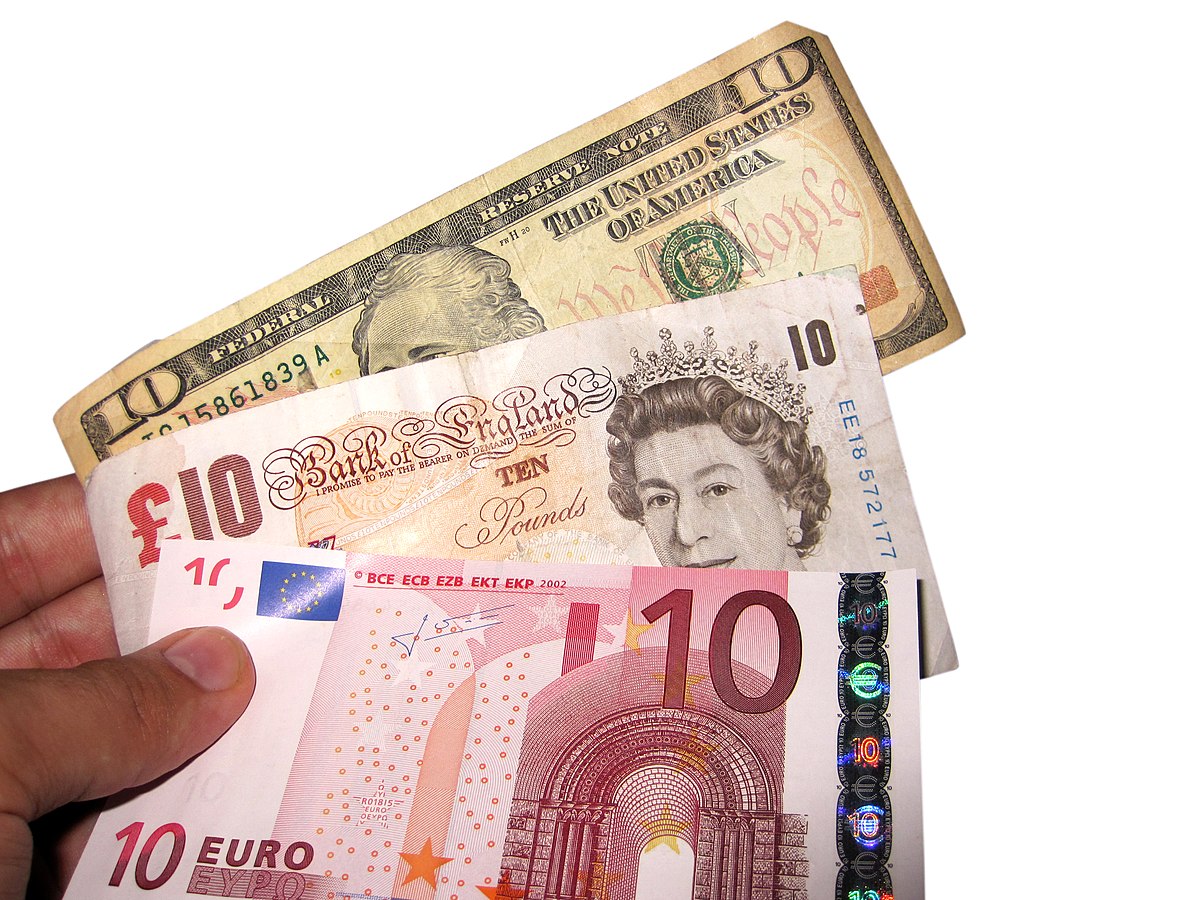
Banknote
86
MENTIONS
13
EPISODES
12
PODCASTS
Search complete. 86 mentions across 13 episodes found for "Banknote".
Oct 4, 2026

Jim CalhounHOST
I often refer to three of his books.
Jim CalhounHOST
which include a section on demagogues, The Revolution, a manifesto, 10 Myths About Paper Money, a free essay from 1983, 36 pages, Cut the Most Basic Level, You and Ron Paul, The Holy Bible, the 66 book version, I'll probably agree that people deserve to be let alone or left alone as the default state of existence.
Jim CalhounHOST
But the globalists have tried to fill every area of our existence with a catasphere that is detrimental to life itself.
Jim CalhounHOST
Compare Ron Paul's emphasis on peace and prosperity with Psalm 1, 3, and 6.

speaker_2NARRATOR
The pattern repeats.
speaker_2NARRATOR
By the 14th century, the Chinese had already discovered paper money.
speaker_2NARRATOR
In fact, they had invented it.
speaker_2NARRATOR
They used flying checks made from mulberry bark.
speaker_2NARRATOR
Over time, they progressed to genuine printed banknotes.
speaker_2NARRATOR
For more than 500 years, Chinese civilization operated with paper money, while Europe was still trading using coins and barter.
speaker_2NARRATOR
500 years ahead.
speaker_2NARRATOR
But then, inevitably, they printed too much.

Mark MillerHOST
Then go watch Eddie Murphy's bit on The Honeymooners, and you'll laugh even harder.
Mark MillerHOST
First appearance of In God We Trust was today in 57 on Paper Currency.
Mark MillerHOST
58...
Mark MillerHOST
Don't leave home without it.

Patrick Ian PerezHOST
[upbeat music] Everyone, my name is Patrick Ian Perez.
Patrick Ian PerezHOST
It is Monday, April 27th, and I'm very pleased, uh, today to be joined by Art Friedberg, our close colleague here at Whitman Brands, to do a little, uh, Paper Money podcast.
Patrick Ian PerezHOST
Um, Art-
Art FriedbergGUEST
How you doing?
Art FriedbergGUEST
Great.
Patrick Ian PerezHOST
So there's a lot of...
Patrick Ian PerezHOST
I mean, as always, with Paper Money, there's always a lot of things happening that may not get as much coverage as something with coins.
Patrick Ian PerezHOST
You know, coins are easy.
Patrick Ian PerezHOST
Yeah.
Patrick Ian PerezHOST
Stacks does a, a paper money auction in New York and a, and a coin, and a coin sale.
Patrick Ian PerezHOST
Um, CNG, Classical, um-
John FeigenbaumHOST
Yeah
9 MINS LATER
Patrick Ian PerezHOST
Exactly.
John FeigenbaumHOST
So what else you got?
Patrick Ian PerezHOST
And then for all the currency people out there, we have, um, the ninth edition of our very popular United States Paper Money.
Patrick Ian PerezHOST
Um, there's two Friedberg books, but we call it the Friedberg book.

Mike TylerHOST
Mike checking in.
Mike TylerHOST
80% to 90% of paper money in the U.S. carries tiny traces of cocaine.
Mike TylerHOST
Estimates roughly 8 out of every 10 bills has traces of cocaine on them.
Mike TylerHOST
And then in urban areas such as Chicago and other major cities, 94% of

James Christian BlockwoodHOST
That sounds very exciting and also very important.
James Christian BlockwoodHOST
Ed, we're dealing with coins and not paper money, right?
Ed MoyGUEST
Yes, the Bureau of Engraving and Printing is responsible for making our paper bills.
Ed MoyGUEST
They have facilities in Washington, D.C., as well as Fort Worth, Texas.
Ed MoyGUEST
There's two different facilities because of continuity of government reasons, just like the Mint has multiple facilities to make our circulating coins.
Ed MoyGUEST
And it's one of the... common misnomers.
Ed MoyGUEST
When people hear about the United States Mint, they think, oh, so you make the paper money.
Ed MoyGUEST
So people are familiar with the mint broadly, but they mix it up with the Bureau of Engraving and Printing.

speaker_4NARRATOR
Colonial governors and judges were to be paid by the Crown, they were to be supported by a standing army of twenty regiments, and all the expenses of this force were to be met by parliamentary taxation.
speaker_4NARRATOR
Restriction of Paper Money, 1763 Among the many complaints filed before the Board of Trade were vigorous protests against the issuance of paper money by the colonial legislatures.
speaker_4NARRATOR
The new ministry provided a remedy in the Act of 1763, which declared void all colonial laws authorizing paper money or extending the life of outstanding bills.
speaker_4NARRATOR
This law was aimed at the cheap money which the Americans were fond of making when specie was scarce, money which they tried to force on their English creditors in return for goods and payment of the interest and principal of debts.
speaker_4NARRATOR
Thus the first chapter was written in the long battle over sound money on this continent.
1 HR 52 MINS LATER
speaker_13NARRATOR
HISTORY OF THE UNITED STATES BY CHARLES A.
speaker_13NARRATOR
BEARD The Finances of the Revolution When the Revolution opened, there were thirteen little treasuries in America, but no common treasury, and from first to last the Congress was in the position of a beggar rather than a sovereign.
speaker_13NARRATOR
having no authority to lay and collect taxes directly, and knowing the hatred of the provincials for taxation, it resorted mainly to loans and paper money to finance the war.

George BagbyGUEST
And the chartered banks in the various states may not operate in another state without the permission of those states, and many of them don't.
George BagbyGUEST
All of these banks, the Bank of the United States and all of the state-chartered banks, issue their own paper currency.
George BagbyGUEST
And this is an, an important factor.
George BagbyGUEST
Without the Bank of the United States, the only alternative for a general circulating currency would be the coinage of the United States Mint.
George BagbyGUEST
Um, there were a great many, uh, chartered institutions of the various states that were-- that either-- [coughs] they either worked to claim the right to act as a bank if they weren't originally chartered as one, um, or they were explicitly given the right to issue paper currencies.
George BagbyGUEST
But not all of these were worthy.
George BagbyGUEST
Um, some of them were in bad financial condition, and people would read the newspaper and see, oh, well, there's, there's questions about the, the bonds of this particular institution, say a canal company that had issued paper currency on the side.
George BagbyGUEST
And people would short the paper currency, and so it would not trade at par.

George BagbyGUEST
And the chartered banks in the various states may not operate in another state without the permission of those states, and many of them don't.
George BagbyGUEST
All of these banks, the Bank of the United States and all of the state-chartered banks, issue their own paper currency.
George BagbyGUEST
And this is an, an important factor.
George BagbyGUEST
Without the Bank of the United States, the only alternative for a general circulating currency would be the coinage of the United States Mint.
George BagbyGUEST
But not all of these were worthy.
George BagbyGUEST
Um, some of them were in bad financial condition.
George BagbyGUEST
And people would read the newspaper and see, oh, well, there's, there's questions about the, the bonds of this particular institution, say a canal company that had issued paper currency on the side.
George BagbyGUEST
And people would short the paper currency, and so it would not trade at par.
3 more episodes mention Banknote.
Create an account to see the whole feed, search across every transcript, and follow the entities you care about.