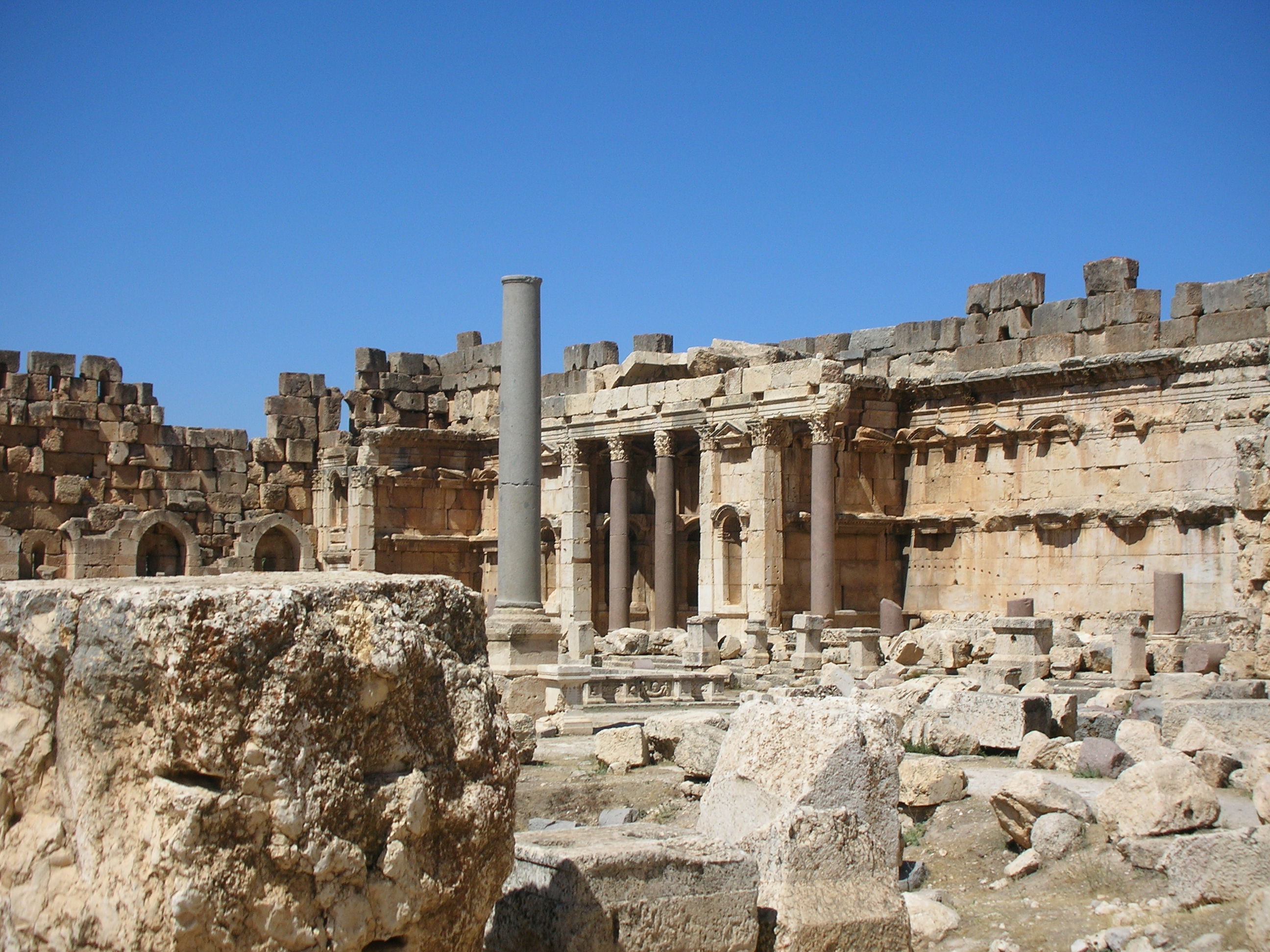
Baalbek
City in LebanonWikipedia
138
MENTIONS
68
EPISODES
38
PODCASTS
Search complete. 138 mentions across 68 episodes found for "Baalbek".
Nov 24, 2026

Andy DHOST
So there's definitely, the problem is like the way, these the way this particular site the way these things were done is has not been documented and that's something that's pretty common across the whole thing right um you know just lack of documentation means that we don't necessarily know that technology now this is also true of some some roman engineering uh processes and approaches that just weren't necessarily that well documented they'll kind of be lost today so may well be there's some fantastic way approach to doing it but if you get you get modern modern kind of you know um professors of construction engineering and they're going i don't know how they did that that that really gives you kind of pause for thought yeah
Matt DriscollHOST
absolutely and a lot of the time these things it's just that we don't know yet and there may be a very simplistic answer that we just don't know but at the moment like you said given that archaeologists experts in these fields having reviewed this can't come up with an answer that does beg the question um Okay, so I think the next one we were going to look at was Baalbek in Lebanon.
Andy DHOST
Yeah.
Matt DriscollHOST
And this is believed to be principally Roman.
Matt DriscollHOST
But again, some of what we're going to talk about may challenge some of that.
Matt DriscollHOST
And the material is limestone.
Matt DriscollHOST
So Baalbek...
Matt DriscollHOST
I think where it differs from Pumapunku is the sheer size and scale of some of these blocks.

JamesHOST
At Ollantaytambo in Peru, stone blocks weighing over 120 tons were transported from a quarry 11 kilometers away, across a deep river valley.
JamesHOST
At Pumapunku in Bolivia, some blocks weigh hundreds of tons, while at Baalbek in Lebanon, the colossal trilithon stones weigh approximately 1,000 tons each.
JamesHOST
Ancient traditions repeatedly describe an extraordinary method of moving these stones, levitation through sound.
JamesHOST
The Aymara people told Spanish chroniclers that enormous stones were transported through the air to the sound of trumpets.

Jacke WilsonHOST
Foundation stones for the construction of a true life.
Jacke WilsonHOST
The impression that I had felt at the site of the steeples of Martinville or of a line of trees near Baalbek.
Jacke WilsonHOST
Okay, that was passage number four.
Jacke WilsonHOST
We're back with Adam.

Dan StevensGUEST
So then once he'd seen that, um then i showed him i said i had you know how the hell do you think they they made that and you show them the temple would have moved those blocks too he's like so they actually did move them you're like yeah and you can see the undercuts where they planned on doing it and they were quarrying that next to it you can see lower blocks where they were quarrying those and he was like jesus christ so then you take now that he understands how it works you then i took him to yanshan quarry not literally, but in, you know, showed him pictures of Yangshan.
Dan StevensGUEST
So they were trying to do the same thing there by the looks of it that they were doing in, in Baobab.
Dan StevensGUEST
It was all that could only been done if you had a spaceship.
Dan StevensGUEST
And it was like, okay, now like this, this conversation was happening on the messenger messenger.

speaker_1SOUNDBITE_SPEAKER
looking for the big mammer jammers.
Carol AnnHOST
So where do we start? Well, why don't we start with the megalithic structures we can still look at and touch today? Places like Stonehenge in England, the Gigantija temples in Malta, Sacsayhuaman in Peru, Baalbek in Lebanon, and Gobekli Tepe in Turkey.
Carol AnnHOST
Now, just like the Egyptian pyramids, mainstream archaeologists say that these stones could have been moved with relatively primitive engineering and a large workforce.
Carol AnnHOST
Maybe that accounts for some of them, but not all.
Carol AnnHOST
Take Baalbek in Lebanon.
Carol AnnHOST
There stands the Temple of Jupiter Ball, the biggest temple supposedly built by the Romans, although there's no written record of that happening.
Carol AnnHOST
What makes this site not really fit the mainstream mold is what is known as the Ballbeck Stones, six gigantic pieces of quarried rock that defy the idea that men could just drag these things into place.
20 MINS LATER
Carol AnnHOST
If you're leaning toward that story being folklore, just know that it comes right out of the same documents that we use to give us the entire history of the conquest of Peru.

Ken HudnallHOST
It may have been Nimrod's attempt to thwart Enlil's diversion plan that led to the Old Testament story of the Tower of Babel.
Ken HudnallHOST
This narrative began in Baalbek, believed to be a post-flood center for the Anunnaki space shuttle operations.
Ken HudnallHOST
The massiness of the 1,100-ton granite block of the Trilithon and others weigh more than 300 tons each, but there's the idea this may have once been a landing or launch pad.
Ken HudnallHOST
One explanation for the trouble at Bamba was that humans there attempted to construct their own launch tower, apparently hoping to produce their own shim or a flying vehicle with a view toward arguing against a breakup of humanity with the offer of lunar iron.
Ken HudnallHOST
They're quoted in Genesis 11, verse four, as saying, come, let us build ourselves a city with a tower that reaches to the heavens.
Ken HudnallHOST
As saying, so we may make a shem for ourselves, not be scattered over the face of this whole planet.
Ken HudnallHOST
An Arabic text found at Baalbek stated that Nimrod and his followers also tried to construct a shem there.
Ken HudnallHOST
Shem, inadvertently misunderstood, is rendered by most translators as a sign for the world name.

Ikraduya JambiNARRATOR
It is a common weakness of modern man to imagine that his own age and his own country has progressed beyond all others.
Ikraduya JambiNARRATOR
Yet he is never more amazed that when he wanders among the ruins at Karnak, or looks up to the great stones high in the temple wall of Baalbek, or standing upon the Athenian Acropolis, he pictures the glory that was grace, or when he sees the magic touch of the creator of the Venice of Milo, yet none of these wonderful things were accounted worthy of a place among the seven wonders.
Ikraduya JambiNARRATOR
the deeper the excavator delves into the ruins of the past age the more he realizes that the ancients erected structures by the side of which the modern skyscraper is insignificant that they worshipped in the temples far more wonderful than our greatest cathedrals that they buried their dead in tombs which no modern millionaire could afford to build that they produce an art which the modern world has yet unequalled.
Ikraduya JambiNARRATOR
And of all the wonders of the earlier days of the world, those described in the following page were regarded by the ancients themselves as the most wonderful.
Andrew FinckGUEST
Like what? Like, no, Like we kind of maybe saw one or two of these in other places, but then we saw this entire wall of them.
Andrew FinckGUEST
So we're going back to Baalbek again, right? Because Baalbek is one of these sites that's got a lot of hallmarks packed in one.
Andrew FinckGUEST
So there's not many nubs here.
Andrew FinckGUEST
We found a couple nubs.
Andrew FinckGUEST
Baalbek is also
Nikkiana JonesHOST
known as the Temple of Jupiter, and they say that it's built by the Romans.
Andrew FinckGUEST
Right.
Andrew FinckGUEST
Then to move it, how are you going to coordinate all these cranes moving? You can't.
Andrew FinckGUEST
It's either unfinished or destroyed, or it's unfinished and it's destroyed.
Andrew FinckGUEST
So like Baalbek, it's unfinished and it's destroyed.
Andrew FinckGUEST
And all these other sites where it's like, well, it was unfinished and then another culture came in and then it was destroyed.
Andrew FinckGUEST
So it's like you had these compounding stories and timelines for these places.

Patricia Sarrafian WardGUEST
Before the war was real, the world went on forever, and we were allowed to think of going places.
Patricia Sarrafian WardGUEST
The world meant taxi rides to Damascus to visit the and day trips to mountains, ,, The world meant Baalbek, where Alain and I sat cross-legged on pedestals and sketched the fallen columns.
Patricia Sarrafian WardGUEST
We wanted to ride the tourist camel, but daddy said it was flea-bitten, and mummy said we weren't tourists anyway.
Patricia Sarrafian WardGUEST
In winter, Beirut meant chestnuts singeing our tongues.
58 more episodes mention Baalbek.
Create an account to see the whole feed, search across every transcript, and follow the entities you care about.