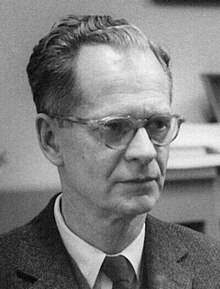
B. F. Skinner
American psychologistWikipedia
105
MENTIONS
23
EPISODES
21
PODCASTS
Search complete. 105 mentions across 23 episodes found for "B. F. Skinner".
Sep 12, 2026

LionelHOST
how to read.
LionelHOST
And he had everybody on from, I saw an old one with BF Skinner and Murray Kempton and just, just it.
LionelHOST
And William F. Buckley had this incredible sesquipedalian logo, Daedalus vocabulary.
LionelHOST
His lexicon was probably Nagy and in Maine.

Chirag PatelGUEST
Um, so currently, when the dog is growling and screaming at the end of the leash, what is it that's changing in the environment that is maintaining that response under similar conditions in the future? And what is it that's giving the dog a signal that if you behave in these situ- if you do engage in these behaviors right now under these conditions, then that reinforcer is available.
Chirag PatelGUEST
Um, and, um, as you mentioned, it's not necessarily about beneath the skin or above the skin, uh, because as a radical behaviorist, um, we, um, what Skinner's skin is, uh, differences in terms of behaviorism was that the skin is no a barrier to the environment.
Chirag PatelGUEST
So the environment is, um, something that is influencing behavior, and that could be hormones, that could be underneath the skin and also above the skin.
Chirag PatelGUEST
So we're interested in both, a whole holistic picture.
Daniel ShawHOST
Yeah.
Daniel ShawHOST
That's so, so interesting.
Daniel ShawHOST
And I think I'd love to dive in to come back to that as well in terms of the radical behaviorist perspective in a, in a little bit, because I think some people might not be familiar with that, and it'd be really interesting to kind of touch on what that means and, um, Skinner's work around that and how that fits into, um, sort of our work with animals as well.
Daniel ShawHOST
So, um, but just going back to what you said about, um, even just the owners there was kind of making me think, you know, how the noise is coming out of their mouth, the, the, the vocalizations that, that the human is articulating can be, often be so different to actually what we might be seeing if we can look at that dog, look at that individual, and how important it is to learn about that individual, but also learn about that caregiver and their needs in that situation, what they need to be able to feel comfortable and safe and enjoy, um, taking care of their dog in a, in a way that sort of facilitates a good human-animal interaction for both ends of the lead.

Audrey WattersGUEST
He stayed really involved in teaching machines.
Audrey WattersGUEST
Of course, more famously, a few decades later, B.F. Skinner invented a teaching machine.
Audrey WattersGUEST
And, of course, B.F. Skinner became much more well-known, and teaching machines are much more associated with Skinner.
Neil SelwynHOST
Yeah, I mean, Skinner's going to be much more familiar to most of our listeners.
Neil SelwynHOST
But, I mean, what was he doing specifically in the mid-20th century that can be traced through to the ed tech of today?
Audrey WattersGUEST
So Skinner is such a fascinating person and fascinating slash sort of terrifying person.
Audrey WattersGUEST
I've spent the last couple of years sort of spending way too much time thinking about behaviorism, thinking about Skinner's influence.
Audrey WattersGUEST
But I think it's fascinating.

speaker_1NARRATOR
Then the behaviour of pecking could be studied in relation to how often that reward was offered.
speaker_1NARRATOR
Or in Skinner's terms, what was the schedule of reinforcement? The
B.F. SkinnerSOUNDBITE_SPEAKER
main thing is what we call schedules of reinforcement.
B.F. SkinnerSOUNDBITE_SPEAKER
When you have a reward, then you can schedule it.
23 MINS LATER
Dave BrodbeckHOST
Oh, wow.
Lynne HoneyGUEST
So we just finished our fourth iteration of it and it is an absolute joy.
Lynne HoneyGUEST
So, um, I'll just, I'm going to actually, let's go with a Skinner quote for this
Dave BrodbeckHOST
one.

Sean LeahyHOST
Um, but exactly that, like there is this, what we want are people who can have that, they can, where is that creative? Where does that innovation, that creativity that, um, you know, that these new ideas that they come from, um, critical thinking yet.
Sean LeahyHOST
We also invented like the BF Skinner teaching machine, which is like a crank, right? So you must learn this is the answer there crank.
Sean LeahyHOST
And so you can form this down into this capability where it's like the way then that we assess, did you learn this thing is, is, in this little box? Did you do the thing in the box the right way as it's predicted that other people will do to achieve the same outcome? To demonstrate you have the cognitive capability to- You want
Andrew MaynardHOST
that predictability to sort of say, we have put this student through the machine and this is the cookie cutter that comes out of the other end that we can describe and we can sort of understand.

David KnightHOST
And when we go back and we look at the footprint of how the government has manipulated society, especially through schools, we go back and we look at people like Horace Mann and Thomas Dewey and how they have reshaped society in the way that they have.
David KnightHOST
And I would also add to that list, Beyond Freedom and Dignity author, B.F. Skinner.
David KnightHOST
These people and their approach, their calculated approach to manipulating society and to brainwashing kids is something that is still there.
David KnightHOST
And when we look at our society, I still am astounded when I see this generation of women and how much they hate their children.

speaker_3UNKNOWN
there.
Michelle BurrGUEST
Anybody knew about BF Skinner's operands.
Michelle BurrGUEST
And so, so then that's, I got, so that my start was in Chicago
speaker_3UNKNOWN
and,

speaker_5HOST
To understand the trap, we have to travel to a basement laboratory at Harvard University in the 1930s.
speaker_5HOST
A behavioral psychologist named B.F. Skinner is running experiments on rats.
speaker_4HOST
The famous Skinner boxes.
speaker_5HOST
Exactly.
speaker_5HOST
He trains them to press a lever, and every time they press it, a machine dispenses a food pellet.
speaker_4HOST
Now, I know the traditional narrative here is that the rats learn the connection and just press it whenever they are hungry.
speaker_4HOST
What changed?
speaker_5HOST
Well, Skinner ran low on pellets, so he decided to alter the mechanics of the machine.
speaker_1NARRATOR
Then the behavior of pecking could be studied in relation to how often that reward was offered.
speaker_1NARRATOR
Or in Skinner's terms, what was the schedule of reinforcement.
B.F. SkinnerSOUNDBITE_SPEAKER
Welcome back to the podcast.
B.F. SkinnerSOUNDBITE_SPEAKER
I'm your host, Dave Brodbeck.
19 MINS LATER
Dave BrodbeckHOST
Right.
Dave BrodbeckHOST
And I think a lot of times that, you know, I think it's important to care about ecological validity, but I think it's also important to realize that there are times when it's not that big a deal.
Dave BrodbeckHOST
And I think when you take pigeons and put them in Skinner boxes, and I mean, I've done a lot of that too.
Dave BrodbeckHOST
This isn't me saying anything bad about it.

Russell BrandHOST
Let me know how you feel about that in the comments and chat.
Russell BrandHOST
Do you feel that your personal liberty and freedom was impeded upon? Do you feel that there was a kind of a whispering campaign that would tantamount to BF Skinner style nudging, that you were coached, manipulated, controlled, like an authoritative force stopped you from being free, all the while telling you that it was for your health or for vulnerable people in your community.
Russell BrandHOST
And if you recognize that as a paradigm, do you see that imprint playing out again and again and again.
Russell BrandHOST
We need to protect you.
13 more episodes mention B. F. Skinner.
Create an account to see the whole feed, search across every transcript, and follow the entities you care about.