Azure Data Lake
10
MENTIONS
3
EPISODES
1
PODCASTS
Search complete. 10 mentions across 3 episodes found for "Azure Data Lake".
Oct 30, 2026

Mirko PetersHOST
The external sources are the exciting part.
Mirko PetersHOST
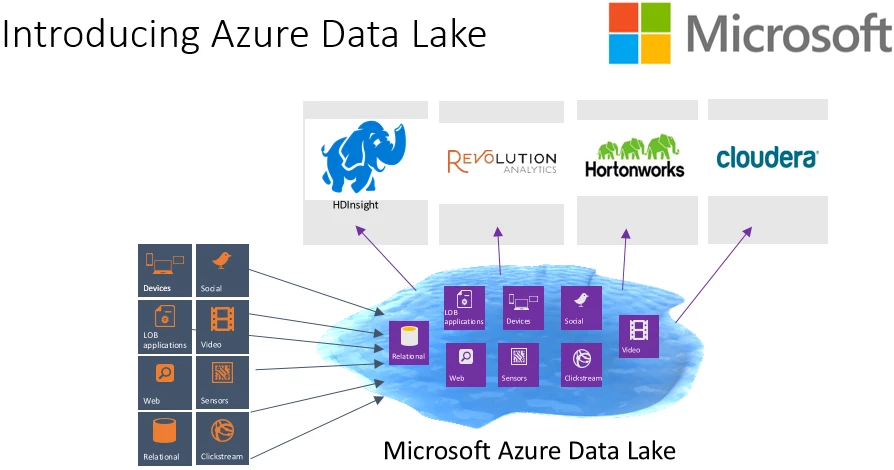
The list reaches Azure Data Lake Storage Gen2, Azure Blob Storage, Amazon S3 and S3-compatible storage, Google Cloud Storage, Dataverse, OneDrive, and SharePoint, and even on-premises or network-restricted locations through a gateway.
Mirko PetersHOST
There's also support for iceberg tables, which we'll come back to in a moment.
Mirko PetersHOST
Read that list again and notice what it means.
Mirko PetersHOST
Spark notebooks can read it, SQL can query it when it's a table, and the real-time tools can use it too.
Mirko PetersHOST
Power BI can read it through a semantic model, including indirect lake mode, which we'll come back to later.
Mirko PetersHOST
Even applications outside Fabric can reach it through the OneLake API, because OneLake speaks the same storage language as Azure Data Lake Storage.
Mirko PetersHOST
Iceberg deserves a plain explanation, because it's a name you'll hear often.
Mirko PetersHOST
The trade-off is less flexibility, but the payoff is speed.
Mirko PetersHOST
Synapse takes a more modular Azure approach, giving you SQL pools for data warehousing, serverless SQL for querying files, Spark for large-scale processing, pipelines for moving data, and Azure Data Lake storage for the file layer underneath.
Mirko PetersHOST
Those pieces can work together, but your team decides how to configure, secure, scale, and connect them.
Mirko PetersHOST
The trade-off here is more control, but also more complexity.
Mirko PetersHOST
Teams store and access data using open formats like Delta and Parquet.
Mirko PetersHOST
A lakehouse, a warehouse, and a Power BI semantic model can all draw from the same foundation instead of creating private copies.
Mirko PetersHOST
And OneLake supports shortcuts, which let Fabric reference data already living elsewhere like Azure Data Lake Storage without forcing you to copy files first.
Mirko PetersHOST
That matters when your company has years of data in Azure Storage and doesn't want a major move before it can start using Fabric.
Mirko PetersHOST
The practical shape of Fabric matters more than the feature list.
Mirko PetersHOST
OneLake sits on Azure Data Lake storage, every workspace is a folder inside it, and you don't even need an Azure account to use it.
Mirko PetersHOST
You buy Capacity, which is a pool of computing power sized by a level Microsoft calls a SQ, and Azure builds it per second with per-user licenses for the people doing the work.
Mirko PetersHOST
Then there's Azure Synapse Analytics.
Mirko PetersHOST
If the work is large-scale engineering, machine learning, or streaming data, Databricks gives you the most control over the engine and the compute.
Mirko PetersHOST
The more useful answer is that you often don't have to choose at all.
Mirko PetersHOST
Microsoft documents shortcuts in one like that point at data living elsewhere, including Azure Data Lake Storage, Amazon S3, and Google Cloud Storage, with no copying and no migration.
Mirko PetersHOST
A shortcut can even point at a mirrored Azure Databricks catalog, and if those files are in delta format, the lakehouse recognizes them as tables and keeps the schema in sync on its own.