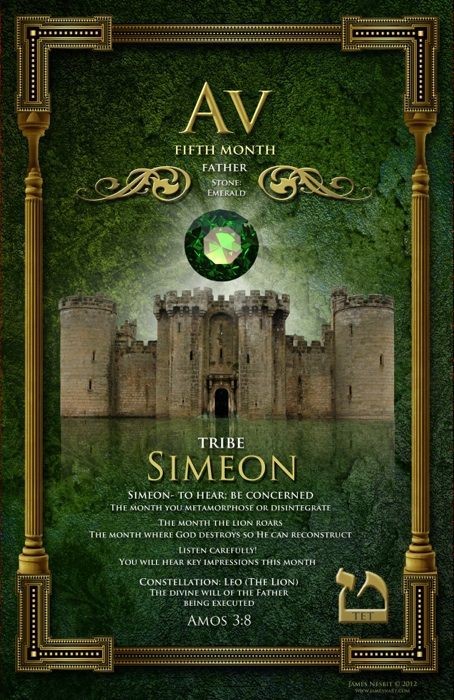
Av
MonthWikipedia
92
MENTIONS
12
EPISODES
12
PODCASTS
Search complete. 92 mentions across 12 episodes found for "Av".
Nov 2, 2026

Yitzchak EtshalomHOST
After telling over what happened to the king and the officers who ran away from Yerushalayim, now we're going to find out what happened to the city itself.
Yitzchak EtshalomHOST
In the fifth month, in the month of Av, on the tenth of that month, in year 19 of the reign of Nebuchadnezzar, the king of Babel, which is the eleventh year of Tzidkiel, the officer who stood in front of the king of Babel recalled that Nebuchadnezzar himself is in Rivlan now, a little north of Israel, and the officer in charge of the army who's going to actually burn down Yerushalayim He, representing the king of Babel, now enters Yerushalayim.
Yitzchak EtshalomHOST
This Babylonian army that Nebuchadnezzar is in charge of, they burned down God's house, the Beit HaMikdash, the king's house, all the houses of Yerushalayim, and the big house, or any big house, was burned down in fire.
Yitzchak EtshalomHOST
In Chazal, we find an interesting pirush at the Beit Hagadol, where people studied Torah and David.
Yitzchak EtshalomHOST
Now, if you notice the date here, it seems like Tisha B'Av should be on the 10th of Av, and not on the 9th of Av.
Yitzchak EtshalomHOST
The Gemara Masechet Tani, Tav Chav Tet, discusses this question as well.
Yitzchak EtshalomHOST
In the parallel story in the Book of Malachim, it says 7th of the month of Av, and here it says the 10th of the month of Av.
Yitzchak EtshalomHOST
The answer to Chazal here is first they entered the city on the 7th of Av, they began the actual destruction of the Beit HaMikdash towards the end of the 9th of Av, And the Meite B'gdash continued and finished burning on the 10th of Av.

Yitzchak EtshalomHOST
Which we will find out is significantly later than Rabbi Akiva's second Goran.
Yitzchak EtshalomHOST
And which is even more later than, should we say, more distant, in this case, a month earlier than Rabbi Akiva's final Goran, 29th of Av.
Yitzchak EtshalomHOST
And we'll see why all of these are when they are.
Yitzchak EtshalomHOST
So the Mishnah here suggests that that really the third one, according to Rabbi Lozan and Rabbi Shimon, should be the first day of Tishrei.
Yitzchak EtshalomHOST
And by the way, Hilchot Pesach also kicked in at that point.
Yitzchak EtshalomHOST
as we know in the context of B'dikat Chameitz.
Yitzchak EtshalomHOST
Now, Ben-Azai Omer, Chavtet Ben-Av, Chavtet Sivan, etc.
Yitzchak EtshalomHOST
What do Avikim and Ben-Azai disagree about in the context of the first Goran? After all, they have the same date.

Yussie ZakutinskyHOST
The month of Cheshbon is a sort of a Yontif-less month, right? It doesn't have any particular...
Yussie ZakutinskyHOST
special days, right? Even months like Tammuz and Av, you know, and things like that, and Teves.
Yussie ZakutinskyHOST
At least there's no Yontif per se, or at least right now, but at least there are days that are highlighted.
Yussie ZakutinskyHOST
You know, Asar with Teves, Fast Days, and things like this.
Yussie ZakutinskyHOST
That's what it says.
Yussie ZakutinskyHOST
Now, as a result of that, In Sefer Malachim it says that Hashem therefore planted seeds for a splinter Malchus, for a splinter kingdom to come, to sort of split the Jewish people into two kingdoms.
Yussie ZakutinskyHOST
And the person that was chosen to be sort of the splinter Malchus was Yeravim ben Avat.
Yussie ZakutinskyHOST
Now Yeravim ben Avat at the time was actually a big tzaddik.

Effie KleinbergHOST
They don't actually have names in the Torah.
Effie KleinbergHOST
The names Nisan, Iyar, Tammuz, Av, Elul are never mentioned anywhere in the biblical text.
Effie KleinbergHOST
They're only... developed later and those those months were added like replacing the first month second month third month became nissan er etc etc now why that works, like, why is that also not problematic, right? Like, like, we're basically saying, okay, well, we're not going to call it January, February, we're going to call them, well, what's actually the difference? Like, this one's not a Jewish, not a Jewish name, and that one's not a Jewish name.
Effie KleinbergHOST
So the Ramban says, he has this line, Shemot Elek kibalnu rak ba'alotenu m'bavel, olam gam la'achar aliyah m'bavel, n'yatzeh lemnot ha-chodeshim, lo li'kol ha-hem mishmon ha-perasim, tsvichim analimnot me'a chodesh nisan, lo v'tzor ha-sefir ha-acheret.
14 MINS LATER
Effie KleinbergHOST
So we should run it that way.
speaker_5UNKNOWN
Is there a problem in celebrating New Year's?
Effie KleinbergHOST
So there are different... halachot that have to do with celebrating days in the calendar that that the gentiles celebrate and the difference you basically have to figure out right so thanksgiving is another example you basically have to figure out what is the origin of that holiday so if the origin of the holiday is more pagan or idolatry or abodah zara in its nature like halloween for example then it's going to become borderline or actual Avodah Zarah to actually celebrate the holiday, you know, even if you're just celebrating with Jewish people, it becomes more problematic.
Effie KleinbergHOST
So you basically have to figure out what holidays in the calendar have more origins that are that are pagan or Avodah Zarah and what holidays are just cultural and and by the by and whatever it is so Thanksgiving by the way is discussed in the post game like where Moshe Feinstein and others say Hakarat Tov to the country you live in and it actually is very important to mark the day I don't know if he goes as far as saying you should make a turkey dinner and you know do all the other things that people do That doesn't mean that it's problematic, but he makes the point of, you know, many people will put, many very religious people will put an American flag on their lawn, you know, on Thanksgiving.

Yaakov GlasserGUEST
That actually had a lot to do with his own journey of discovering Torah and mitzvos and people who were inspiring to him.
Yaakov GlasserGUEST
And I always share that growing up, the last hour of Tisha B'Av, my father would always practice Ne'ilah because he claimed that these were test conditions for Ne'ilah.
Yaakov GlasserGUEST
Wow.
Yaakov GlasserGUEST
Because he was a chazen.
Yaakov GlasserGUEST
And I always say to people that if you're a teenager, there's nothing that says churban more than listening to an hour of Chazanis at the end of
David BashevkinHOST
your fast.
Yaakov GlasserGUEST
But then this transitioned over the course of Elul, the rest of Av and Elul, the rest of those months preceding the high holidays, where every Friday night I would fall asleep to him practicing and reciting the entire prayers of the high holidays.
Yaakov GlasserGUEST
And so it became internalized in a way that's very fundamental and very meaningful.

Kevin O'ConnorGUEST
Put the picture up, Tristan, of the temple being destroyed again, the one with the temple being destroyed.
Kevin O'ConnorGUEST
When you see the temple being destroyed, do you see the ninth of Av there, A-V? No.
Kevin O'ConnorGUEST
That's the second time that number comes into play, that date.
Kevin O'ConnorGUEST
It was in Exodus when the 12 tribes came back.

Mark BiltzHOST
This is when the mountains were seen.
Mark BiltzHOST
And then what happens? It is now the month of Av.
Mark BiltzHOST
And what does... know what do and remember his name is comfort and this is when every year the seven weeks of comfort happen after the three weeks from tamu 17 to the ninth of ob known as the dire straits isn't that fascinating how all of these things on god's biblical timeline happen at the same time and so he sends forth a raven And then he sends forth a dove.
Mark BiltzHOST
But the dove returns.
Mark BiltzHOST
And we see she comes back with an olive leaf plucked off.
Mark BiltzHOST
Well, the olive branch represents the Messiah.
Mark BiltzHOST
And this would have been the 18th of Av during the three weeks of comfort.
Mark BiltzHOST
We also know that the olive tree represents Israel from Isaiah 18.

Hershel SchachterHOST
In the days of the Tana'im, they had Ne'ilah on every Taanis Tzibur, but we only have...
Hershel SchachterHOST
The only Taanis Tzibur we have is Tisha B'Av and Yom Kippur.
Hershel SchachterHOST
Yom Kippur we have Ne'ilah.
Hershel SchachterHOST
Tisha B'Av we don't have Ne'ilah 'cause the whole idea of Ne'ilah, that if you have-- the Yerushalmi explains that if you have ribui tefillah, you stand a better chance of having the tefillos answered.
Hershel SchachterHOST
But on Tisha B'Av, the whole thing with the day is, like the pasuk reads in Eichah, "Kam ke'ezov kasher ef sasom tefillos," tefillos are not accepted.
Hershel SchachterHOST
So we don't have Ne'ilah on, on Tisha B'Av to demonstrate tefillos are not accepted.
Hershel SchachterHOST
We take down the parochos.
Hershel SchachterHOST
Why do you take down the parochos? Because the-- so Rav Soloveitchik explained that, uh, in the Beis Hamikdash, you have, "Di la'parochas lachem bein haKodesh el haKodashim haKodashim." On the other side of the parochos was the, was the, uh, Kodesh haKodashim.

Rav BergHOST
Is that clear? Okay? So Nissan, Nissan, which is a fire sign, nevertheless denotes there is three fire signs.
Rav BergHOST
The three fire signs are Ares, Nisan, Av, Aryeh, Leo, and Keshit, Kislev, Sagittarius.
Rav BergHOST
There you have your three fire signs.
Rav BergHOST
However, when we discuss Nisan, Ares, you will notice it is the right, or it is the first month of the three monthly selection.
Rav BergHOST
Cancer, Tammuz, or Sartana.
Rav BergHOST
It is a water sign, but which column of the water signs? The right.
Rav BergHOST
Leo, Av, Aryeh.
Rav BergHOST
It would be, it's a fire sign, but which fire sign? The left of the fire sign.

Leah FeinbergHOST
חזל note the significance of the fact that he died בחודש השביעי, in the seventh month, the month of Tishrei.
Leah FeinbergHOST
Yermiyahu had prophesied in the fifth month, in Av, that Chananya would die בשנה הזאת.
Leah FeinbergHOST
Tishrei marks the beginning of the next year.
Leah FeinbergHOST
So the Talmud Yerushalmi in Sanhedrin, perek yud alef halakha heh, or daf page fifty-six B, records that Chananya lay dying on Erev Rosh Hashanah, and he instructed his household to conceal his death until after Rosh Hashanah and bury him only after the holiday to deny the realization of Yermiyahu's prophecy.
2 more episodes mention Av.
Create an account to see the whole feed, search across every transcript, and follow the entities you care about.