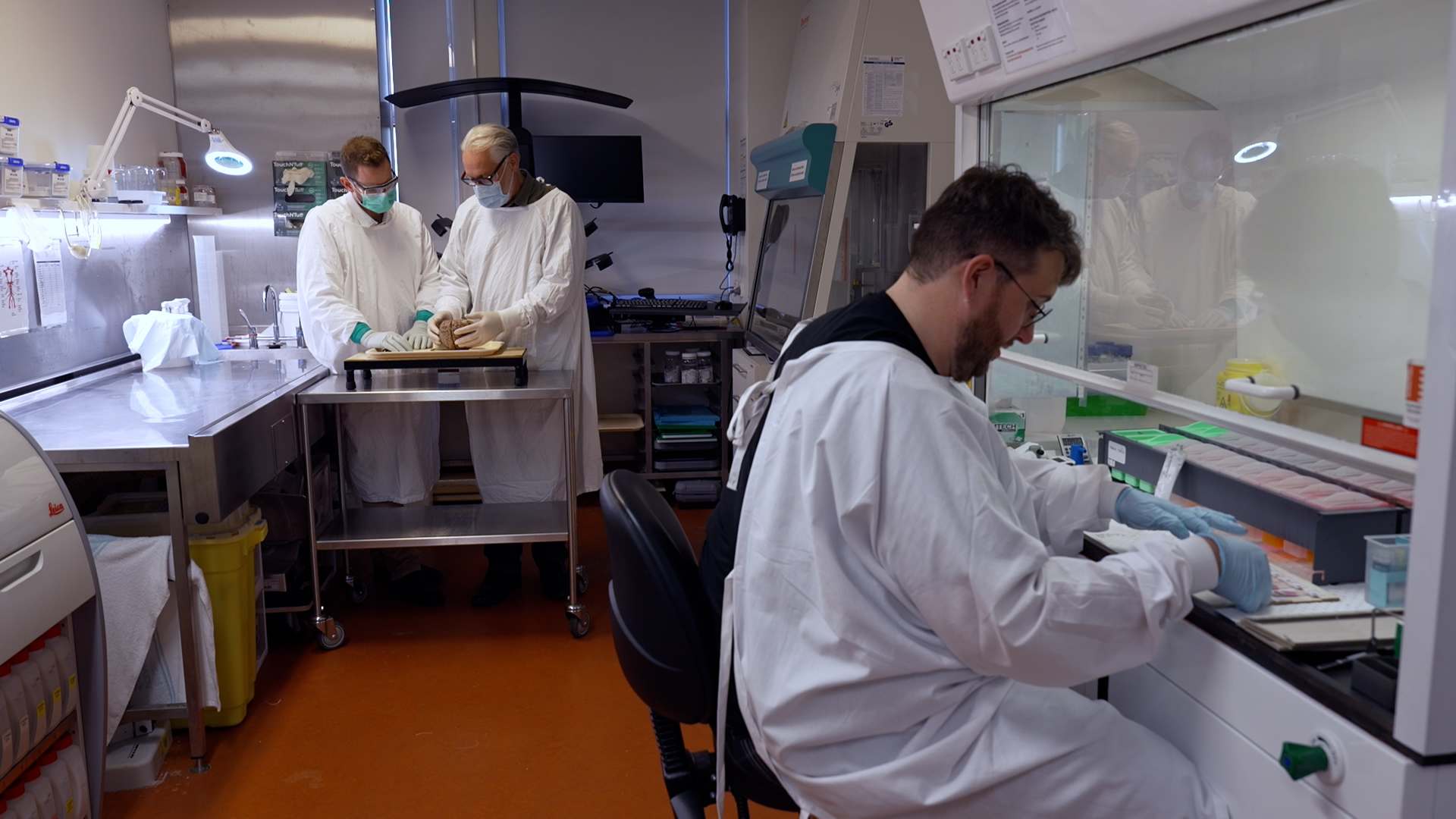
Australian Sports Brain Bank
Research instituteWikipedia
9
MENTIONS
5
EPISODES
4
PODCASTS
Search complete. 9 mentions across 5 episodes found for "Australian Sports Brain Bank".
Oct 4, 2026

Ross WalkerHOST
We're seeing heartbreaking stories of past players suffering from CTE.
Ross WalkerHOST
Why is it so critical to support research through initiatives like Brain Donation to the Australian Sports Brain Bank?
Adrian CohenGUEST
But it
Ross WalkerHOST
used to be
Adrian CohenGUEST
Very few people have a full neurological autopsy.
Adrian CohenGUEST
You have to put your hand up and say, either I'm worried that myself or a member of my family might have this condition, therefore I want to donate my brain to research, or you might say, I've never played any of those things, but you need lots of normal brains so we can compare to those people that have played contact sports.
Adrian CohenGUEST
So the Australian Sports Brain Bank is easy to find online.
Adrian CohenGUEST
It costs you nothing to put your name down.
Ross WalkerHOST
We're seeing heartbreaking stories of past players suffering from CTE.
Ross WalkerHOST
Why is it so critical to support research through initiatives like Brain Donation to the Australian Sports Brain Bank? But
Adrian CohenGUEST
it used to be said that we didn't have this disease, CTE, in Australia.
Adrian CohenGUEST
But it's an American disease.
Adrian CohenGUEST
Very few people have a full neurological autopsy.
Adrian CohenGUEST
You have to put your hand up and say, either I'm worried that myself or a member of my family might have this condition, therefore I want to donate my brain to research, or you might say, I've never played any of those things, but you need lots of normal brains so we can compare to those people that have played contact sport.
Adrian CohenGUEST
So the Australian Sports Brain Bank is easy to find online.
Adrian CohenGUEST
It costs you nothing to put your name down.

Kelly StarrettHOST
Comma, what we're starting to see now, and I wanna talk about, there were these two big studies, one, uh, in the United States, and then one in Australia, looking at, um, CTE in rugby and in football.
Kelly StarrettHOST
Um, basically the same week, the Australian Sports Brain Bank reported there were 31 of, um, of the first 51 rugby league brains they'd examined, 61% had CTE.
Kelly StarrettHOST
In one case, there was a 20-year-old young kid who started playing at, rugby at age five.
Kelly StarrettHOST
And then there was this other big study that came out, uh, in the U- uh, in the United States, and what they found is basically one in four NFLers had CTE, and those were just of the brains they looked at, and people suspect CTE is much higher.

Joanna GlengarryGUEST
We do.
Joanna GlengarryGUEST
It's something that we've had a lot of engagement with the Australian Sports Brain Bank, but also in...
Joanna GlengarryGUEST
A lot of engagement of people in the community have said either during life that they've given an indication that they'd love their brain to be looked at for this after death.
Joanna GlengarryGUEST
And we're happy to be part of that and facilitate that investigation that the Australian Sports Brain Bank is doing.
Joanna GlengarryGUEST
And really learning about the extent of repeated head injury is in sport but also in domestic violence as well and there have been cases where people in an interpersonal violence setting have had repeated head injuries and have developed the same thing so yes it's an important and hot topic in sport that we need to learn more about but also for others who are sustaining that repeated head trauma and learning more about how prevalent is that It's early days at the moment, but it certainly has been described.
Neil MitchellHOST
A lot of doctors I know talk about, still, and these are people into their 60s, talk about the first patient they lost stays with them.

Rhys GrangerHOST
Dr. Buckland is the Head of Department of Neuropathology at the Royal Prince Alfred Hospital in Sydney and a Clinical Associate Professor at the University of Sydney.
Rhys GrangerHOST
He is the founder and director of the Australian Sports Brain Bank established in 2018, looks at chronic traumatic encephalopathy or CTE.
Rhys GrangerHOST
Dr. Buckland is also the co-founder of Brainstorm, a brain cancer research initiative at RPA and leads research spent in glaucomas, neurodegenerative disease and molecular neuropathology.
Rhys GrangerHOST
Dr. Buckland, massive honor and welcome to the podcast.
18 MINS LATER
Rhys GrangerHOST
And then the last couple of years it's come out with the grains.
Rhys GrangerHOST
So completely get that.
Rhys GrangerHOST
Then when it comes to brain donations with the Australian Sports Brain Bank, how can that help with the brain donations in terms of supporting the Australian Sports Brain Bank? But then also on a more personal level, I don't know if yourself has been involved with this given that in Australia, it's relatively early.
Rhys GrangerHOST
How difficult is it actually asking a person to donate a family member's brain within a specific time period? Because obviously a person's passed and they need to start organizing a funeral and then you got cultural sensitivities.