Auslan
Sign languageWikipedia
50
MENTIONS
21
EPISODES
19
PODCASTS
Search complete. 50 mentions across 21 episodes found for "Auslan".
Sep 29, 2026

CJGUEST
...
CJGUEST
I know, I have a diploma of Auslan, so I do know-
JonasHOST
Mm
CJGUEST
... and I, I worked in the deafblind space as a support, volunteer support-

Irene HolubGUEST
Actually, I don't have training in theatre myself.
Irene HolubGUEST
I did direct a show in 2019, which was really more of a mixed media type of performance that involved projection, sound, performance, poetry in Auslan.
Irene HolubGUEST
But my background is multimedia arts.
Irene HolubGUEST
I've always been involved heavily in the arts world with a range of different media, because I've got a lot to say.
Irene HolubGUEST
through colours, through shapes, through movement, not really understanding or having language in the form that we would understand it as communication.
Irene HolubGUEST
My earliest memory is actually a visual language.
Irene HolubGUEST
So later, of course, I came to learn Auslan, but that was much later in life.
Irene HolubGUEST
So up until that point, I was really encouraged to leave sign language aside.

Jacquelyn Ben-ZekryHOST
Right? And-
Joel EdgertonGUEST
Australian Sign Language.
Jacquelyn Ben-ZekryHOST
Uh, but- [laughs]
Blake CrouchHOST
Yeah.

BecHOST
That's a lot.
BecHOST
We're in Auslan in Australia.
MoroHOST
Yeah, and it's kind of funny, isn't it? Because you kind of think of spoken languages, of course, we speak differently.
MoroHOST
But in my head, I go, oh, why couldn't there be one sign language?
BecHOST
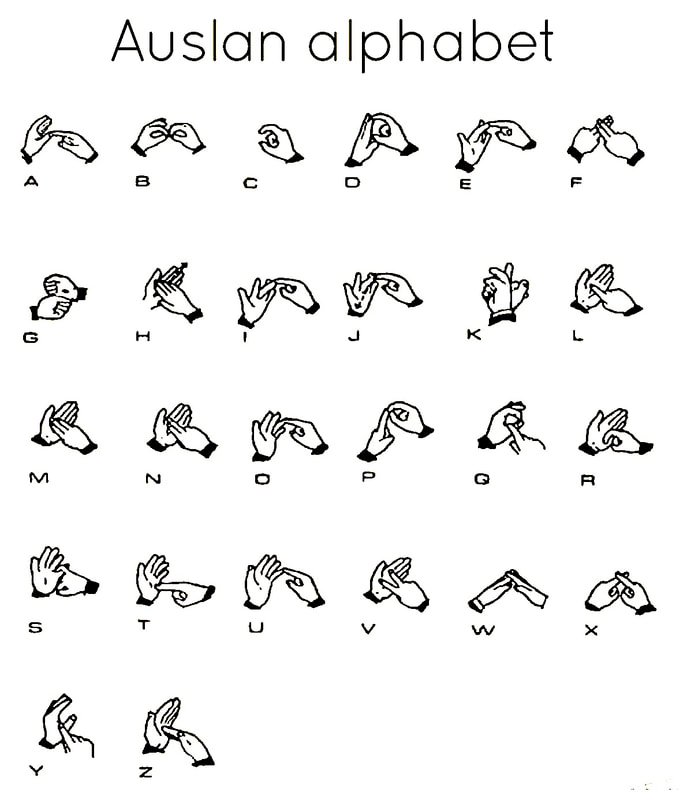
can do the alphabet.
BecHOST
That's about where I go.
BecHOST
My sister can speak Auslan, which is
MoroHOST
really cool.

Erin WestHOST
We know that most of you access this podcast in an auditory format.
Erin WestHOST
Today, we really encourage you to stop, go to the show notes, and follow the instructions to access the video format of this episode, which is presented in Auslan and English, also with captions.
Erin WestHOST
So today, we're lucky to be joined by Dr. Ramis McCrae, a Deaf Cultural and Auslan consultant, researcher, and advocate.
Erin WestHOST
Dr. McRae's work focuses on communication accessibility, deaf wellbeing, and supporting community connection through a strengths-based lens.
Erin WestHOST
Dr. McRae is deaf and will be communicating in Auslan today.
Erin WestHOST
And we're also joined by Genevieve Cassin, who will be providing Auslan English interpretation for our conversation.
Erin WestHOST
In today's episode, we're going to explore how communication access, sign language and deaf culture can support identity and wellbeing.
Erin WestHOST
We'll also discuss the importance of communication and human rights and how speech pathologists and other professionals can be better allies to the deaf community.

Adam RozenbachsHOST
My...
Adam RozenbachsHOST
One of my favorite things at shows now, gigs, is the Auslan interpreter.
Rosie WaltonHOST
Oh, yeah.
Adam RozenbachsHOST
Because they will sign a song.
Mick MolloyHOST
Looks like dry humping.
Mick MolloyHOST
A lot of dry humping.
Rosie WaltonHOST
I've done gigs with the Auslan interpreter.
Adam RozenbachsHOST
Yeah.

Dylan NunnGUEST
Not a problem at all, mate.
Dylan NunnGUEST
And if I can just do a real quick shout-out for my daughter, Emily, who did the Auslan signing last night at the Festival of Music at the Entertainment Centre.
Dylan NunnGUEST
Oh, wow.
Dylan NunnGUEST
So she actually specifically asked me to say that.

Andrew HeatonHOST
That is to say that it, it's unrelated.
Andrew HeatonHOST
Like Australian Sign Language is completely different than American Sign Language because they were developed separately, so they're completely unintelligible on another.
Andrew HeatonHOST
And a lot of the parents were kinda having debates of like, "But if we give our kid a cochlear implant, they won't speak our, they won't need to speak our language.
Andrew HeatonHOST
Maybe our language would die out." And so there were these kind of internal debates as to like if, if we, if we, quote-unquote, "fix ourselves," is our culture gonna disappear? 'Cause we don't want our culture to disappear.

Hannah McPiercyGUEST
I certainly tried.
Hannah McPiercyGUEST
I've been learning Auslan, which is the Australian sign language, and I can communicate with that.
Hannah McPiercyGUEST
But it wasn't just that my hearing had been taken.
Hannah McPiercyGUEST
It was that I'd lost my vestibular system.

JulesPANELIST
And they also – part of the issue is that Kenya lacks any standardised sign language.
JulesPANELIST
So they don't have a – like Auslan we have here in Australia, they don't have a standardised sign language.
JulesPANELIST
Oh, really? Yeah.
JulesPANELIST
So it makes it really difficult to explain concepts like maths and science, makes it really difficult to teach.
11 more episodes mention Auslan.
Create an account to see the whole feed, search across every transcript, and follow the entities you care about.