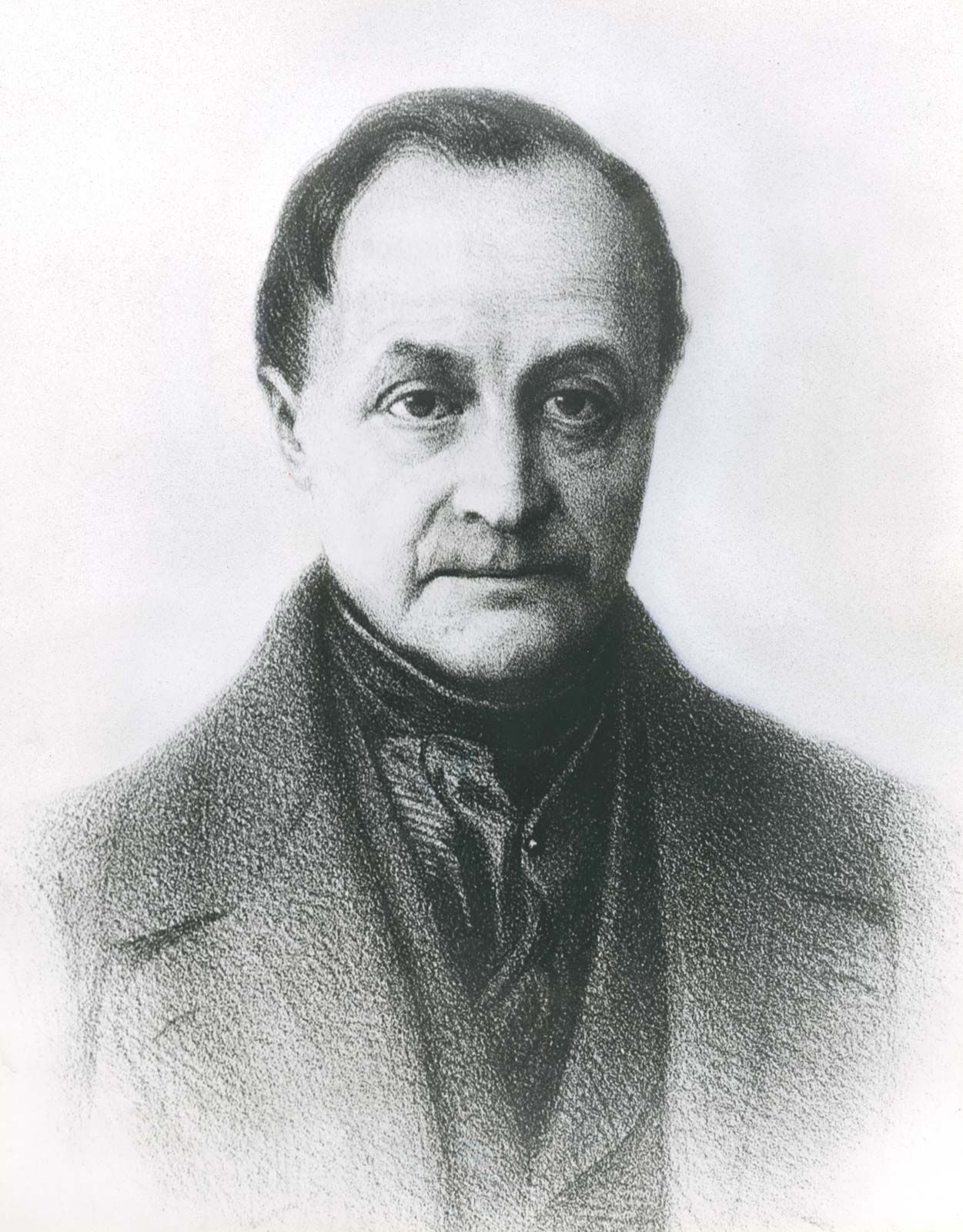
Auguste Comte
French philosopher and writerWikipedia
535
MENTIONS
69
EPISODES
58
PODCASTS
Search complete. 535 mentions across 69 episodes found for "Auguste Comte".
Sep 11, 2026

Amelia ChesleyNARRATOR
a philosophy which no longer discussing the essence of things first causes the aim of life and similar symbolic expressions, and repudiating all sorts of anthropomorphism, the endowment of natural phenomena with human characteristics, should be a digest and unification of all our knowledge, a philosophy which, proceeding from the simple to the complex, would furnish a key to the understanding of all nature in its entirety, and through that, indicate to us the lines of further research and the means of discovering new yet unknown correlations so-called laws while at the same time it would inspire us with confidence in the correctness of our conclusions however much they may differ from current superstitions such attempts at a constructive synthetic philosophy were made several times during the nineteenth century the chief of them being those of auguste comte and of herbert spencer on these two we shall have to dwell The need of such a philosophy as this was admitted already in the 18th century by the philosopher and economist Turgeau, and subsequently, even more clearly, by Saint-Simon.
Amelia ChesleyNARRATOR
As has been stated above, the encyclopedists, and likewise Voltaire in his Philosophical Dictionary, had already begun to construct it.
Amelia ChesleyNARRATOR
In a more rigorous scientific form, which would satisfy the requirements of the exact sciences, it was now undertaken by Auguste Comte.
Amelia ChesleyNARRATOR
It is well known that Comte acquitted himself very ably of his task, so far as the exact sciences were concerned.
Amelia ChesleyNARRATOR
He was quite right in including the science of life, biology, and that of human societies, sociology, in the circle of sciences that compassed by his positive philosophy.
Amelia ChesleyNARRATOR
And his philosophy has had a great influence upon all scientists and philosophers of the 19th century.
Amelia ChesleyNARRATOR
But why was it that this great philosopher proved so weak the moment he took up, in his positive politics, the study of social institutions, especially those of modern times? This is the question which most admirers of Comte have asked themselves.
Amelia ChesleyNARRATOR
How could such a broad and strong mind come to the religion which Comte preached in those closing years of his life? Le Très and Mill, it is well known, refused even to recognize Comte's politics as part of his philosophy.

Robert MorrellNARRATOR
Another factor in the thought of those days attracted but little attention in the press, though there is a long article in The Spectator at the beginning of 1882 on the ever-increasing wonder of that strange faith, positivism.
Robert MorrellNARRATOR
It is difficult for the present generation to realize how large a space in the minds of the young men of the eighties was occupied by the religion invented by Auguste Comte.
Robert MorrellNARRATOR
Of this, however, more must be said on a later page.
Robert MorrellNARRATOR
But perhaps the most significant feature in the periodical literature of the time is what it omits.
6 MINS LATER
Robert MorrellNARRATOR
Our parents, who read neither Spencer nor Huxley, lived in an intellectual world which bore no relation to our own.
Robert MorrellNARRATOR
And cut adrift as we were from the intellectual moorings of our upbringings, recognizing, as we did, that the older men were useless as guides in religion, in science, in philosophy, because they knew not evolution, we also felt instinctively that we could accept nothing on trust from those who still believed that the early chapters of Genesis accurately described the origin of the universe, and that we had to discover somewhere for ourselves what were the true principles of the then recently invented science of sociology.
Robert MorrellNARRATOR
One man there was who professed to offer us an answer, Auguste Comte.
Robert MorrellNARRATOR
He too was pre-Darwinian, but his philosophy accepted science, future as well as past.

TroubleKittyNARRATOR
The attempt has often been made to classify these various faiths under some few general headings.
TroubleKittyNARRATOR
The scheme of Auguste Comte still has supporters.
TroubleKittyNARRATOR
He taught that man begins with fetishism, advances to polytheism, and at last rises to monotheism.
TroubleKittyNARRATOR
More in vogue at present is the theory that the simplest and lowest form of religion is individual.

Bryn RobertsNARRATOR
It was The Count of Monte Cristo, Dumas' terrible romance.
Bryn RobertsNARRATOR
My civilized fool read everything, beginning with the signboards of the public houses and finishing with Auguste Comte, which was lying in my trunk together with other neglected books that I did not read.
Bryn RobertsNARRATOR
But of the whole mass of written and printed matter, he only approved of terrible, strongly exciting novels with celebrated personages, poison, and subterranean passages.
Bryn RobertsNARRATOR
All the rest he dubbed nonsense.

Carl ManchesterNARRATOR
Religion, the most powerful of the elements which have entered into the formation of moral feeling, having almost always been governed either by the ambition of a hierarchy seeking control over every department of human conduct, or by the spirit of Puritanism; and some of those modern reformers who have placed themselves in strongest opposition to the religions of the past have been no way behind either churches or sects in their assertion of the right of spiritual domination.
Carl ManchesterNARRATOR
M. Comte, in particular, whose social system, as unfolded in his Système de Politique Positive, aims at establishing, though by moral more than by legal appliances, a despotism of society over the individual, surpassing anything contemplated in the political ideal of the most rigid disciplinarian among the ancient philosophers.
Carl ManchesterNARRATOR
Apart from the peculiar tenets of individual thinkers, there is also in the world at large an increasing inclination to stretch unduly the powers of society over the individual, both by the force of opinion and even by that of legislation; and as the tendency of all the changes taking place in the world is to strengthen society and diminish the power of the individual, this encroachment is not one of the evils which tend spontaneously to disappear, but, on the contrary, to grow more and more formidable.
Carl ManchesterNARRATOR
The disposition of mankind, whether as rulers or as fellow-citizens, to impose their own opinions and inclinations as a rule of conduct on others, is so energetically supported by some of the best and by some of the worst feelings incident to human nature, that it is hardly ever kept under restraint by anything but want of power.

Amelia ChesleyNARRATOR
A philosophy which, proceeding from the simple to the complex, would furnish a key to the understanding of all nature in its entirety, and through that, indicate to us the lines of further research and the means of discovering new, yet unknown correlations, so-called laws, while at the same time it would inspire us with confidence in the correctness of our conclusions, however much they may differ from current superstitions.
Amelia ChesleyNARRATOR
Such attempts at a constructive synthetic philosophy were made several times during the 19th century, the chief of them being those of Auguste Comte and of Herbert Spencer.
Amelia ChesleyNARRATOR
On these two we shall have to dwell.
Amelia ChesleyNARRATOR
The need of such a philosophy as this was admitted already in the 18th century by the philosopher and economist Turgot, and subsequently, even more clearly, by Saint-Simon.
Amelia ChesleyNARRATOR
As has been stated above, the encyclopedists, and likewise Voltaire in his philosophical dictionary, had already begun to construct it.
Amelia ChesleyNARRATOR
In a more rigorous scientific form, which would satisfy the requirements of the exact sciences, it was now undertaken by Auguste Comte.
Amelia ChesleyNARRATOR
It is well known that Comte acquitted himself very ably of his task so far as the exact sciences were concerned.
Amelia ChesleyNARRATOR
He was quite right in including the science of life, biology, and that of human societies, sociology, in the circle of sciences that compassed by his positive philosophy.

Bryn RobertsNARRATOR
It was The Count of Monte Cristo, Dumas' terrible romance.
Bryn RobertsNARRATOR
My civilized fool read everything, beginning with the signboards of the public houses and finishing with Auguste Comte, which was lying in my trunk together with other neglected books that I did not read.
Bryn RobertsNARRATOR
But of the whole mass of written and printed matter, he only approved of terrible, strongly exciting novels with celebrated personages, poison, and subterranean passages.
Bryn RobertsNARRATOR
All the rest he dubbed nonsense.

David WalesNARRATOR
PART OF A LECTURE ON POLITICAL INSTITUTIONS, DELIVERED AT THE POSITIVIST SCHOOL, MAY 11. footnote the present course of lectures on a special subject has made no pretension to present the religious aspect of positivism and i shall not venture to intrude on one of its gravest functions the due commemoration of the dead but nothing that is spoken here should have a merely scientific form nor can i be satisfied until i have tried to give expression to the feeling which must be foremost in the minds of all present It is impossible to forget that it was by Mr.
David WalesNARRATOR
Mill that Comte was first made known in this country, and that by him first in this country the great doctrines of positive thought, the supreme reign of law in the moral and social world, no less than in the intellectual world, were reduced to system and life.
David WalesNARRATOR
This conception, as a whole, has been gradually forming in the minds of all modern thinkers, but its full scope and force were presented to Englishmen for the first time by Mr.
David WalesNARRATOR
Mill.

Marianne BodorfNARRATOR
He has made his impress on eternity.
Marianne BodorfNARRATOR
Opinions may differ as to what constitutes Harriet Martineau's best work, but my view is that her translation and condensation of Augustus Comte's six volumes into two will live when all her other work is forgotten.
Marianne BodorfNARRATOR
Comte's own writings were filled with many repetitions and rhetorical flourishings.
Marianne BodorfNARRATOR
He was more of a philosopher than a writer.
Marianne BodorfNARRATOR
He had an idea too big for him to express, but he expressed it right bravely.
Marianne BodorfNARRATOR
She caught the idea and translated the thought rather than the language.
Marianne BodorfNARRATOR
And so it has come about that her work has been literally translated back into French and is accepted as a textbook of positivism, while the original works of the philosopher are merely collected by museums and bibliophiles as curiosities.
Marianne BodorfNARRATOR
Comte taught that man passes through three distinct mental stages in his development.

speaker_1HOST
Part 3, Order and Progress.
speaker_1HOST
I introduced our old friend, Auguste Comte, and his philosophy of positivism back in Chapter 55.
speaker_1HOST
As you may remember, he believed that mankind was reaching a new stage of development in which scientific learning, including in the social sciences, would not only serve as the foundation for understanding truth and morality, it would also unleash an age of industrial-scale human progress.
speaker_1HOST
In the late 1840s, he expanded on this idea, developing what he called the religion of humanity.
59 more episodes mention Auguste Comte.
Create an account to see the whole feed, search across every transcript, and follow the entities you care about.