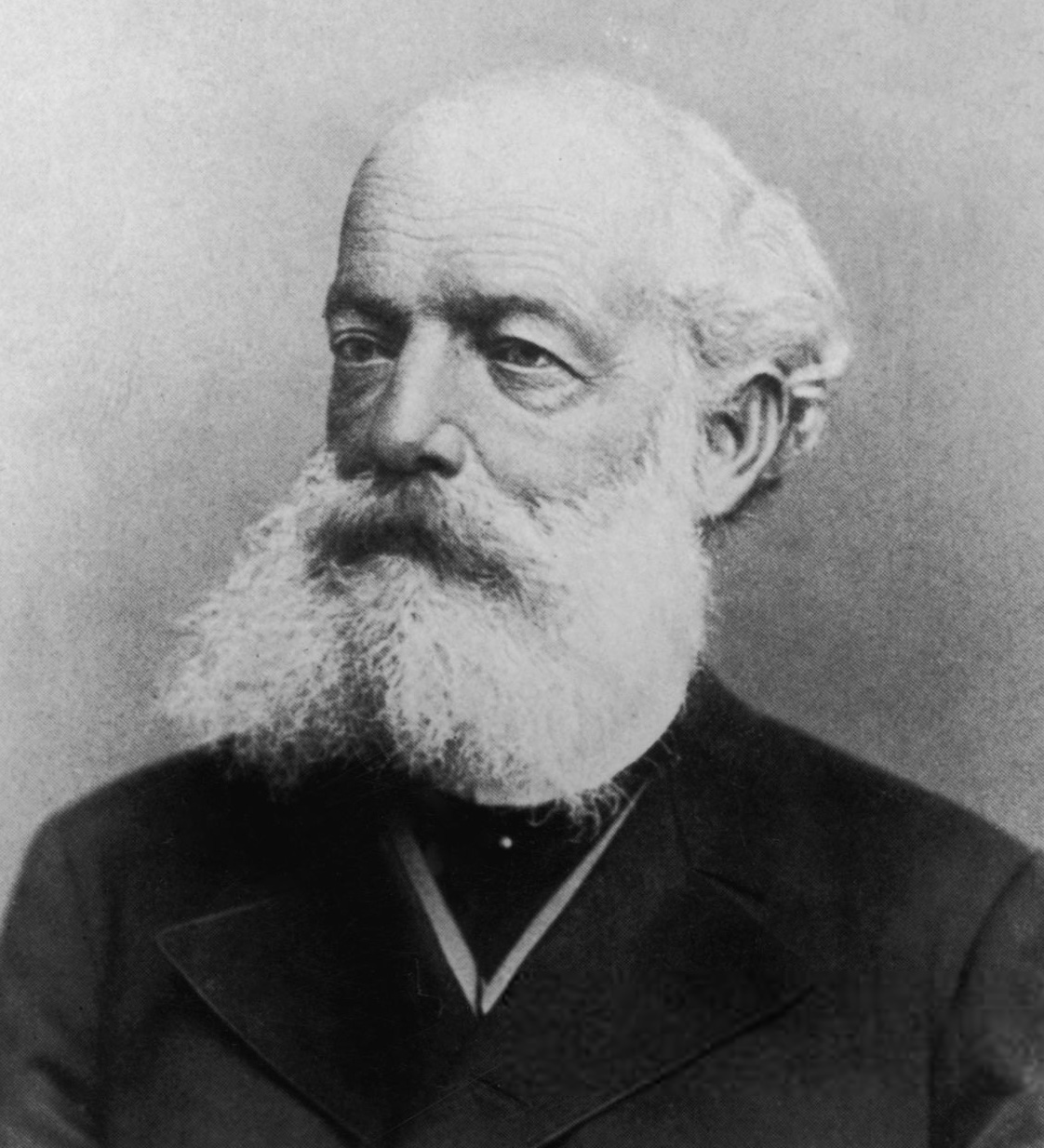
August Kekulé
German organic chemistWikipedia
39
MENTIONS
9
EPISODES
7
PODCASTS
Search complete. 39 mentions across 9 episodes found for "August Kekulé".
Oct 19, 2026

David KrakauerGUEST
...
David KrakauerGUEST
he wrote this beautiful essay called The Kekulé Problem.
Gary O'ReillyHOST
Yes.
David KrakauerGUEST
Right, the discovery of the structure of the benzene ring, and that was kind of a dreamt solution.
Gary O'ReillyHOST
Mm
David KrakauerGUEST
... eats its own tail.
David KrakauerGUEST
And so Kekulé wakes up and he says, "Wait a minute.
David KrakauerGUEST
What's going on? What are you trying to tell me? Why can't you just tell me?" And the unconscious says, "I don't do language, you moron." Right.

speaker_5HOST
The painter Salvador Dali did the exact same thing, to harvest surreal imagery for his art, but he used a heavy metal key over a plate.
speaker_5HOST
Even in modern science, the chemist August Kekulé famously claimed he discovered the ring structure of the benzene molecule, a massive breakthrough in organic chemistry, because he was dozing off by a fire and had a hypnagogic vision of a snake eating its own tail.
speaker_4HOST
So it's a space of incredible creative potential.
speaker_4HOST
But this liminal space isn't just for geniuses trying to invent things.

speaker_0NARRATOR
The fact that sleepiness exists in creatures as simple as fruit flies suggests that the biological mechanisms behind drowsiness are extremely ancient, possibly hundreds of millions of years old.
speaker_0NARRATOR
Some scientists believe the basic chemistry of sleepiness may have evolved before the brain itself in single-celled organisms that needed to alternate between active and resting states.
speaker_0NARRATOR
In humans, the timing and intensity of sleepiness is controlled by two separate systems working together, which scientists call the two-process model of regulation.
speaker_0NARRATOR
This model was proposed in nineteen eighty-two by a Swiss researcher named Alexander Borbely, and it remains the most widely accepted framework for understanding drowsiness.
1 HR 4 MINS LATER
speaker_0NARRATOR
The body's peak nighttime level is typically equivalent to about zero point one to zero point three milligrams in the bloodstream, making even a one milligram supplement a supraphysiological dose.
speaker_0NARRATOR
Unlike prescription medications, melatonin does not appear to be habit-forming, and stopping supplementation does not cause withdrawal symptoms or rebound.
speaker_0NARRATOR
The history of prescription medications for this purpose is a story of progressive refinement from dangerous, blunt sedatives to increasingly targeted compounds that work with the brain's own chemistry rather than against it.
speaker_0NARRATOR
In the nineteenth century, substances like chloral hydrate, potassium bromide, and even chloroform were used to induce rest in patients who could not achieve it on their own, and all of these carried significant risks of overdose, organ damage, and side effects that were sometimes worse than the insomnia they were intended to treat.

Deboki ChakravartiHOST
Hi, I'm Deboki Chakravarti, and welcome to Crash Course Organic Chemistry.
Deboki ChakravartiHOST
The German chemist, August Kekulé, is one of those people who's often considered a founder of modern organic chemistry.
Deboki ChakravartiHOST
In a speech at a symposium in 1890, he told the audience that 30 years earlier, he was dozing near a fire in Ghent, Belgium, when the image of a snake devouring its own tail came to him.
Deboki ChakravartiHOST
This dream, he said, was what led him to the chemical structure of benzene, a flat ring of six carbon atoms with the formula C6H6.
Deboki ChakravartiHOST
The author was Auguste Laurent, but the work was actually published after his death by some of his colleagues.
Deboki ChakravartiHOST
Laurent is probably most famous for his work developing the functional group nomenclature that we still use today, that whole business of alkanes ending in ane, alkenes in ene, and so on.
Deboki ChakravartiHOST
Other scientists have speculated that Kekulé chose to describe his revelation as a dream to avoid sharing credit with his colleagues.
Deboki ChakravartiHOST
Perhaps that's true, but for now, it's his name that we find in textbooks.

David EaglemanHOST
We experience stories.
David EaglemanHOST
And in fact, there are various stories of someone discovering something in dreams, like Kekulé thinking of the structure of the benzene ring based on a dream he had of two snakes biting each other's tails, or Paul McCartney dreaming the melody for the song Yesterday.
David EaglemanHOST
So what's up with dream content? The key is that the brain is a storytelling machine.
David EaglemanHOST
Your brain is deeply carved with roadways that represent your experience in the world, and these are stored in what are called associative neural networks, which means that everything connects to other things based on how they relate.

David KrakauerGUEST
...
David KrakauerGUEST
he wrote this beautiful essay called The Kekulé Problem.
Neil deGrasse TysonHOST
Yes.
David KrakauerGUEST
Right? The discovery of the structure of the benzene ring, and that was kind of a dreamt solution.
speaker_2NARRATOR
Serotonin and norepinephrine, by contrast, drop to very low levels.
speaker_2NARRATOR
This shift in brain chemistry may partly explain why dreams feel so different from waking thought.
speaker_2NARRATOR
The absence of norepinephrine may also explain why dreams are so quickly forgotten, since it plays a key role in encoding new memories.
speaker_2NARRATOR
Melatonin, the hormone that helps regulate the body's cycle, does not directly cause dreams, but its role in triggering and maintaining rest creates the conditions under which dreaming occurs.
2 HRS 6 MINS LATER
speaker_2NARRATOR
We read every single one.
speaker_2NARRATOR
It may seem like a fairly ordinary subject, but even the most familiar things are made up of countless small details.
speaker_2NARRATOR
We will begin with what a leaf actually does all summer, continue through the chemistry that hides inside every green surface, and eventually reach the quiet reasons a tree lets go of its leaves entirely.
speaker_2NARRATOR
Along the way, we will notice the simple processes, forgotten history, and mildly unusual facts that usually pass without much attention.
speaker_4NARRATOR
The fact that sleepiness exists in creatures as simple as fruit flies suggests that the biological mechanisms behind drowsiness are extremely ancient, possibly hundreds of millions of years old.
speaker_4NARRATOR
Some scientists believe the basic chemistry of sleepiness may have evolved before the brain itself, in single-celled organisms that needed to alternate between active and resting states.
speaker_4NARRATOR
In humans, the timing and intensity of sleepiness is controlled by two separate systems working together, which scientists call the two-process model of regulation.
speaker_4NARRATOR
This model was proposed in nineteen eighty-two by a Swiss researcher named Alexander Borbély, and it remains the most widely accepted framework for understanding drowsiness.
1 HR 7 MINS LATER
speaker_4NARRATOR
The body's peak nighttime level is typically equivalent to about 0.1 to 0.3 milligrams in the bloodstream, making even a 1 milligram supplement a supraphysiological dose.
speaker_4NARRATOR
Unlike prescription medications, melatonin does not appear to be habit-forming, and stopping supplementation does not cause withdrawal symptoms or rebound.
speaker_4NARRATOR
The history of prescription medications for this purpose is a story of progressive refinement from dangerous, blunt sedatives to increasingly targeted compounds that work with the brain's own chemistry rather than against it.
speaker_4NARRATOR
In the 19th century, substances like chloral hydrate, potassium bromide, and even chloroform were used to induce rest in patients who could not achieve it on their own, and all of these carried significant risks of overdose, organ damage, and side effects that were sometimes worse than the insomnia they were intended to treat.