atrial heart septal defect
ConditionWikipedia
8
MENTIONS
4
EPISODES
4
PODCASTS
Search complete. 8 mentions across 4 episodes found for "atrial heart septal defect".
Sep 13, 2026

Nimisha AithalHOST
And this is where associated defects become life-saving for the baby.
Nimisha AithalHOST
a patent ductus arteriosus, a large ASD or a ventricular septal defect.
Nimisha AithalHOST
Any of these can allow bidirectional shunting, meaning some oxygenated blood bleeds across into the systemic circuit and some deoxygenated blood bleeds across into the pulmonary circuit.
Nimisha AithalHOST
The more mixing there is, the less cyanotic the baby.
11 MINS LATER
Nimisha AithalHOST
This is also called the Rashkind procedure.
Nimisha AithalHOST
This is performed at the bedside under echocardiogram guidance or in a cath lab.
Nimisha AithalHOST
Here, a balloon catheter is passed through a vein, advanced into the right atrium, threaded across the foramen ovale or the small ASD into the left atrium.
Nimisha AithalHOST
That balloon is then inflated and then forcibly pulled back across the septum, which tears a large defect into that interatrial septum.

Megan RollerGUEST
So when we think about shunts, one of the things I think about too is like a patient can actually have a naturally occurring shunt that we don't create either surgically or in the cath lab.
Megan RollerGUEST
And so things like an ASD, a pain PDA, or ductus arteriosus, those are all naturally occurring shunts.
Megan RollerGUEST
And then We tend to think about shunts more in terms of the ones that we create either surgically or in the cath lab, especially in patients with single ventricle physiology.
Megan RollerGUEST
That's where we see a lot of those shunts occurring from a surgical standpoint.
7 MINS LATER
Megan RollerGUEST
And I think the BDT shown is one of those that's also the historical development is also very interesting.
Megan RollerGUEST
So it was developed, I think, in like the 40s at Johns Hopkins.
Megan RollerGUEST
And it was outside the ASD closure.
Megan RollerGUEST
It was one of the most or one of the.

Sung HeeHOST
Do Jae-hak does his very first surgery, which is an ASD closure.
Sung HeeHOST
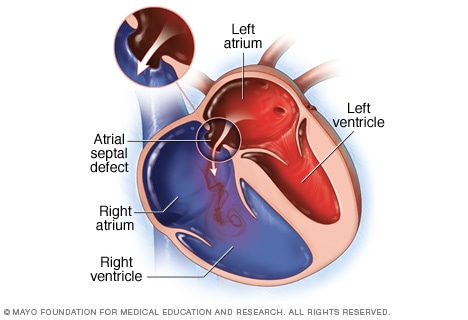
ASD stands for atrial septal defect, and this is a hole in the heart between the right and left atria, the two smaller chambers of the heart.
Sung HeeHOST
Now, the reason why this is significant is that because the pressures on the left side of the heart are higher than the right, blood will shunt through from the left to the right atrium, leading to excess blood flow from the right heart into the lungs.
Sung HeeHOST
And over time, this excessive blood flow will overload the circulation from the right heart into the lungs and cause damage to these blood vessels and lead to excessive blood pressure from the right heart into the lungs, also known as pulmonary hypertension.

Adrianne BischoffPANELIST
And when we did calculations of cardiac output, both the left and the right ventricular output were decreased.
Adrianne BischoffPANELIST
The PFO, ASD, atrial level communication shunt was bidirectional at the time.
Adrianne BischoffPANELIST
So at that time, the recommendation was to start epinephrine of 0.05 to support the systolic dysfunction of both ventricles and also Marinone, which was started at 0.5, given that the baby was kind of normal to even hypertensive.
Adrianne BischoffPANELIST
And there was a plan to then reassess a couple of hours later.
21 MINS LATER
Adrianne BischoffPANELIST
The pulmonary pressures are estimated to be half to two-thirds.
Adrianne BischoffPANELIST
The septum was a little bit flat, but the PDA is now almost all left to right.
Adrianne BischoffPANELIST
And the PFO-ASD is still left to right in direction of shunt.
Adrianne BischoffPANELIST
So what we see now that is the predominant physiology is that there's obvious significant biventricular hypertrophy with preserved systolic function.