Atomism
15
MENTIONS
9
EPISODES
9
PODCASTS
Search complete. 15 mentions across 9 episodes found for "Atomism".
Oct 7, 2026

Pamela NagamiNARRATOR
Eight.
Pamela NagamiNARRATOR
Atomism.
Pamela NagamiNARRATOR
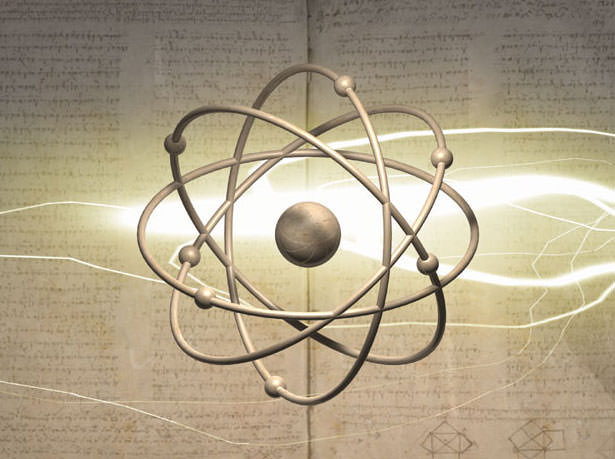
Before explaining how the theory of atoms arose, let me explain what it means.
Pamela NagamiNARRATOR
Atomism implies, first of all, that matter, or the substance of which bodies are composed, while it occupies space and is therefore extended, is not, like pure space, continuous, but discrete.
Pamela NagamiNARRATOR
That is, it consists of perfectly distinct and separate parts moving about in void space, solid, indivisible, impenetrable, differing from one another only in size and shape, capable of being united together in mechanical groups, but only communicating with one another by external contact and collision.
Pamela NagamiNARRATOR
In the next place, the atoms are so small as to lie beyond the reach of our senses; but assuming space to be infinitely extended, they are infinite in number; for otherwise the universe would in the course of infinite ages have disappeared by dissipation into the surrounding void.
Pamela NagamiNARRATOR
And he seems to have been the first to point out the distinction, since grown so familiar, between the two great sources of knowledge, sense, which gives us the appearances, and understanding, which gives us the reality of things.
Pamela NagamiNARRATOR
He owed it to the atomic theory.

Pamela NagamiNARRATOR
As it is, the essays alone remain to show what great things he might have done by limiting himself to the subjects with which they deal.
Pamela NagamiNARRATOR
The famous logical and physical treatises, the Novum Organum and the De Augmentis, notwithstanding their wealth and splendor of language, are to us at the present day less living than the fragments of early Greek thought, than most of Plato, than much of Aristotle, than Atomism as expounded by Lucretius.
Pamela NagamiNARRATOR
Macaulay rests his claim of the highest place among philosophers for Bacon, not on his inductive theory, to which the historian rightly denies any novelty, but on the new purpose and direction that the search for knowledge is assumed to have received from his teaching.
Pamela NagamiNARRATOR
On this view, the whole of modern science has been created by the desire to convert nature into an instrument for the satisfaction of human wants, an ambition dating from the publication of the Novum Organum.

Pamela NagamiNARRATOR
8.
Pamela NagamiNARRATOR
Atomism Before explaining how the theory of atoms arose, let me explain what it means.
Pamela NagamiNARRATOR
Atomism implies, first of all, that matter, or the substance of which bodies are composed, while it occupies space and is therefore extended, is not like pure space continuous but discrete.
Pamela NagamiNARRATOR
That is, it consists of perfectly distinct and separate parts moving about in void space, solid, indivisible, impenetrable, differing from one another only in size and shape, capable of being united together in mechanical groups, but only communicating with one another by external contact and collision.
Pamela NagamiNARRATOR
In the next place, the atoms are so small as to lie beyond the reach of our senses, but assuming space to be infinitely extended, they are infinite in number.
16 MINS LATER
Pamela NagamiNARRATOR
His image may still be seen on the coins of his native place, Clazomeni, probably copied from a statue erected there in his honor.
Pamela NagamiNARRATOR
14.
Pamela NagamiNARRATOR
Qualitative Atomism Democritus observed with truth that the astronomical heresies which brought Anaxagoras into such trouble were not new.

Pamela NagamiNARRATOR
Unlike the master, he declared, that the eternal reality was without a bound identifying it as would seem with infinite space and while denying movement or multiplicity to absolute being he allows them at least a place in thought as illusions of sense such an enlargement of view meant much how much will be apparent when we come to study the grandest result of early greek thought the atomic theory 8.
Pamela NagamiNARRATOR
ATOMISM Before explaining how the theory of atoms arose, let me explain what it means.
Pamela NagamiNARRATOR
Atomism implies, first of all, that matter or the substance of which bodies are composed, while it occupies space and is therefore extended, is not like pure space continuous but discrete.
Pamela NagamiNARRATOR
that is it consists of perfectly distinct and separate parts moving about in void space solid indivisible impenetrable differing from one another only in size and shape capable of being united together in mechanical groups but only communicating with one another by external contact and collision.
Pamela NagamiNARRATOR
In the next place, the atoms are so small as to lie beyond the reach of our senses.
Pamela NagamiNARRATOR
What distinguishes him as a philosopher is the enormous range of his interests.
Pamela NagamiNARRATOR
We have seen that the love of knowledge for its own sake was recognized at a very early time as the characteristic feature in philosophy.
Pamela NagamiNARRATOR
democritus expressed this passion vividly by saying i had rather discover a single new explanation than be king of persia but his ambition went beyond a knowledge of things which taken alone is merely science he asked what was the nature of knowledge itself thus giving a still wider extension to philosophy of which that question has ever since formed an integral part and he seems to have been the first to point out the distinction since grown so familiar between the two great sources of knowledge sense which gives us the appearances and understanding which gives us the reality of things he owed it to the atomic theory Atomism is a reasonable inference from our sensations, but at the same time, in a way, it denies them.

Vic NaumovGUEST
So their understanding of ancient hermetics and, like I said, theosophy and resurrectionism and esoteric Freemasonry and everything else, they're all on the same page.
Vic NaumovGUEST
So they're pulling information not from centralized Rockefeller books Atomism and anatomy and physiology, that's like this, right? They're pulling from 2000 years of mystery school information that is vitalistic.
Vic NaumovGUEST
So you need to have a think tank.
Vic NaumovGUEST
And I believe that the people in this inner circle, through that think tank, use various sources to create, first of all, to organize and write down the 33 principles.

The Cajun KnightHOST
Jesus Christ, these words.
The Cajun KnightHOST
This, uh, the Atomist worldview.
The Cajun KnightHOST
It's called the Empiricist, okay? Uh, included the idea that there must be many worlds.
The Cajun KnightHOST
There is an unlimited number of cosmoi, which is worlds, and some are similar to this one, and some are dissimilar.