Atomic clock
List of measuring instrumentsWikipedia
31
MENTIONS
6
EPISODES
6
PODCASTS
Search complete. 31 mentions across 6 episodes found for "Atomic clock".
Oct 31, 2026

Alan PerryHOST
If you want precise time, there's a really great app that I use because we synchronize with Kelowna's AM1150 and just for other things there.
Alan PerryHOST
I use an app called Atomic Clock on my iPhone, and you can change it whether you want it to be analog or digital.
Alan PerryHOST
I just use the free version there, so I get limited options there.
Alan PerryHOST
Okay.
Alan PerryHOST
So you will hear that coming up when we get to the top of the hour.
Alan PerryHOST
If you're listening on the podcast or on Sunday, we might be a few seconds off.
Alan PerryHOST
So again, it's called Atomic Clock Free on the Apple App Store.
Alan PerryHOST
And here's what happens at the top of the hour.

Judah LevineGUEST
Well, I think there are applications that depend on what's called UT1, which is the angle of the Earth with respect to the stars.
Judah LevineGUEST
And there was a lot of concern about a divergence between atomic time and UT1.
Judah LevineGUEST
The leap second business was essentially to try to keep them within one second.
Judah LevineGUEST
But there was some concern that you shouldn't abandon the link altogether.
Judah LevineGUEST
The second thing is that the leap second introduced a discontinuity in time interval because there was this extra second which was added into the time, but real-time processes like navigation didn't stop.
Judah LevineGUEST
And so when you wanted to measure the elapsed time, which was how you measure distance when measuring the elapsed time, you got into trouble because of this leap second business.
Judah LevineGUEST
But the real trigger was the concern that there would be a negative leap second, that the Earth was speeding up, and that instead of atomic time being ahead of the Earth, the Earth might be ahead of atomic time, and that the negative leap second had never been done before, never been used before.
Judah LevineGUEST
And so there were concerns that that would be a problem.

Steve HermanHOST
It was the railroads themselves.
Bill BernardoniHOST
Fast forward to today and we're using atomic clocks so precise that even the tiniest error can matter.
Bill BernardoniHOST
Not just for telling time, but for GPS, communications, and the technology we depend on each and every day.
Steve HermanHOST
So how do we go from the position of the sun to a system that measures time in billionths of a second?
29 MINS LATER
Bill BernardoniHOST
We've been looking at how Americans went from keeping time by the sun to adopting a standardized system that could connect an entire country.
Steve HermanHOST
But today, timekeeping involves something much more sophisticated than railroad schedules or mechanical clocks.
Steve HermanHOST
Atomic clocks help establish an incredibly precise international standard, and the technology built around that affects everything from the internet to satellite navigation.
Bill BernardoniHOST
And that precision matters.

Melvyn BraggHOST
It was only in the late 19th century that time was standardized globally and that Greenwich was chosen as the location of the prime meridian.
Melvyn BraggHOST
The history of the measurement of time is a long one, from earlier man tracing his days from sunrise to sunset, to the advent of atomic clocks in the 1950s.
Melvyn BraggHOST
We've constantly striven to calculate and control the time, but how did mechanisms for measuring time develop into such precise machines? And how did the changes in society drive the need for such precise timekeeping? With me to discuss the history of the measurement of time are Kristen Lippincott, former director of the Royal Observatory, Greenwich; Jim Bennett, director of the Museum of the History of Science at the University of Oxford; and Jonathan Betts, senior curator of horology at the Royal Observatory, Greenwich.
Melvyn BraggHOST
Kristen Lippincott, how did early, earliest civilizations measure using the natural phenomenon, measure time?
39 MINS LATER
Jonathan BettsGUEST
That's right.
Jonathan BettsGUEST
This was a sort of refinement of quartz, really.
Jonathan BettsGUEST
Uh, uh, atomic clocks actually have as their time standard a quartz clock.
Jonathan BettsGUEST
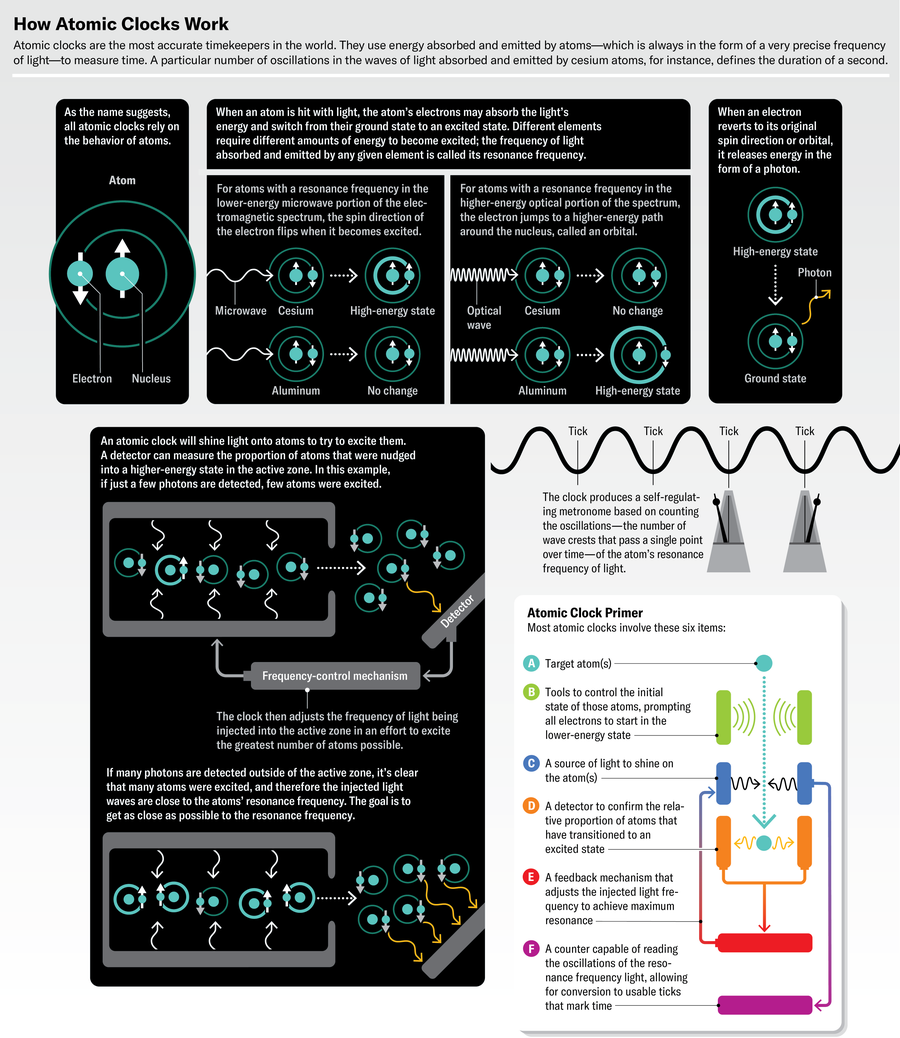
Uh, what, i- i- in simple terms, w- what an atomic clock does is to kind of fine-tune the quartz and, um, watch how that quartz is behaving, and it uses atomic technology to kind of check how the quartz is, uh, how the frequency of the quartz is running.

Melvyn BraggHOST
It was only in the late 19th century that time was standardized globally, and that Greenwich was chosen as the location of the prime meridian.
Melvyn BraggHOST
The history of the measurement of time is a long one, from earlier man tracing his days from sunrise to sunset, to the advent of atomic clocks in the 1950s.
Melvyn BraggHOST
We've constantly striven to calculate and control the time.
Melvyn BraggHOST
But how did mechanisms for measuring time develop into such precise machines? And how did the changes in society drive the need for such precise timekeeping? With me to discuss the history of the measurement of time are Kristen Lippincott, former director of the Royal Observatory, Greenwich; Jim Bennett, director of the Museum of the History of Science at the University of Oxford; and Jonathan Betts, senior curator of horology at the Royal Observatory, Greenwich.
40 MINS LATER
Jonathan BettsGUEST
That's right.
Jonathan BettsGUEST
This was a sort of refinement of quartz, really.
Jonathan BettsGUEST
Uh, uh, atomic clocks actually have as their time standard a quartz clock.
Jonathan BettsGUEST
Uh, what, i- i- in simple terms, what an atomic clock does is to kind of fine-tune the quartz and, um, watch how that quartz is behaving, and it uses atomic technology to kind of check how the quartz is, uh, how the frequency of the quartz is running.