Atom
49
MENTIONS
12
EPISODES
12
PODCASTS
Search complete. 49 mentions across 12 episodes found for "Atom".
Oct 26, 2026

Peggy TrevisanMODERATOR
And everything goes into use, absolutely everything.
Peggy TrevisanMODERATOR
And I can say that with confidence because every single atom and everything you see, touch, taste, feel is made up of atoms, right? A-T-O-M-S, right? Everything.
Peggy TrevisanMODERATOR
And atoms are threefold by nature, the way Yahweh made them.
Peggy TrevisanMODERATOR
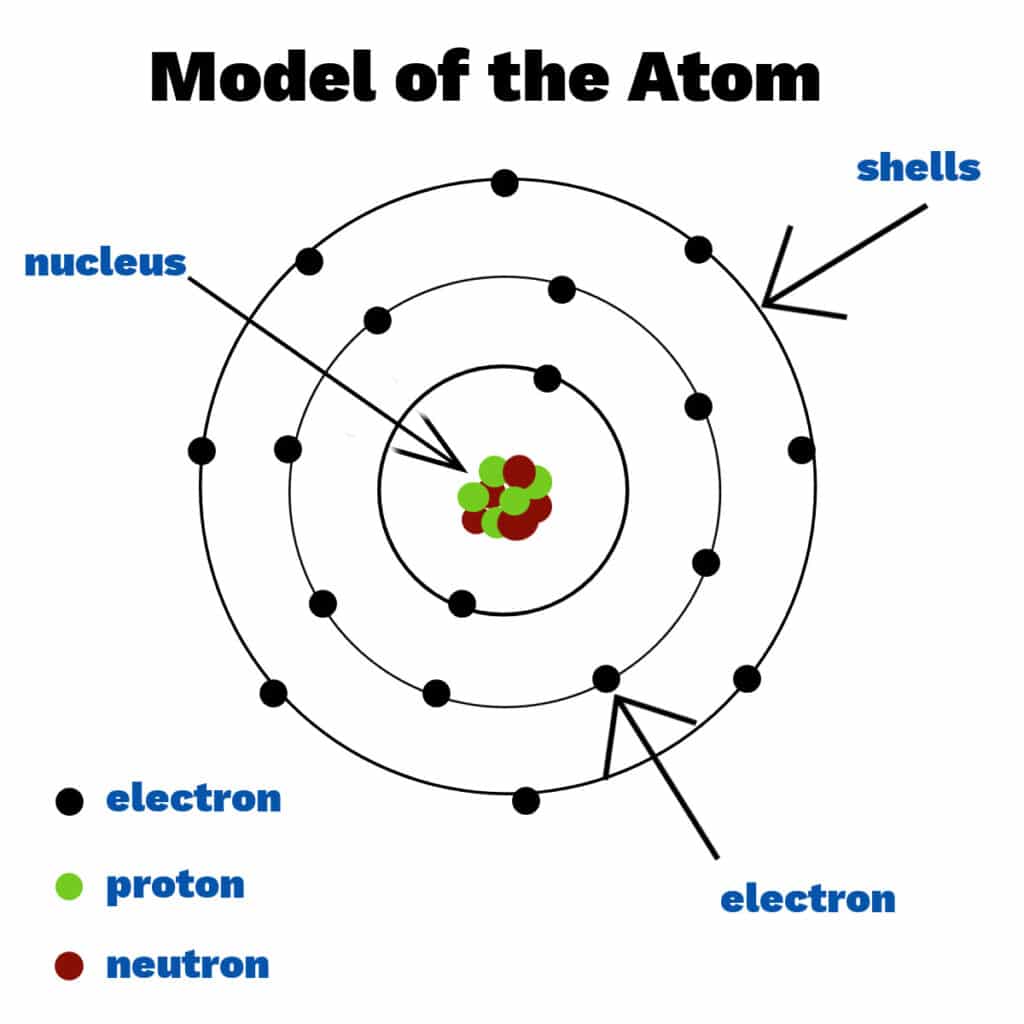
There's a most holy place, there's a proton, which has a positive charge, which makes sense, because this is where Yahweh said, I will dwell.

Ernest ChappellNARRATOR
Then he wasn't smiling at all.
Ernest ChappellNARRATOR
This one's spelled A-T-O-M.
Ernest ChappellNARRATOR
So I said, I don't get it, boss, but what you say goes.
Charles EgglestonVOICE_ACTOR
And I started out.

Adrian RogersSOUNDBITE_SPEAKER
In a moment, He says there in verse 51.
Adrian RogersSOUNDBITE_SPEAKER
The word moment is the word we get our word atom from.
Adrian RogersSOUNDBITE_SPEAKER
Not Adam, the man Adam, but A-T-O-M.
Adrian RogersSOUNDBITE_SPEAKER
It means an indivisible unit.
Adrian RogersSOUNDBITE_SPEAKER
That's what men first thought the atom was before the day of nuclear physics.

Adrian RogersSOUNDBITE_SPEAKER
In a moment.
Adrian RogersSOUNDBITE_SPEAKER
He says there in verse 51, the word moment is the word we get our word atom from.
Adrian RogersSOUNDBITE_SPEAKER
Not Adam the man atom, but A-T-O-M.
Adrian RogersSOUNDBITE_SPEAKER
It means an indivisible unit.
Adrian RogersSOUNDBITE_SPEAKER
That's what men first thought the atom was before the day of nuclear physics.

Preston DennettHOST
Earliest case I could find in Oahu actually involves humanoids, and boy, is it strange.
Preston DennettHOST
This comes from a gentleman by the name of Sidro L. Basa, and he wrote a letter to Ray Palmer, a researcher and publisher, and says that in 1924, while on Sand Island, this is a small island about two miles from the shore of Oahu, he was eight years old at the time and was playing hooky from school with a friend.
Preston DennettHOST
They were going to collect some crabs, and they spent much of the day collecting all these crabs, and around 4 p.m., Sidro's friend left, but Sidro stayed, hoping to catch more crabs.
Preston DennettHOST
And he says, as soon as his friend left, Sidro noticed what looked like a canoe to him with three very small children and a dog approaching the Sand Island and landed at the shore and got out.

MattHOST
Probably the best known of these was Fate Magazine, which was a magazine specializing in paranormal phenomena.
MattHOST
Originally founded by science fiction author and editor Ray Palmer, Fate was best known for their extensive coverage of UFOs, flying saucers, and aliens.
MattHOST
And they had even published several articles written by Kenneth Arnold, who's of course the original flying saucer guy, the guy who coined the term flying saucer in the first place.
MattHOST
But Fate Magazine is especially important to our story because in 1953, just one year after Al Bender founded the IFSB, they published a story about an alien encounter in the Appalachian wilderness of West Virginia.
9 MINS LATER
KatieHOST
Mm-hmm.
MattHOST
And so when an alleged UFO crashed in his home state of West Virginia, Barker offered to check it out for FATE Magazine.
MattHOST
The editor, Ray Palmer, gave her, gave him the go-ahead, and within a week, Gray Barker was in Flatwoods.
MattHOST
And he was in good company too, because also there was renowned cryptozoologist Ivan T. Sanderson.

Amanda McGowanHOST
Today, we are visiting an object that's been called the world's most dangerous toy.
Amanda McGowanHOST
It's a science kit that's meant to teach children all about the atom, but the twist is it actually contains uranium.
Amanda McGowanHOST
Yes, that famously radioactive substance, uranium.
Amanda McGowanHOST
This toy comes from a time that was a lot more optimistic about nuclear power, but it also challenges our own ideas today about what's safe and what's not.
Amanda McGowanHOST
So we got to open up the red briefcase that contains the world's most dangerous toy, allegedly.
Amanda McGowanHOST
Emblazoned across the front in a bright yellow comic book letters, it says, "Atomic Energy Lab," and there's little retro drawings of atoms, too.
Amanda McGowanHOST
This kit's full name was the Gilbert U-238 Atomic Energy Lab Toy Science Kit, and when you opened it up, you'd see a tantalizing array of glass bulbs, wires, prongs, and some carefully labeled, tightly sealed vials.
Voula SaridakisGUEST
What was very interesting about it is that it's like this working nuclear physics laboratory that you could buy and work in your own home.

speaker_0ADVERTISER
Please enjoy responsibly.
speaker_1NARRATOR
Introduction of the Atom and the Ocean.
speaker_1NARRATOR
This is a LibriVox recording.
speaker_1NARRATOR
All LibriVox recordings are in the public domain.
Larry WilsonNARRATOR
for more information or to volunteer please visit librivox dot org read by larry wilson the atom and the ocean by e w seabrook hole introduction the understanding the atom series nuclear energy is playing a vital role in the life of every man woman and child in the united states today in the years ahead it will affect increasingly all the peoples of the earth It is essential that all Americans gain an understanding of this vital force if they are to discharge thoughtfully their responsibilities as citizens and if they are to realize fully the myriad benefits that nuclear energy offers them.
Larry WilsonNARRATOR
The United States Atomic Energy Commission provides this booklet to help you achieve such understanding.
Larry WilsonNARRATOR
Edward J. Brunenkant, Director, Division of Technical Information United States Atomic Energy Commission Dr. Glenn T. Seaborg, Chairman James T. Ramey Wilfred E. Johnson Dr. Theos J. Thompson Dr. Clarence E. Larson End of Introduction
speaker_3NARRATOR
SECTION 2 OF THE ATOM AND THE OCEAN historians of the future will record that man almost simultaneously unlocked the secret of atomic energy and ventured into new domains beneath the closed doors of the world ocean in one of the greatest exploration endeavors of all time history may also show how these two efforts to benefit mankind became closely interthreaded how nuclear energy in its many forms and applications played a major role in the efforts to explore and exploit the other three-quarters of our planet and moreover how the very development of a nuclear technology enforced our need to know more about the sea around us nuclear energy is a fundamental physical phenomenon like the actions of the wheel the lever or the inclined plane like chemical combustion or electricity it is but another means for men to do useful work whether that work be in the interests of science commerce recreation or war to this extent nuclear energy is universal as applicable in the sea as it is on land or in outer space wherever man goes and whatever he does he requires energy to get him there and energy for his work or play when he arrives some of the places he now seeks to pioneer are hard to investigate by any one encumbered with bulky traditional energy sources coal fuel oil or storage batteries the ocean in its full three-dimensional scope is one of these places The atom is the most concentrated source of energy and one of the most diverse.

Kirk ZieglerNARRATOR
It is an unstable mass of matter, in constant motion, with great gulfs of space between its atoms.
Kirk ZieglerNARRATOR
Emerson was very far ahead of his time, and it took science a half a century to catch up with him and learn that he had recorded a fact in nature when he wrote, Atom from atom yawns as far as earth from moon or star from star.
Kirk ZieglerNARRATOR
In 1908, the Scientific American Supplement, commenting on our reconstructed ideas about matter, remarked that the actual mass of the physical body to the apparent mass was about one to one million.
Kirk ZieglerNARRATOR
If the physical body is merely an organized mass of matter, continually varying, constantly coming and going, and having no permanent relationship to the consciousness that functions through it, what reason is there for believing that it is the man? Does it not seem strange that the center of consciousness should be able to draw about itself on the higher planes aggregations of matter and finally to express itself on the material plane through the mass of matter we call the body? If that is mysterious, quite as miraculous things are going on constantly about us unnoticed.
2 more episodes mention Atom.
Create an account to see the whole feed, search across every transcript, and follow the entities you care about.