Atlantic slave trade
161
MENTIONS
26
EPISODES
26
PODCASTS
Search complete. 161 mentions across 26 episodes found for "Atlantic slave trade".
Sep 11, 2026
Domestic Slave Trade Of The Southern States-Winfield Hazlitt Collins
P
2:33Patrick EatonNARRATOR
A SKETCH OF THE RISE OF THE SLAVE TRADE IN AFRICAN STATES AND OF THE FOREIGN SLAVE TRADE OF THE SOUTHERN STATES It is not our intention, nor is it within our province, to enter into details concerning the foreign slave trade.
P
2:58Patrick EatonNARRATOR
it seems however that a brief account is necessary as introductory to the subject of the domestic slave trade the rise in europe of the traffic in slaves from africa was an incident in the commercial expansion of portugal it was coeval and almost coextensive with the development of commerce and followed in the wake of discovery and colonization the first name connected with it is that of antonio gonzalves who was a marine under prince henry the navigator in fourteen forty one he was sent to cape bohodar to get a vessel-load of sea-wolf skins he signalized his voyage by the capture of samours whom he carried to portugal in fourteen forty two these moors promised black slaves as a ransom for themselves prince henry approved of this exchange and gonsalves took the captives home and received among other things ten black slaves in exchange for two of them the king justified his act on the grounds that the negroes might be converted to the christian religion but the moors could not two years later the company of lagos chartered by the king and engaged in exploration on the coast of Africa, imported about 200 slaves from the islands of Nar and Tidar.
P
4:18Patrick EatonNARRATOR
This year, 1444, Europe may be said to have made a distinct beginning in the slave trade, henceforth to spread on all sides like the waves in stirred-up water, and not like them to become fainter and fainter as the circles widened.
P
4:36Patrick EatonNARRATOR
After the discovery of America, the islands which became known as the Spanish West Indies were speedily colonized, and the inefficiency of the Indian as a laborer in the mines there soon led to the substitution of the Negro.
30 MINS LATER
J
34:59Jake StouckADVERTISER
dot com slash tickets.
P
35:06Patrick EatonNARRATOR
it seems that agriculture had
P
35:08Patrick EatonNARRATOR
taken a new start about eighteen sixteen probably owing to the fact that tobacco was very high being from eight to fifteen cents per pound for colonel mercer in the virginia constitutional convention of eighteen twenty nine said that in eighteen seventeen the lands of virginia were valued at two hundred and six million dollars and that negroes averaged three hundred dollars each while by eighteen twenty nine lands had decreased in value to eighty million or ninety million dollars and negroes to a hundred and fifty dollars each but while agriculture was in such a discouraging condition in the worn-out states louisiana and other states of the southwest were being opened up and were looked on as the land of promise immigrants to that favored section wrote glowing accounts of the fertility of the country and of the delightful climate an immigrant from maryland writes from louisiana in eighteen seventeen do not the climate the soil and productions of this country furnish allurements to the application of your negroes on our lands in your state a planter with ten negroes with difficulty supports a family genteelly here well managed they would be a fortune to him with you the seasons are so irregular your crops often fail here the crops are certain and want of the necessaries of life never for a moment causes the heart to ache abundance spreads the table of the poor man and contentment smiles on every countenance in marked contrast to the unprofitableness of slave labor in the older slave states was their immense profit when employed on the fresh lands of the southwest some planters in this section had plantations thousands of acres in extent to cultivate them great numbers of slaves were required if the crop were cotton one negro was needed for every three acres and these would yield cotton to the value of two hundred and forty dollars to two hundred and sixty dollars the master realized upon each negro employed at least two hundred dollars annually the income of some of these plantations was immense it was not uncommon for a planter in mississippi and louisiana to have an income of thirty thousand dollars and some of them even eighty thousand dollars to a hundred and twenty thousand dollars eighteen twenty the enormous profits caused slaves to be very high in this section and in great demand there were only two possible sources of supply first the illicit traffic already spoken of second the domestic slave trade a good negro from twenty to thirty years of age would command from eight hundred dollars to twelve hundred dollars indeed it is stated that at one time during this early period they sold for as much as two thousand dollars this fact in connection with the fact that in eighteen seventeen the average price of a negro in virginia was only three hundred dollars and the depreciation by eighteen twenty nine to a hundred and fifty dollars gives us the reason for the rise of the domestic slave trade it was over and again stated in the virginia legislature of eighteen thirty two that the value of negroes in virginia was regulated not by their profitableness at home but by the southwestern demand the great difference in the price of slaves in the buying states and the selling states was an inducement to a certain class of men to engage in the business of buying them up and carrying them south the profits were from one-third to one-half on an average after expenses were paid slave traders soon got rich williams a washington dealer boasted in eighteen fifty that he made thirty thousand dollars in a few months it is said the firm of franklin and armfield of alexandria made thirty three thousand dollars in eighteen twenty nine in eighteen thirty four armfield of this same firm was reputed to be worth nearly five hundred thousand dollars which he had accumulated in the business ingram tells of a man who had amassed more than a million dollars in this traffic more instances might be given but this is enough to show that the traffic was profitable the cultivation of rice and sugar especially sugar used up slaves rapidly as a consequence slaves were in demand in the rice and sugar sections not only because of the expansion of these industries but to take the place of those that died in eighteen twenty nine the statement was made in a report of the agricultural society of baton rouge louisiana that the annual loss of life on well-conducted sugar plantations was two and one half per cent more than the annual increase in eighteen thirty the hon j l johnson in a letter to the secretary of the treasury gave evidence of a thorough study of the subject and arrived at the same conclusion we come now to consider the one thing the prime factor which brought about the wonderful agricultural prosperity of the southwest cotton sugar and rice could only be grown in certain limited sections rice principally in south carolina and sugar in louisiana but the cotton field came to cover the larger part of nine great states until toward the end of the eighteenth century the production of cotton in this country was very small in seventeen ninety three however eli whitney invented his machine for separating the seed from the cotton this soon revolutionized the industry while the cotton crop of the united states in seventeen ninety three was only five million pounds by eighteen o eight it had increased to eighty million and remained about the same or rather declined during the war of eighteen twelve but the very year peace was established its production went up to a hundred million pounds and the year following eighteen sixteen to a hundred and twenty five million by eighteen thirty four it had grown to four hundred and sixty million during the whole of this period with slight fluctuations cotton continued high but after eighteen thirty five it began to decline and reached low water mark at the average price of five and three quarter cents per pound in eighteen forty five which was scarcely the cost of production however the crop of eighteen thirty nine according to the census reports was
S
42:24speaker_4ADVERTISER
seven hundred and ninety
September 9: Saint Peter Claver, Priest—USA Memorial
S
3:17speaker_0NARRATOR
After the establishment of Cartagena and other colonies, the Spanish crown began granting licenses for the importation of African slaves to meet labor demands.
S
3:31speaker_0NARRATOR
Cartagena quickly became a major hub in the transatlantic slave trade due to its strategic location.
S
3:41speaker_0NARRATOR
By the time Father Claver was ordained, it is estimated that about 10,000 slaves were being transported annually on Spanish ships to Cartagena and subsequently sold.
S
3:55speaker_0NARRATOR
The conditions the slaves endured on the ships were horrific, leading to the death from disease and malnutrition of an estimated one-third of them during the journey.
Slavery_ Diabetes_ And Addiction_ The Dark History Of Sugar
B
22:50Bailey SarianHOST
They then forced them onto a giant slave ship to go and work on one of these sugar plantations.
B
22:56Bailey SarianHOST
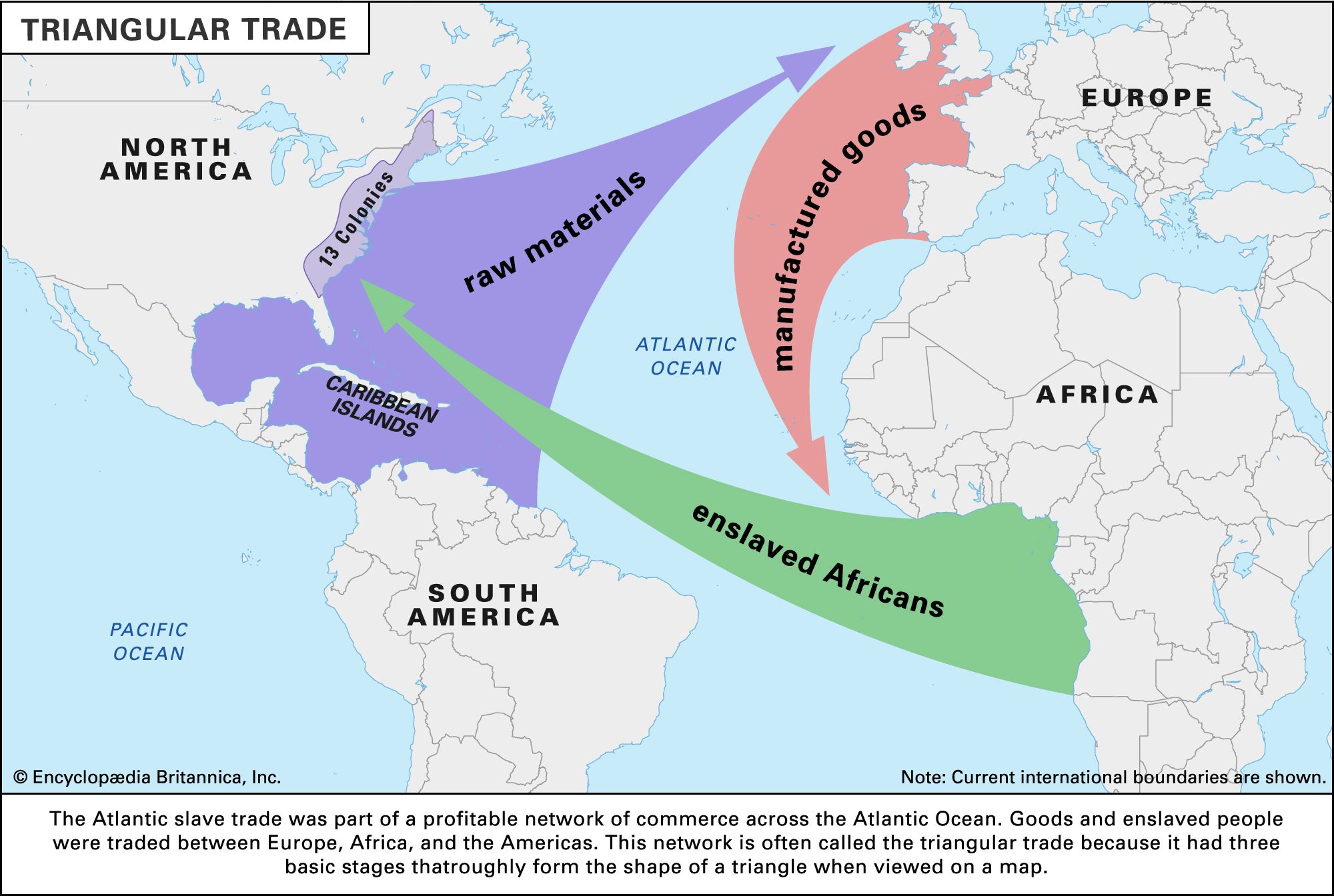
This became part of something called the trans-Atlantic slave trade, which was a huge, huge trafficking operation.
B
23:06Bailey SarianHOST
It lasted for over 300 years, from 1501 to 1867.
B
23:11Bailey SarianHOST
300 years.
B
23:13Bailey SarianHOST
Now, the trans-Atlantic slave trade should be its own episode, honestly.
B
23:17Bailey SarianHOST
Like, there is no possible way we could do it any justice in just this part of our story.
B
23:23Bailey SarianHOST
But it's impossible to talk about sugar without it, and then that's what's supposed, is even more...
B
23:49Bailey SarianHOST
12 million people? That's a lot of people.
Australia’s Slave Ship Massacre – Part Two: Shoot Them All
M
0:45Michael AdamsHOST
This Forgotten Australia miniseries was originally released in 2021.
M
0:50Michael AdamsHOST
I'm re-releasing it now as an accompaniment to the recent Talking History episode with Ryan Butter about his book Blackbirding, A Reckoning with Australia's Slave Trade.
M
1:01Michael AdamsHOST
This mini-series contains references to suicide and descriptions of murder and atrocity that never really made our history books.
M
1:08Michael AdamsHOST
Listener discretion is advised.
9 MINS LATER
M
10:00Michael AdamsHOST
The islanders, Captain Palmer said, were, quote, squatting about, looking emaciated and frightened.
M
10:06Michael AdamsHOST
Daphne's logs and papers were a bundle of falsehoods and discrepancies.
M
10:11Michael AdamsHOST
Captain Palmer went on, quote, this, combined with the fact that there was no interpreter and Ross Lewin figuring, as a principal actor in the entire transaction, determined me to seize the vessel and land her cargo of human beings at once, on the suspicion that the vessel, master, supercargo, and crew had been engaged, if not in actual slaving, at least in a most irregular traffic, tending to promote and encourage the slave trade.
M
10:38Michael AdamsHOST
Captain Palmer impounded Daphne, arrested the ship's Captain Daggett and Ross Lewin's business partner, Mr Pritchard, and took them to Sydney, where they faced the Water Police Court.
Dr. Ray Winbush, Dr. Kokayi Patterson & Francis Opai Tetteh on Black Voters, Reparations, Mental Health and Ghana Opportunities
C
46:10Carl NelsonHOST
Got a tweet question for you, Francis, from, uh, one of our Nige- Nigerian listeners, but I'll get to that in a moment.
C
46:15Carl NelsonHOST
But my question to you before we leave for the traffic and weather update was, uh, uh, is, is this, the transatlantic slave trade, is that taught in, in the schools? So you go to, uh, you go to Ghana, you go to, you go to, uh, Elmina, you go to, uh, Cape Coast, we see, all we see is tourists.
C
46:30Carl NelsonHOST
M- uh, mostly African Americans, uh, go there, and maybe f- some people from the Caribbean will be there as well.
C
46:36Carl NelsonHOST
But honestly, Ghana, uh, c- is that because they already know the history of the slave trade and those dungeons and the slave castles? Uh, w- can you explain that for us?
F
46:48Francis Opai TettehGUEST
It's, it's, uh, um, within our curriculum a- and it's taught as part of our social studies.
F
46:55Francis Opai TettehGUEST
Uh, even myself, when I was a teacher, I wrote a book with my students.
F
47:00Francis Opai TettehGUEST
The title is "The Transatlantic Slave Trade: Mirror of Injustice." So we do everything possible because, uh, Dr.
F
47:11Francis Opai TettehGUEST
Matthew Motete once said, and I quote, "A nation that deliberately forgets its history is doomed to repeat the mistakes of the past.
Essay on the Slavery and Commerce of the Human Species Particularly the African - Thomas Clarkson
S
72:57speaker_5NARRATOR
As these practices are in full force at the present day, it appears that there are four orders of involuntary slaves on the African continent, of convicts, of prisoners of war, of those who are publicly seized by virtue of the authority of their prince, and of those who are privately kidnapped by individuals.
S
73:15speaker_5NARRATOR
It remains only to observe on this head that in the sale and purchase of these the African commerce or slave trade consists, that they are delivered to the merchants of Europe in exchange for their various commodities, that these transport them to their colonies in the west, where their slavery takes place, and that a fifth order arises there, composed of all such as are born to the native Africans after their transportation and slavery have commenced.
S
73:42speaker_5NARRATOR
Having thus explained as much of the history of modern servitude as is sufficient for the prosecution of our design, we should have closed our account here, but that a work, just published, has furnished us with a singular anecdote of the colonists of a neighbouring nation, which we cannot but relate.
S
73:59speaker_5NARRATOR
The learned author, having described the method which the Dutch colonists at the Cape make use of to take the Hottentots and enslave them, takes occasion, in many subsequent parts of the work, to mention the dreadful effects of the practice of slavery, which, as he justly remarks, leads to all manner of misdemeanours and wickedness.
M
76:34Mike PickettNARRATOR
For more information, or to volunteer, please visit LibriVox.org. An essay on the slavery and commerce of the human species, particularly the African, by Thomas Clarkson.
M
76:45Mike PickettNARRATOR
Part 2.
M
76:46Mike PickettNARRATOR
The African Commerce or Slave Trade.
M
76:48Mike PickettNARRATOR
Chapter 1.
Essay on the Slavery and Commerce of the Human Species, Particularly the African-Thomas Clarkson
M
0:56Mike PaquetteNARRATOR
My Lord, the dignity of the subject of this little treatise, not any persuasion of its merits as a literary composition, encourages me to offer it to your Lordship's patronage.
M
1:07Mike PaquetteNARRATOR
the cause of freedom has always been found sufficient in every age and country to attract the notice of the generous and humane and it is therefore in a more peculiar manner worthy of the attention and favor of a personage who holds a distinguished rank in that illustrious island the very air of which has been determined upon late investigation of its laws to be an antidote against slavery i feel a satisfaction in the opportunity which the publication of this treatise affords me of acknowledging your lordship's civilities which can only be equalled by the respect with which i am your lordship's much obliged and obedient servant thomas clarkson the preface as the subject of the following work has fortunately become of late a topic of conversation i cannot begin the preface in a manner more satisfactory to the feelings of the benevolent reader than by giving an account of those humane and worthy persons who have endeavored to draw upon it that share of the public attention which it has obtained among the well-disposed individuals of different nations and ages who have humanely exerted themselves to suppress the abject personal slavery introduced in the original cultivation of the european colonies in the western world bartholomew de las casas the pious bishop of chiapa in the fifteenth century seems to have been the first this amiable man during his residence in spanish america was so sensibly affected at the treatment which the miserable indians underwent that he returned to spain to make a public remonstrance before the celebrated emperor charles v declaring that heaven would one day call him to an account for those cruelties which he then had it in his power to prevent the speech which he made on the occasion is now extant and is a most perfect picture of benevolence and piety but his entreaties by opposition of avarice were rendered ineffectual and i do not find by any books which i have read upon the subject that any other person interfered till the last century when morgan godwin a british clergyman distinguished himself in the cause the present age has also produced some zealous and able opposers of the colonial slavery for about the middle of the present century john woolman and anthony benizet two respectable members of the religious society called quakers devoted much of their time to the subject the former traveled through most parts of north america on foot to hold conversations with the members of his own sect on the impiety of retaining those in a state of involuntary servitude who had never given them offense the latter kept a free school at philadelphia for the education of black people he took every opportunity of pleading in their behalf he published several treatises against slavery and gave a hearty proof of his attachment to the cause by leaving the whole of his fortune in support of that school to which he had so generously devoted his time and attention when alive till this time it does not appear that any bodies of men had collectively interested themselves in endeavoring to remedy the evil but in the year seventeen fifty four the religious society called quakers publicly testified their sentiments upon the subject declaring that to live in ease and plenty by the toil of those whom fraud and violence had put into their power was neither consistent with christianity nor common justice impressed with these sentiments many of the society immediately liberated their slaves and though such a measure appeared to be attended with considerable loss to the benevolent individuals who unconditionally presented them with their freedom yet they adopted it with pleasure nobly considering that to possess a little in an honorable way was better than to possess much through the medium of injustice their example was gradually followed by the rest a general emancipation of the slaves in the possession of quakers at length took place and so effectually did they serve the cause which they had undertaken that they denied the claim of membership in their religious community to all such as should hereafter oppose the suggestions of justice in this particular either by retaining slaves in their possession or by being in any manner concerned in the slave trade And it is a fact that through the vast tract of North America there is not at this day a single slave in the possession of an acknowledged Quaker.
M
4:56Mike PaquetteNARRATOR
but though this measure appeared as has been observed before to be attended with considerable loss to the benevolent individuals who adopted it yet as virtue seldom fails of obtaining its reward it became ultimately beneficial most of the slaves who were thus unconditionally freed returned without any solicitation to their former masters to serve them at stated wages as free men the work which they now did was found to be better done than before it was found also that a greater quantity was done in the same time hence less than the former number of laborers was sufficient from these and a variety of circumstances it appeared that their plantations were considerably more profitable when worked by freemen than when worked as before by slaves and that they derived therefore contrary to their expectations a considerable advantage from their benevolence animated by the example of the quakers the members of other sects began to deliberate about adopting the same measure some of those of the church of england of the roman catholics and of the presbyterians and independents freed their slaves and there happened but one instance where the matter was debated where it was not immediately put in force this was in pennsylvania it was agitated in the synod of the presbyterians there to oblige their members to liberate their slaves the question was negatived by a majority of but one person and this opposition seemed to arise rather from a dislike to the attempt of forcing such a measure upon the members of that community than from any other consideration i have the pleasure of being credibly informed that the manumission of slaves or the employment of freemen in the plantations is now daily gaining ground in north america should slavery be abolished there and it is an event which from these circumstances we may reasonably expect to be produced in time let it be remembered that the quakers will have had the merit of its abolition nor have their brethren here been less assiduous in the cause as there are happily no slaves in this country so they have not had the same opportunity of showing their benevolence by a general emancipation they have not however omitted to show it as far as they have been able at their religious meetings they have regularly inquired if any of their members are concerned in the iniquitous african trade they have appointed a committee for obtaining every kind of information on the subject with a view to its suppression and about three or four years ago petitioned parliament on the occasion for their interference and support i am sorry to add that their benevolent application was ineffectual and that the reformation of an evil productive of consequences equally impolitic and immoral and generally acknowledged to have long disgraced our national character is yet left to the unsupported efforts of piety morality and justice against interest violence and oppression and these i blush to acknowledge too strongly countenanced by the legislative authority of a country the basis of whose government is liberty nothing can be more clearly shown than that an inexhaustible mine of wealth is neglected in africa for prosecution of this impious traffic that if proper measures were taken the revenue of this country might be greatly improved its naval strength increased its colonies in a more flourishing situation the planters richer and a trade which is now a scene of blood and desolation converted into one which might be prosecuted with advantage and honor such have been the exertions of the quakers in the cause of humanity and virtue they are still prosecuting as far as they are able their benevolent design and i should stop here and praise them for thus continuing their humane endeavours but that i conceive it to be unnecessary they are acting consistently with the principles of religion they will find a reward in their own consciences and they will receive more real pleasure from a single reflection on their conduct than they can possibly experience from the praises of an host of writers in giving this short account of those humane and worthy persons who have endeavored to restore to their fellow-creatures the rights of nature of which they have been unjustly deprived i would feel myself unjust were i to omit two zealous opposers of the colonial tyranny conspicuous at the present day the first is mr granville sharp this gentleman has particularly distinguished himself in the cause of freedom it is a notorious fact that but a few years since many of the unfortunate black people who had been brought from the colonies into this country were sold in the metropolis to merchants and others when their masters had no farther occasion for their services though it was always understood that every person was free as soon as he landed on the british shore in consequence of this notion these unfortunate black people refused to go to the new masters to whom they were consigned they were however seized and forcibly conveyed under cover of the night to ships then lying in the thames to be retransported to the colonies and to be delivered again to the planters as merchantable goods the humane mr sharp was the means of putting a stop to this iniquitous traffic whenever he gained information of people in such a situation he caused them to be brought on shore at a considerable expense he undertook their cause and was instrumental in obtaining the famous decree in the case of somerset that as soon as any person whatever set his foot in this country he came under the protection of the british laws and was consequently free nor did he interfere less honorably in that cruel and disgraceful case in the summer of the year seventeen eighty one when an hundred and thirty-two negroes in their passage to the colonies were thrown into the sea alive to defraud the underwriters but his pious endeavors were by no means attended with the same success to enumerate his many laudable endeavors in the extirpation of tyranny and oppression would be to swell the preface into a volume suffice to say that he has written several books on the subject and one particularly which he distinguishes by the title of a limitation of slavery
S
10:12speaker_2NARRATOR
the second
58 MINS LATER
I
68:25InkelNARRATOR
Avarice, therefore, which was too powerful for justice on this occasion, immediately turned the scale.
I
68:31InkelNARRATOR
Not only those who were fairly convicted of offences were now sentenced to servitude, but even those who were suspected— new crimes were invented then new punishments might succeed thus was every appearance soon construed into reality every shadow into a substance and often virtue into a crime such also was the case with respect to prisoners of war not only those were now delivered into slavery who were taken in a state of public enmity and injustice but those also who conscious of no injury whatever were taken in the arbitrary skirmishes of these venal sovereigns war was now made not as formerly from the motives of retaliation and defence but for the sake of obtaining prisoners alone and the advantages resulting from their sale if a ship from europe came but into sight it was now considered as a sufficient motive for a war and as a signal only for an instantaneous commencement of hostilities but if the african kings could be capable of such injustice what vices are there that their consciences would restrain or what enormities that we might not expect to be committed when men once consent to be unjust they lose at the same instant with their virtue a considerable portion of that sense of shame which till then had been found a successful protector against the sallies of vice from that awful period almost every expectation is forlorn the heart is left unguarded its protector is no more the vices therefore which so long encompassed it in vain obtain an easy victory in crowds they pour into the defenceless avenues and take possession of the soul there is nothing now too vile for them to mediate too impious to perform such was the situation of the despotic sovereigns of africa they had once ventured to pass the bounds of virtue and they soon proceeded to enormity this was particularly conspicuous in that general conduct which they uniformly observed after any unsuccessful conflict influenced only by the venal motives of european traffic they first made war upon their neighbouring tribes contrary to every principle of justice and if by the flight of the enemy or by other contingencies they were disappointed of their prey they made no hesitation of immediately turning their arms against their own subjects the first villages they came to were always marked on this occasion as the first objects of their avarice they were immediately surrounded were afterwards set on fire and the wretched inhabitants seized as they were escaping from the flames these consisting of whole families fathers brothers husbands wives and children were instantly driven in chains to the merchants and consigned to slavery To these calamities, which thus arose from the tyranny of the kings, we may now subjoin those which arose from the avarice of private persons, many were kidnapped by their own countrymen, who, encouraged by the merchants of Europe, previously lay in wait for them, and sold them afterwards for slaves, while the seamen of the different ships, by every possible artifice, enticed others on board, and transported them to the regions of servitude.
I
71:39InkelNARRATOR
As these practices are in full force at the present day, it appears that there are four orders of involuntary slaves on the african continent of convicts of prisoners of war of those who are publicly seized by virtue of the authority of their prince and of those who are privately kidnapped by individuals it remains only to observe on this head that in the sale and purchase of these the african commerce or slave trade consists that they are delivered to the merchants of europe in exchange for their various commodities that these transport them to their colonies in the west where their slavery takes place and that a fifth order arises there composed of all such as are born to the native africans after their transportation and slavery have commenced having thus explained as much of the history of modern servitude as is sufficient for the prosecution of our design we should have closed our account here but that a work just published has furnished us with a singular anecdote of the colonists of a neighbouring nation which we cannot but relate the learned author having described the method which the dutch colonists at the cape make use of to take the hottentots and enslave them takes occasion in many subsequent parts of the work to mention the dreadful effects of the practice of slavery, which, as he justly remarks, leads to all manner of misdemeanours and wickedness.
I
73:01InkelNARRATOR
Pregnant women, says he, and children in their tenderest years, were not at this time, neither indeed are they ever, exempt from the effects of the hatred and spirit of vengeance, constantly harboured by the colonists, with respect to the Boshi's man-nation.
”Fuimos la escena del crimen de estas atrocidades”: el país que se enfrenta a EE.UU. y Europa al reclamar el pago de reparaciones por la esclavitud
S
0:11speaker_1NARRATOR
Image source, Ernest Ankomah/Getty Images.
S
0:14speaker_1NARRATOR
This year, or has there been a drastic shift in the tone of the global debate on the transatlantic slave trade? Slave trade.
S
0:21speaker_0NARRATOR
Fuente de la imagen, Ernest Ankomah/Getty Images.
S
0:26speaker_0NARRATOR
Este ao se ha producido un cambio drástico en el tono del debate mundial sobre la trata transatlántica de esclavos.
S
1:58speaker_0NARRATOR
Aunque Estados Unidos y Argentina votaron en contra de la resolución y todas las naciones europeas se abstuvieron en la votación.
S
2:09speaker_0NARRATOR
Reino Unido, que junto con Portugal domina el comercio transatlántico de esclavos, ha rechazado sistemáticamente la idea de pagar reparaciones, lo cual quizás no sea sorprendente, dado que las estimaciones de lo que Gran Bretaña debe en daños a las naciones afectadas ascienden a muchos billones de libras esterlinas.
S
2:28speaker_1NARRATOR
The United Kingdom, which together with Portugal dominates the transatlantic slave trade, has systematically rejected the idea of paying reparations, which is perhaps not surprising given that estimates of what Britain owes in damages to the nations concerned amount to many trillions of pounds sterling.
S
2:45speaker_1NARRATOR
It is not surprising given that estimates of what Britain owes to the nations concerned amount to many trillions of pounds sterling.
Biography of an American Bondman, By His Daughter-Josephine Brown
S
22:01speaker_4NARRATOR
Speculation and mismanagement had so far reduced the doctor’s finances that he found himself compelled to sell some of his slaves to repair his affairs, and Elizabeth, William’s mother, was among the first that were sold.
S
22:16speaker_4NARRATOR
William had three brothers who, together with his mother, were taken to the St. Louis Negro market and sold to the highest bidder.
S
22:25speaker_4NARRATOR
The boys were purchased by a slave trader and sent off to the lower country, but the mother was more fortunate and became the slave of Isaac Mansfield, a gentleman residing in the city of St. Louis.
S
22:39speaker_4NARRATOR
The last tidings that William had of his brothers was that they had been bought by a planter and sent to his farm on the Yazoo River.
S
22:48speaker_4NARRATOR
If still living, they are lingering out a miserable existence on a cotton, sugar, or rice plantation in a part of the country where the life of the slave has no parallel in deeds of atrocity.
6 MINS LATER
S
28:35speaker_4NARRATOR
A bitter smile was on her cheek and a dark flash in her eye.
S
28:41speaker_4NARRATOR
After remaining on the farm for a few weeks under the iron rule of the overseer, William was again hired out to the proprietors of the steamer Enterprise.
S
28:51speaker_4NARRATOR
On the second trip of the boat's return from Galena, she took on board at Hannibal a noted slave trader named Walker, who had with him between fifty and sixty slaves, consisting chiefly of men and women adapted to field service.
Reasons - Racism thriving, why?
D
17:02David StoneHOST
And it wasn't really until, I think, having done a bit of research on this, the 15th century, when a guy called Gomes Inês de Zerara, a Portuguese thinker and writer, produced his Chronicle of Guinea in 1543 for the king of the Portuguese establishment which established a kind of basis for permitting the Portuguese army and navy and traders to take slaves but it wasn't based upon any sense of the slaves being less worthy as humans but on their being rife for conversion they were savages you know and their job their duty in a way was to capture as many in quote slaves as possible and convert them to christianity Now the thing is, when I talk about slavery to other people, I think apologists really, or people who don't think that the slave trade, the African slave trade, was of particular note.
D
18:23David StoneHOST
They'll tell me, as you'll probably know, that the term slavery comes from Slav, and it started in Eastern Europe, and that African slavery was a thing well before the Atlantic slave trade, when the conquering Arabs used to take slaves as part of their booty.
D
18:45David StoneHOST
But, and this is, I think, key, there was never, prior to the African Atlantic slave trade, there was never in recorded human history occasions when people were taken into slavery purely on the basis of their colour.
D
19:05David StoneHOST
There might have been slavery to do with conquest, to do with tribal warfare, to do with conquest, to do with Jewish slaves in Egypt, that kind of thing.
D
19:20David StoneHOST
But it was never based on colour, until that is, in my judgement, the Enlightenment.
16 more episodes mention Atlantic slave trade.
Create an account to see the whole feed, search across every transcript, and follow the entities you care about.