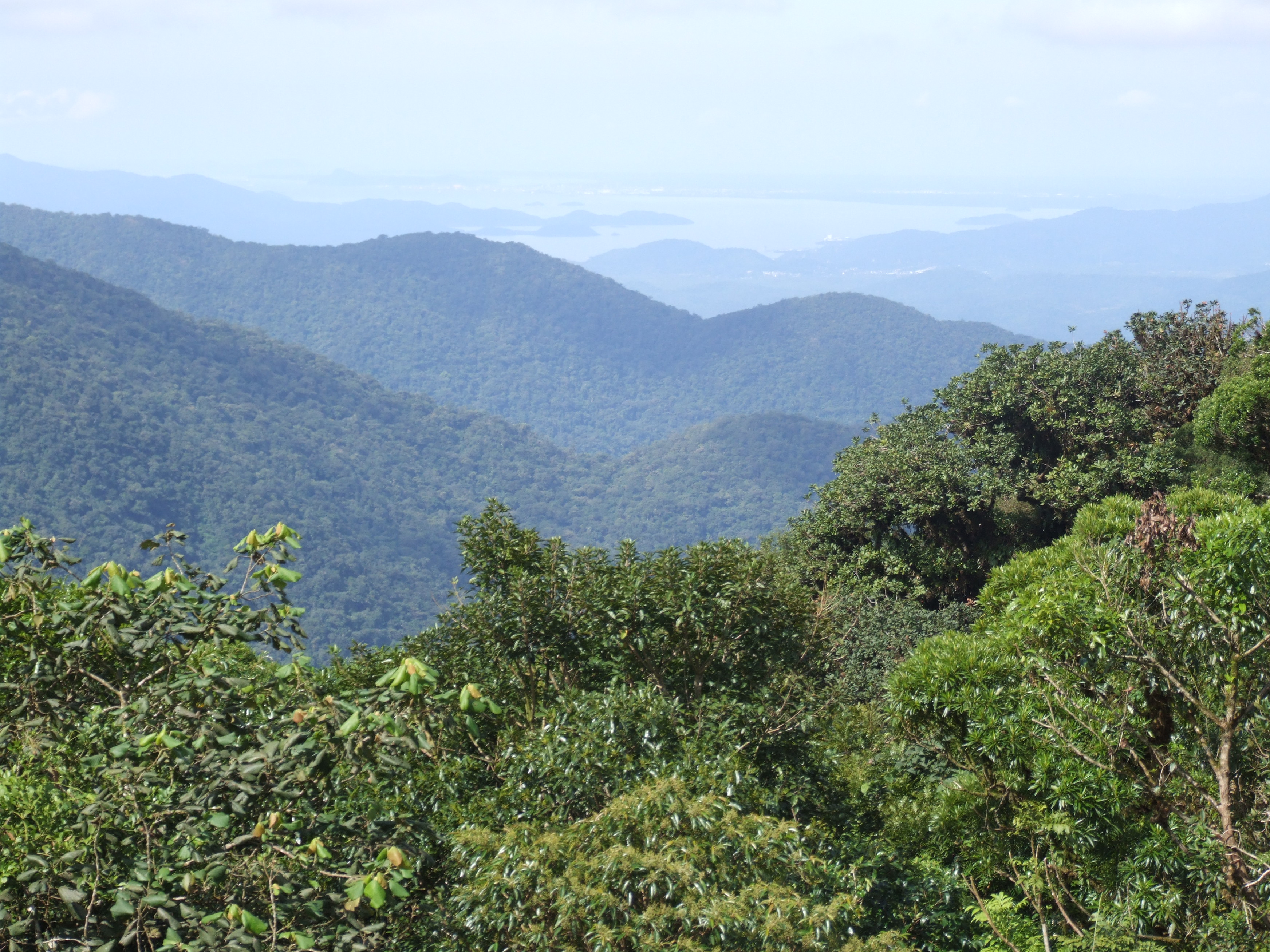
Atlantic Forest
RegionWikipedia
12
MENTIONS
9
EPISODES
9
PODCASTS
Search complete. 12 mentions across 9 episodes found for "Atlantic Forest".
Nov 19, 2026

Jorge Luis SogorbGUEST
Todas las islas del sur, tanto del Pacífico como del Atlántico, hay muchísimas historias que no se han logrado explicar al día de hoy.
Jorge Luis SogorbGUEST
Seguimos subiendo y toda la Mata Atlántica es un lugar donde están todas las ciudades perdidas que se siguen buscando.
Jorge Luis SogorbGUEST
Seguís subiendo al Mato Grosso y otra vez, todos los relatos de, de, de ciudades perdidas, de lugares increíbles, del cerro-- del Cerro del Roncador.
Jorge Luis SogorbGUEST
Eh, nos vamos un poco más al sur y me olvidé de todo lo que hay alrededor, que sí es poblado, pero tenés, eh, todos los misterios en el Uritorco, más abajo, más al sur, todo lo que es, este, en Chile, en el Cajón del Maipo, en San Clemente.

Kiana WeltzienGUEST
I am in Brazil.
Kiana WeltzienGUEST
I'm off the coast of the Atlantic Forest, which is this beautiful tropical jungle, mountain range, incredible place, and a little town called Parachi.
Shelby StangerHOST
Oh, fun.
Shelby StangerHOST
It sounds amazing.

speaker_2NARRATOR
The brown-throated sloth has company in these trees.
speaker_2NARRATOR
Its three-toed relatives include the pale-throated, three-toed sloth of Amazonia, the threatened Maine sloth of Brazil's Atlantic Forest, and the pygmy three-toed sloth.
speaker_2NARRATOR
found on an island off Panama.
speaker_2NARRATOR
Then, there are the two-toed sloths, Hoffmans and Linneuses, a separate group that lives alongside the three-toed kinds in several places, from Costa Rican farmland to Panama.
speaker_2NARRATOR
Two-toed animals took to pasture where usable trees still stood, while their three-toed neighbors kept clear of it.
speaker_2NARRATOR
Farther south, in Brazil, a maned sloth's familiar world can be small.
speaker_2NARRATOR
In the Atlantic forest of the country's southeast, a few adult maned sloths were followed for more than a year, and each kept to a home range.
speaker_2NARRATOR
A bounded patch of trees used again and again, that ran from well under a hectare to several hectares depending on the animal.

Audax M. GawlerGUEST
I feel into my own energy and try and try and sort of project my story or literally tell my story to the place and I spend time consciously in exchange with it so I like to give offerings of different sorts food stuffs or just like things that will feel beneficial for the for the place putting little things in the soil um and I uh Yeah, apart from the introduction, there's a couple of different practices that I've been taught about how you can introduce yourself around waterways that have to do with introducing your bodily fluids through sweat or spit into those places, different objects, which I also really like, throwing things into waterways.
Audax M. GawlerGUEST
The other thing, I was speaking to someone the other day about it, about just even just speaking your name and identity into a stick or a stone and just breathing into it and throwing it into the greater body of a river or a lake or a water body as a way of letting your presence be announced when it's somewhere more contained like on the block that i live on uh It's a little bit different because I have a bit more, I guess, visibility and I'm trying to think about the difference between, for example, where I live in a contained block and where I was just over a week ago in the Mata Atlantica, which is a big remnant rainforest here.
Audax M. GawlerGUEST
And that's a rainforest with all sorts of creatures inside of it, including onsa, who are jaguars, and all different scales of big cats and mountain lions occasionally.
Audax M. GawlerGUEST
No, pumas, pumas.

Stephen C. StearnsHOST
There was a refuge up near the Andes, in Peru and Ecuador.
Stephen C. StearnsHOST
There was a refuge in the Atlantic forest, and then there was another one that was up in the highlands of Venezuela.
Stephen C. StearnsHOST
That huge forest, which now covers a third or a half of South America, has expanded out of those refuges in the last 10,000 years.
Stephen C. StearnsHOST
And you can see that some of those trees were probably able to move fairly long distances, fairly rapidly, to get there and cover much of the rainforest.

Nellie NealHOST
But the thing is, like so many other things, If you have the opportunity to let things even themselves out or you can't solve the problem, sometimes they fix themselves a little bit at least.
Nellie NealHOST
And in this particular case, they have found the Atlantic Forest has a much larger population now than it did.
Nellie NealHOST
The frogs have come back, and I, for one, am glad to see it.
Nellie NealHOST
Thanks, Kermit.

Jamila RobinsonGUEST
But if you go around the world, there are communities in every part of the planet that have healthy meals and healthy food ways.
Jamila RobinsonGUEST
We go to the Atlantic Forest in Brazil.
Jamila RobinsonGUEST
We go to Ethiopia, we go to parts of Asia to see how people have been eating for thousands of years.
Jamila RobinsonGUEST
There's a real look at the indigenous population across Brazil and how some of the dishes that they eat are important for us to incorporate into our food ways.

Gavin HainesHOST
But we're making really good progress on land.
Gavin HainesHOST
And we've got a nice case study that the UN provided from the Atlantic Forest.
Gavin HainesHOST
Okay.
Gavin HainesHOST
So this, once stretched across Brazil, Paraguay and Argentina, has been reduced significantly to just sort of fragments of its former range.

Tim ChristophersenGUEST
And in the tropics in particular, agroforestry, but also in temperate regions, agroforestry is underrated.
Tim ChristophersenGUEST
We've helped a great company in Brazil called Courageous Land, for-profit agroforestry intelligence platform and then agroforestry extension provider they are now scaling up so rapidly that they've helped reach one of the un world restoration flagship targets there is the atlantic forest in brazil is used to be the third largest rainforest in the world after the amazon and congo basin but much of it disappeared already starting 500 years ago There's only about 10% of it left, and there are 350 NGOs working to restore 15 million hectares of degraded Mata Atlantica.
Tim ChristophersenGUEST
In 30 years, they managed 1 million hectares collectively.
Tim ChristophersenGUEST
So if you do the math, 15 million hectares, it would take 450 years at the pace that they're going.