Atacama Large Millimeter Array
Observatory in ChileWikipedia
27
MENTIONS
8
EPISODES
7
PODCASTS
Search complete. 27 mentions across 8 episodes found for "Atacama Large Millimeter Array".
Oct 2, 2026

Pamela GayHOST
At least we hadn't had them until now.
Pamela GayHOST
A team of observers using the very large array and the Atacama Large Millimeter Array have now observed more than 300 baby planet-forming disks that are just starting to spin up.
Pamela GayHOST
All these systems are part of the great Orion star-forming region.
Pamela GayHOST
As astronomers, we will often say things like, "All the stars in a star cluster form at the same time." But the truth is they may gradually come into existence over a million or millions of years, which from the perspective of cosmic time and stellar evolution is all at the same time.

ClaraHOST
Instead, they use spectroscopy.
ClaraHOST
They look at the electromagnetic spectrum using massive arrays of radio telescopes like the ALMA Observatory in Chile.
AdrianHOST
So they're looking at wavelengths.
ClaraHOST
Exactly.

Nakul Sethuram RamjeeHOST
And this discovery actually was made from the archival data from the WMK Observatory at Hawaii in the United States.
Nakul Sethuram RamjeeHOST
And about, Ten years ago, the ALMA telescope at Chile detected a gap in the star's dusky disk.
Nakul Sethuram RamjeeHOST
So if a star is forming, its disk would be filled with dust and debris.
Nakul Sethuram RamjeeHOST
And from that dust and debris of the molecules and some other compounds, they all come together, they accrete each other, and that's how they form as a planet.

speaker_6HOST
It is usually a slow, deliberate accumulation of evidence.
speaker_6HOST
And the mystery of Elias Two Twenty-Four B actually started a full decade ago, not in Hawaii, but high in the Atacama Desert of Chile, using an entirely different array of instruments known as ALMA.
speaker_5HOST
ALMA.
speaker_5HOST
Hey, that stands for the Atacama Large Millimeter/Submillimeter Array, right?
speaker_6HOST
Yeah.
speaker_5HOST
Oh, that's a great way to think about it.
speaker_6HOST
The longer wavelength allows them to bypass the physical obstacles.
speaker_6HOST
ALMA uses this principle to peer directly through the dust.

speaker_0NARRATOR
Astronomers had clues that a planet might be forming in the system long before Elias 2-24b was confirmed.
speaker_0NARRATOR
About a decade ago, observations from the Atacama Large Millimeter-submillimeter Array, or ALMA, revealed a gap in the dusty disk surrounding the young star.
speaker_0NARRATOR
Later observations from the European Southern Observatory's Very Large Telescope detected a faint point of light inside that gap.
speaker_0NARRATOR
The potential planet raised questions because existing planet formation models suggested a giant planet should not have been able to form so quickly at such a large distance from its star.

Paul DalbaHOST
Now, a single absorption line at a single telescope is not enough to stake a career on.
Paul DalbaHOST
So Greaves and her collaborators, including Sarah Seager, William Baines, and Janusz Patkowski at MIT, and Paul Rimmer at Cambridge, went back in 2019 with the ALMA telescope.
Paul DalbaHOST
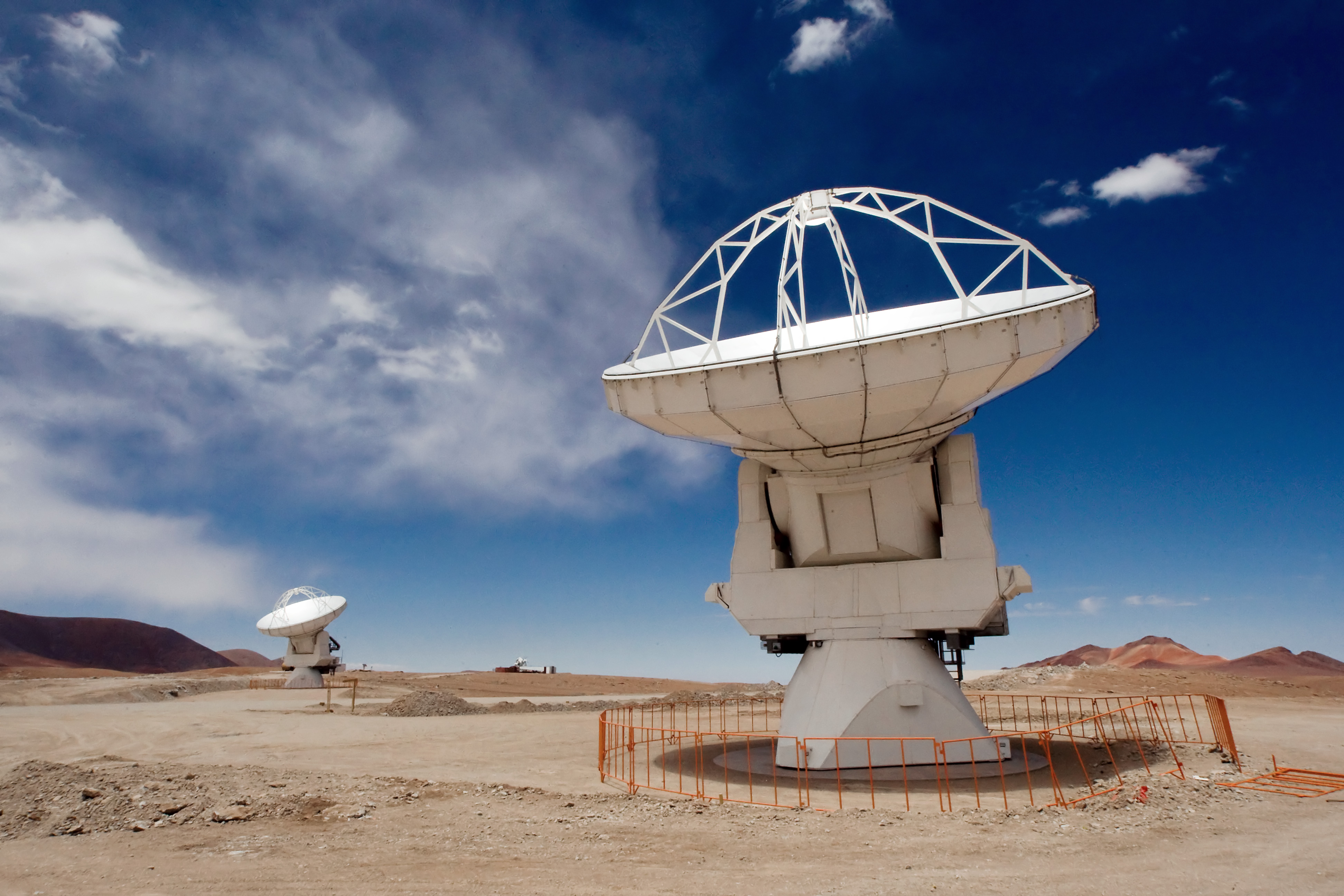
ALMA is a truly staggering instrument.
Paul DalbaHOST
66 individual radio dishes in the Atacama Desert in Chile, working together as a single telescope.
Paul DalbaHOST
They observed Venus again, and they got the signal again, at five to seven sigma confidence.
Paul DalbaHOST
That's not a whisper, that's a shout.
Paul DalbaHOST
Statistically, a five sigma result means the probability that the signal is a random fluctuation is about one in three and a half million.
Paul DalbaHOST
They estimated roughly 20 parts per billion of phosphine in the original JCMT data and around five to seven parts per billion in the reprocessed ALMA data.
speaker_5HOST
If you build this array at sea level, you see nothing.
speaker_4HOST
nothing.So we have to travel to the high Atacama Desert in Chile to a facility called ALMA, the Atacama Large Millimeter Array, which honestly sounds like a villain's lair from a sci-fi movie.
speaker_5HOST
It really does look like one, too.
speaker_5HOST
It's a collection of sixty-six massive radio antennas sitting at an altitude so high the air is just bone dry.
speaker_5HOST
Up in the Atacama, ALMA has a crystal clear window into the deep cosmos.
speaker_4HOST
But the real genius of ALMA isn't just the location, is it? It's how those sixty-six antennas work together.
speaker_5HOST
Right, through a process called interferometry.
speaker_4HOST
Let me see if I have the mechanics of interferometry right because it is wild.

speaker_0HOST
We are totally at a cliffhanger.
speaker_0HOST
The physics community is waiting on the ALMA array and the Chandra satellite to give us the final verdict.
speaker_0HOST
But I want to leave you with a final lingering thought to ponder long after this deep dive ends.
speaker_0HOST
Think about the incredible irony of the cosmos.