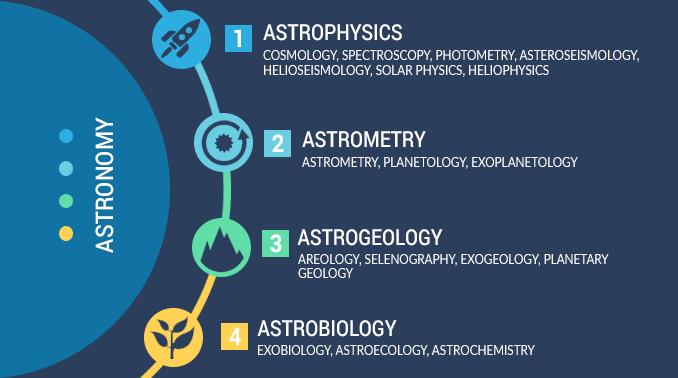
Astrophysics
Applied disciplineWikipedia
8
MENTIONS
4
EPISODES
4
PODCASTS
Search complete. 8 mentions across 4 episodes found for "Astrophysics".
Sep 11, 2026

Richard VaughanHOST
May the eighth is Victory Day in Europe for the Second World War.
Richard VaughanHOST
By the way, ladies and gentlemen, you have just heard the voice of Carlos Hoyos, astrofísico, amigo mío, who comes here from time to time.
Richard VaughanHOST
He's always very nervous talking about things, [laughs] but it's always interesting.
Richard VaughanHOST
And he-- De-- A veces hablas de-- atropelladamente, so you need to, uh, calm down.
24 MINS LATER
Carlos HoyosGUEST
Yeah.
Richard VaughanHOST
You know, and things.
Richard VaughanHOST
Ladies and gentlemen, I'm with, uh, Carlos Hoyos, astrofísico, astronomer.
Richard VaughanHOST
And, uh, we're good friends, and we like to talk about strange subjects sometimes.

AveryHOST
That's a good line to move on from.
AveryHOST
Story two, published yesterday in Astronomy and Astrophysics, and it's about black holes that are the wrong size.
AveryHOST
Anna, what's the rule they're breaking?
AnnaHOST
The rule is co-evolution.
AnnaHOST
That shuts down both its own supply and the galaxy's star formation, a thermostat.
AveryHOST
So here's the result.
AveryHOST
Johannes Büchner at the Max Planck Institute for Extraterrestrial Physics, with colleagues at Penn State, Illinois, Cal Poly, the Center for Astrophysics, and the Space Telescope Science Institute, went through 140 squared degrees of the eROSITA X-ray survey.
AveryHOST
They picked out 200 quasars selected on hard X-rays, which is the honest way to do it because dust can hide a growing black hole at optical wavelengths but not in hard X-rays.

AveryHOST
That's a good line to move on from.
AveryHOST
Story 2, published yesterday in Astronomy and Astrophysics.
AveryHOST
And it's about black holes that are the wrong size.
AveryHOST
Anna, what's the rule they're breaking?
AnnaHOST
A thermostat.
AveryHOST
So here's the result.
AveryHOST
Johannes Buchner at the Max Planck Institute for Extraterrestrial Physics, with colleagues at Penn State, Illinois, Cal Poly, the Center for Astrophysics, and the Space Telescope Science Institute, went through 140 square degrees of the eRosita X-ray survey.
AveryHOST
They picked out 200 quasars, selected on hard x-rays, which is the honest way to do it because dust can hide a growing black hole at optical wavelengths, but not in hard x-rays.

Ethan SiegelHOST
We orbit a star about 26,000 light years from the galactic center that only came into existence about a third of the universe's age ago, about 4.6 billion years ago.
Ethan SiegelHOST
For all the time prior to that Astrophysics was still happening.
Ethan SiegelHOST
Stars were forming.
Ethan SiegelHOST
Galaxies were merging together.