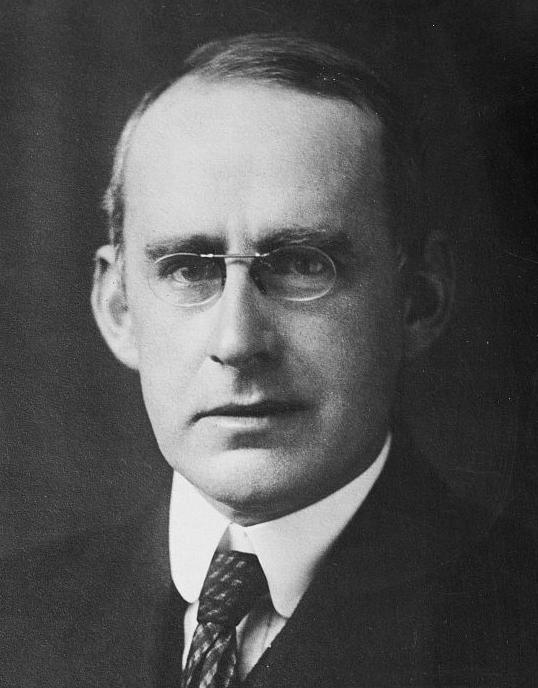
Arthur Eddington
Astrophysicist and mathematicianWikipedia
37
MENTIONS
30
EPISODES
23
PODCASTS
Search complete. 37 mentions across 30 episodes found for "Arthur Eddington".
Nov 3, 2026

Brian KeatingHOST
In the case of these proofs, some of which are, you know, are in excess of, you know, five hundred, eight hundred pages, and it's not uncommon in mathematics.
Brian KeatingHOST
I mean, first of all, it reminds me of what Einstein said, you know, when they made the 1919 eclipse expedition, the Eddington expedition, to see if the-
Sergiu KlainermanGUEST
Yes
Brian KeatingHOST
...

Neil deGrasse TysonHOST
So this all happened in 1915.
Neil deGrasse TysonHOST
Sir Arthur Eddington.
Neil deGrasse TysonHOST
Probably the world's first astrophysicist, if you wanted to.
Neil deGrasse TysonHOST
We have astronomers up until him.
Neil deGrasse TysonHOST
So we lose Vulcan.
Neil deGrasse TysonHOST
We gain the confidence in the general theory of relativity.
Neil deGrasse TysonHOST
It's all because of Sir Arthur Eddington, a brilliant physicist.
Neil deGrasse TysonHOST
I think he was from Cambridge, Cambridge, England, at University of Cambridge.

Matt O'DowdHOST
And now, your comments on last week's episode on the great American eclipse.
Matt O'DowdHOST
Martin Kettling asks whether a DIY of Arthur Eddington's confirmation of general relativity would be possible.
Matt O'DowdHOST
Well, the answer is yes, but it ain't easy.
Matt O'DowdHOST
Eddington measured the very slight offset in the positions of stars around the limb, the edge, of the sun due to the paths of their light bending in the sun's gravitational field.

Emad MostaqueGUEST
And here is a really interesting result.
Emad MostaqueGUEST
Eddington got to one over 137 and then he got a bit overconfident.
Emad MostaqueGUEST
But, you know, I put a quote by Feynman as the thing here whereby this is one of the most magical numbers we've ever seen.
Emad MostaqueGUEST
And if we have a derivation of it, fantastic.

EricHOST
And so you have to ask, well, is that true? And so Bertrand Russell in 1927 first asked this question in The Analysis of Matter.
EricHOST
Same with Arthur Eddington in The Nature of the Physical World, 1928.
EricHOST
These guys were working through the implications of general relativity.
EricHOST
Russell makes the simple and clear observation that physics tells you what matter does, but it does not tell you what matter is.

Stephen MeyerSOUNDBITE_SPEAKER
Out of hand, the idea that the universe is dynamic and expanding.
Stephen MeyerSOUNDBITE_SPEAKER
But two years later, Arthur Eddington at Cambridge urges him again to go out to Mount Wilson to see what Hubble has been seeing through the telescope.
Stephen MeyerSOUNDBITE_SPEAKER
And there's some famous news.
Stephen MeyerSOUNDBITE_SPEAKER
Take a second to explain the red shift.
speaker_2UNKNOWN
And in 1958, he died in a hospital in Zurich, in room 137.
ParzivalHOST
The astronomer Arthur Eddington went further and claimed to prove it was exactly 1 over 136.
ParzivalHOST
And when the measurements moved, he found a reason to add 1.
ParzivalHOST
So people started calling him Sir Arthur Adding 1.

Simon JacobsonHOST
There are no fish in the sea that are shorter than a half inch long.
Simon JacobsonHOST
I think so, Arthur Eddington probably is the name.
Simon JacobsonHOST
And he was about to make a big announcement.
Simon JacobsonHOST
He thought he'd probably get a Nobel Prize, a Nobel Science Prize.

Thom BurnsGUEST
She actually got interested late in her academic career in Cambridge in astronomy.
Thom BurnsGUEST
And it would be Arthur Eddington's lecture at Cambridge about the Eddington Eclipse, which is a very famous eclipse in 1919.
Thom BurnsGUEST
That would be the first practical experiment to prove one aspect of Einstein's theory of relativity.
Thom BurnsGUEST
When she came here to Harvard, she would actually have a scholarship as well.

Robert E. FarrellGUEST
And that's, in fact, what led him to believe that a strong gravitational field would interact with an electromagnetic field in the form of a beam of starlight and deflect it.
Robert E. FarrellGUEST
And that was proved by Sir Arthur Eddington in 1919.
Robert E. FarrellGUEST
So there is that relationship.
JamesHOST
And
20 more episodes mention Arthur Eddington.
Create an account to see the whole feed, search across every transcript, and follow the entities you care about.