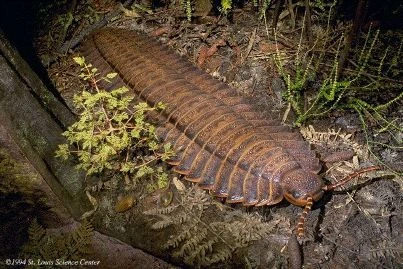
Arthropleura
AnimalWikipedia
8
MENTIONS
6
EPISODES
6
PODCASTS
Search complete. 8 mentions across 6 episodes found for "Arthropleura".
Oct 4, 2026

Joe BartolozziHOST
[squawking]
speaker_1SOUNDBITE_SPEAKER
Arthropleura was an eight-
Joe BartolozziHOST
No, no, no.
Joe BartolozziHOST
Just imagine one of these things just fucking hitting you with a stinger right in the neck about yay thick.

speaker_4NARRATOR
They represent a completely different era of marine life, when the arthropods could grow up to monstrous sizes without any real competition.
speaker_4NARRATOR
Arthropleura was a 1,000-foot-long 2.6-meter-long creature that consumed decomposing plant matter and lived during the Carboniferous Period.
speaker_4NARRATOR
This gigantic tracking animal wandered the beaches and forests of ancient England, feeding on decomposing plant matter and leaving huge marks on the earth.
speaker_4NARRATOR
During the Carboniferous Period, extensive tropical forests acted like the lungs of the Earth, absorbing carbon dioxide and releasing huge amounts of oxygen.
speaker_4NARRATOR
Scientists estimate that during that time, there was between 5 and 10% more oxygen in the atmosphere and this abundance of oxygen is one of the main reasons why Arthropleura could reach such a size.
speaker_4NARRATOR
Another factor was the lack of competition.
speaker_4NARRATOR
With fewer predators and competitors who could challenge it, this gigantic thousand-feet could be allowed to be slow and heavy, limiting itself to open its way, eating through the ancient forests.

speaker_2NARRATOR
They represent a completely different era of marine life when arthropods could grow to monstrous sizes without any real competition.
speaker_2NARRATOR
Arthropleura was a two-point-six-meter-long millipede that consumed mulch and lived during the Carboniferous period.
speaker_2NARRATOR
This giant creepy-crawly roamed the beaches and forests of ancient England, munching on decaying plant material and leaving enormous tracks in the dirt.
speaker_2NARRATOR
During the Carboniferous period, sprawling rainforests acted as the Earth's lungs, drawing in carbon dioxide and breathing out massive amounts of oxygen.
speaker_2NARRATOR
Scientists estimate there was five to ten percent more oxygen in the atmosphere during this time, and this abundance of oxygen is one major reason why Arthropleura could grow so large.
speaker_2NARRATOR
Another factor was lack of competition.
speaker_2NARRATOR
With fewer predators and competitors to challenge it, this enormous millipede could afford to be slow and ponderous, just eating its way through ancient forests.

DanHOST
Maybe if Clay didn't eat so much mammoth, he'd have more articulations.
DanHOST
So the inclusion of the Ice Age greats make this collection, although we're missing Scat, Scrat the squirrel, right? Oh, but hang on, we do have Scute here, the Arthropleura.
DanHOST
Did I even say that correctly? I was trying to figure out where this guy comes from.
DanHOST
Is, does he fit in with the Ice Age? He really fits in his own thing.

Gabby PanicciaHOST
But there are other ones that are bigger.
Gabby PanicciaHOST
So for example, um, the Arthropleura, which are the, like, giant centipede guys, could be about, like, six feet long.
Philip ShaneHOST
Wow.
Matthew StanleyHOST
Ah.

speaker_0HOST
This was a time of great transition, as land ecologies were rapidly transforming with new types of plants, like giant tree-sized lycophytes and the earliest gymnosperms, as well as early variations of the unique vertebrate tetrapods.
speaker_0HOST
The world's developing terrestrial ecologies were populated by all kinds of Paleozoic arthropods, like the two-foot-long scorpion Pulmonoscorpius, enormous myriapods like the giant eight-foot-long millipede Arthropleura, the titanic Meganeura and griffinflys, an older cousin lineage related to modern dragonflies, and all manner of spiders, roaches, and proto-mayflies.
speaker_0HOST
The Carboniferous Period is known for its tropical climates and extensive forest biomes, but these did not appear all at once.
speaker_0HOST
The early Carboniferous was actually a bit more uncomfortable.