Artemisia Gentileschi
Italian painterWikipedia
32
MENTIONS
10
EPISODES
10
PODCASTS
Search complete. 32 mentions across 10 episodes found for "Artemisia Gentileschi".
Oct 1, 2026

Alejandro DolinaHOST
Vamos a hablar de una pintora hoy, de una pintora en una época en que no había pintoras.
Alejandro DolinaHOST
Se trata de Artemisia Gentileschi, que fue una estupenda artista.
Alejandro DolinaHOST
Nació en Roma en 1593, ¿eh? Era la mayor de cuatro hermanos.
Alejandro DolinaHOST
Su papá, Orazio, era un pintor de Pisa.

Philip KennicottSOUNDBITE_SPEAKER
He has some actual paintings from the Renaissance and some classic works from antiquity.
Philip KennicottSOUNDBITE_SPEAKER
There's a painting by Gentileschi, there's a Lucas Cranach, so there's some very substantial art.
Philip KennicottSOUNDBITE_SPEAKER
But then he also has a really extensive collection of cartoons.
Philip KennicottSOUNDBITE_SPEAKER
There's a very popular cartoon from back in the 60s and 70s and a little earlier called Pogo from the United States, and I grew up with that.

Sarah Urist-GreenHOST
To them, works of craft didn't have the deeper meaning that makes something truly art.
Sarah Urist-GreenHOST
In what's considered one of the earliest art historical writings, the lives of the most excellent painters, sculptors, and architects The author, Giorgio Vasari, described great artists as having a nugget of genius that sets them apart from ordinary people.
Sarah Urist-GreenHOST
I like to think of it as a chicken nugget of genius, personally.
Sarah Urist-GreenHOST
We can track some pretty major shifts in how art was thought about through this book.

Sabrina NelsonGUEST
at the detroit institute of arts one is the nkisi and kande the piece with the nails in it and the shards in it yeah um and that piece is is really a promise keeper it's supposed to be in the middle of the village if you make a promise to take care of someone or to do something if you don't keep your promise karma and the nganga takes it to the holy high place and then So I've always felt like we need that in the center of Detroit versus the spirit of Detroit.
Sabrina NelsonGUEST
Also, the head of Hall of Furnace by Artemisia Gentileschi, just kind of taking back the idea of woman power and not feeling like you don't have a voice when you experience trauma, but also knowing that you're strong enough to be your own protector and hero if you need to be.
Sabrina NelsonGUEST
One of the pieces that I will say that I made that I'm certainly most proud of and know that it kind of led me down the path of being an activist is just thinking about what it is to perform as a black bird, as a mother who is wailing, who is burying her child because someone killed them.
Sabrina NelsonGUEST
and i've done that many times and you don't need language when you're talking about grief and trauma literally so people understand that you can watch a mother in gaza you can watch a mother in rwanda you can watch a mother in haiti you can watch a mother who has to bury her child in anguish without words and know exactly that you need to empathize with that

Elissa Yukiko WeichbrodtGUEST
Because I think that that's such a great encapsulation of why I chose the counter story that I did is the counter story for Vessel is being.
Elissa Yukiko WeichbrodtGUEST
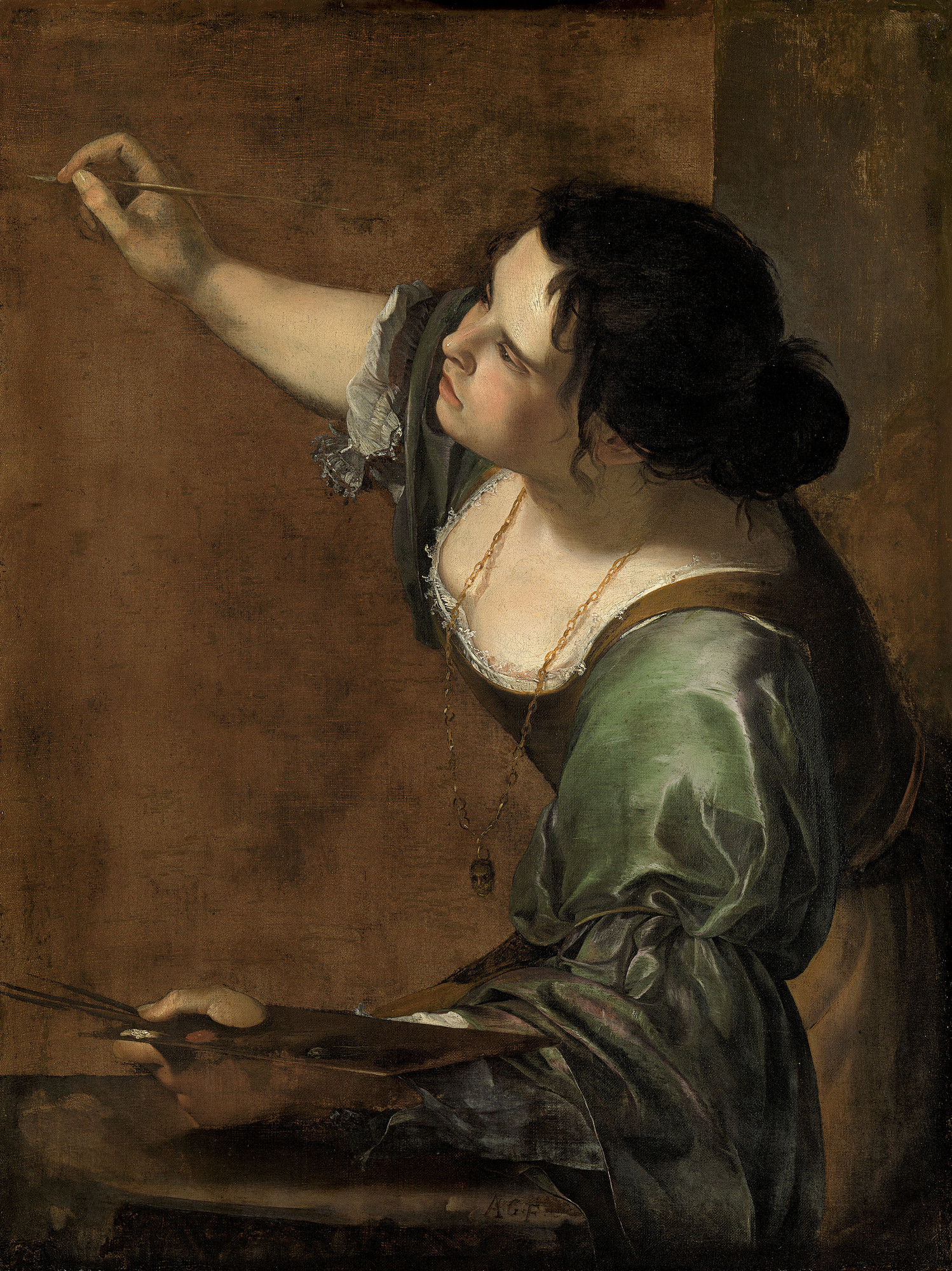
And we look at Artemisia Gentileschi's self-portrait as the allegory of painting, which on the surface, you might think, isn't she just making herself a symbol again? Yeah.
Elissa Yukiko WeichbrodtGUEST
Um, because
Sheila Wray GregoireHOST
that's a very long title for a painting of a woman who like you see the painting, it's, it's kind of neat.
Elissa Yukiko WeichbrodtGUEST
And she is using, um, many of the symbols that were associated with this symbol of painting, with the allegorical sort of personification of painting.
Elissa Yukiko WeichbrodtGUEST
So you are supposed to sort of recognize her as being this personification, this allegory, this vessel.
Elissa Yukiko WeichbrodtGUEST
But at the same time, we're asserting that it is also Artemisia Gentileschi herself.
Sheila Wray GregoireHOST
Right.

Elissa Yukiko WeichbrodtGUEST
So if the vessel story is saying that women's bodies are these kind of empty containers for other people's meaning, the counter story of being is proposing instead that there's value in our particular individual lived experiences as stories that are given to us by God.
Elissa Yukiko WeichbrodtGUEST
And I use Artemisia Gentileschi's self-portrait as the allegory of painting from 1638 as my example here.
Elissa Yukiko WeichbrodtGUEST
Which on the surface, you think, oh, Artemisia, who sort of paints herself as the discipline of painting, right? She's actually painting herself as the metaphorical, the allegorical representation of painting, right? You might think that she's just going along with the vessel's story.
Elissa Yukiko WeichbrodtGUEST
But what I try to show in this counter story is that when we know actually more about Artemisia's lived experience, when we know more about who she actually was and what she endured...

CJ DentonGUEST
Now, some people have said that looks like a pigment grinding stone, which again, would match with all of the painting themes within the work itself.
CJ DentonGUEST
But there's three letters on that stone as well, which is A-G-F. which we think is Artemisia Gentileschi, fessit, which means made this in Latin.
CJ DentonGUEST
So it's saying a little signature in there, but hidden in the background as well.
speaker_9ADVERTISER
It's me,

Howard BurtonHOST
Today, Artemisia Gentileschi is quite possibly the best-known female artist in history, with many of her extraordinarily powerful paintings so strongly reminiscent of Caravaggio.
Howard BurtonHOST
Hardly a surprise, given that both she and her artist father Orazio were part of the first wave of Caravaggist painters in Rome.
Howard BurtonHOST
But despite her enormous international reputation, several Artemisia works are still somehow undervalued, particularly those created towards the end of her career in Naples.
Howard BurtonHOST
Christopher Marshall, the eminent University of Melbourne scholar of the Neapolitan Baroque, is determined to redress that gap.
Howard BurtonHOST
through his wonderfully informative 2024 book, Artemisia Gentileschi and the Business of Art, which paints a captivating picture of this most fascinating artist throughout her entire, often turbulent, but ultimately hugely triumphant life.
Howard BurtonHOST
As is plain to see, I was extremely excited at the prospect of chatting with the ever-genial Christopher, constantly peppering him with many follow-up questions about Artemisia and her world that his book had provoked me to ponder.
Howard BurtonHOST
In fact, truth be told, I probably kept him longer than I should have.
Christopher MarshallGUEST
Thanks so much, Howard.

C.J. DentonGUEST
Well, so the book is called Lapitura.
C.J. DentonGUEST
It follows the life of Artemisia Gentileschi, who is a name that will hopefully be familiar to some people.
C.J. DentonGUEST
If not, she was sort of a Renaissance artist working in the early 1600s in Italy and then later on in the UK and London as well.
C.J. DentonGUEST
The story centers around the idea that although the things that we know about her, which are her early life working in Rome, the assault when she was quite young, the following trial, then her work in Florence, Naples, Venice, and then eventually London, All of those things are really interesting in their own right.