Artemis IV
Space missionWikipedia
64
MENTIONS
33
EPISODES
28
PODCASTS
Search complete. 64 mentions across 33 episodes found for "Artemis IV".
Sep 22, 2026

Paul MackinHOST
So Starship's human landing system is one of the central vehicles, and Blue Origin also has their lunar lander that hopefully – Artemis III is going to test both of those.
Paul MackinHOST
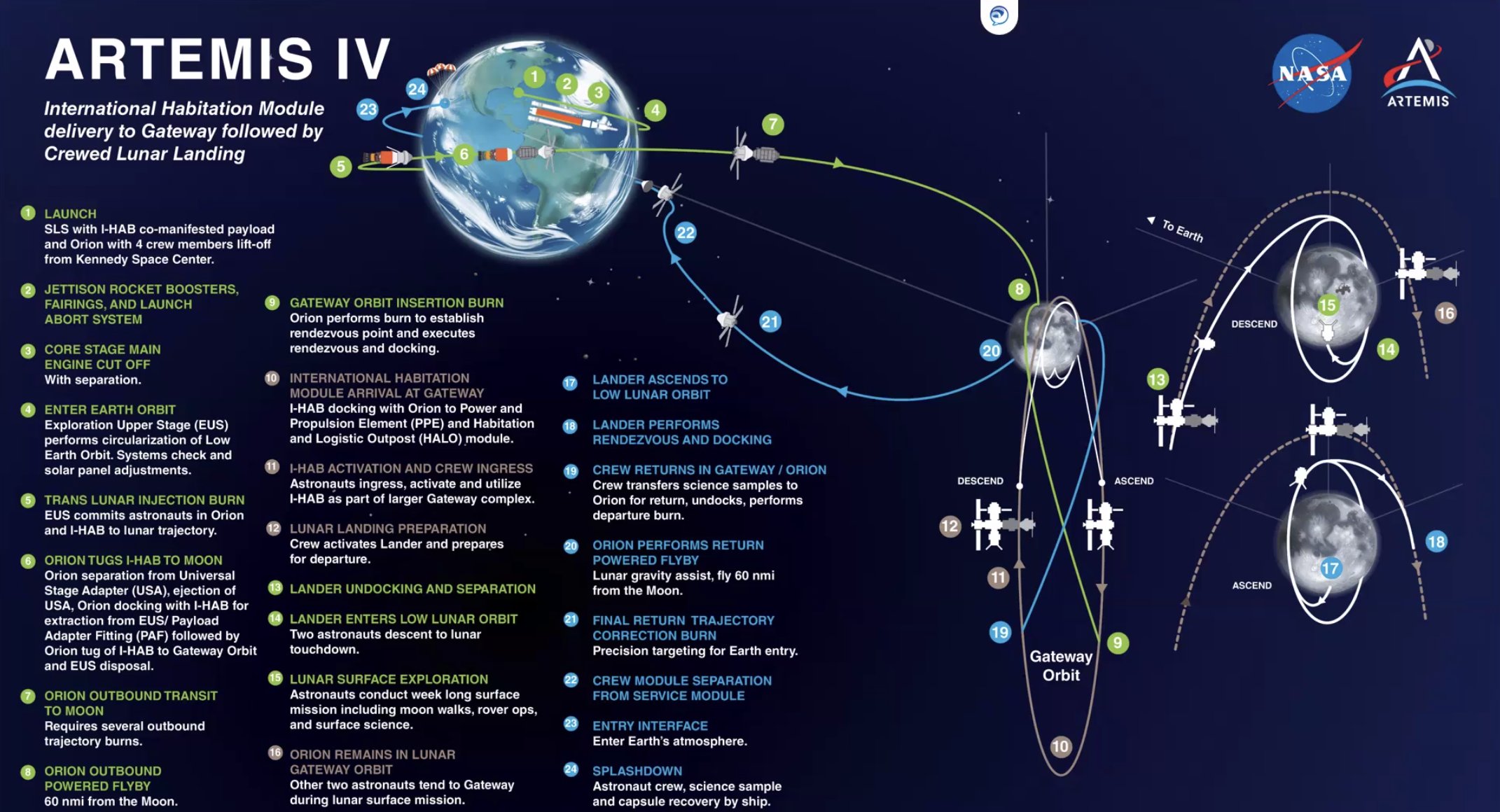
Artemis IV is now targeted to conduct the program's first crewed lunar landing.
Paul MackinHOST
Before Starship can carry astronauts to the Moon, however, SpaceX must demonstrate orbital refueling, long-duration flight docking, and an uncrewed lunar landing.
Paul MackinHOST
So Flight 14 isn't going to accomplish all of that.

Anthony BadolatoHOST
So why go to all this trouble? Because this is a rehearsal.
Anthony BadolatoHOST
On Artemis IV, the plan is for Starship to literally push Orion to the moon, allowing it to stay in a much lower lunar orbit where astronauts ride home could pass overhead every couple of hours rather than once a week.
Anthony BadolatoHOST
So yes, Artemis 3 might be the moon mission that doesn't actually go to the moon, but it could completely rewrite how we get there.
Anthony BadolatoHOST
Okay, that's it from me this week.

Alex McColganHOST
Artemis III will be NASA's most complex crewed mission to date, involving three separate rocket launches and two privately built lunar landers that will carry out a series of demonstrations in low Earth orbit designed to validate critical systems for future Moon landings.
Alex McColganHOST
Artemis IV will push further still, with astronauts actually touching down on the lunar surface, staying approximately a week, more than twice the Apollo 17 record.
Alex McColganHOST
But these milestones are only steps towards a far more ambitious plan, transforming the Moon into a place where people actually live.
Alex McColganHOST
The problem is that when Artemis was announced, we didn't actually have a long-term plan for how to achieve it.
8 MINS LATER
Alex McColganHOST
It will touch down on what's known as the Shackleton Connecting Ridge, a narrow strip of high ground that extends away from the rim of Shackleton Crater.
Alex McColganHOST
This is one of the most scientifically important permanently shadowed craters at the South Pole, because it provides the perfect mix of water ice at the crater floor and almost constant sunlight at the rim, as I mentioned earlier.
Alex McColganHOST
It also has a clear line of sight, making communication with Earth relatively easy, reducing the risk for the later crewed landing of Artemis IV in 2028.
Alex McColganHOST
Other phase one missions, originally targeted to launch in 2026, will deliver international science payloads, and Astrolab's FLEX Lunar Innovation Platform, a rover that will demonstrate important mobility technology and inform future lunar terrain vehicle, or LTV, use.

Chas HollowayGUEST
All right, take these monks, put them in a time machine, and drop them into present day, and give them the job of running NASA.
Chas HollowayGUEST
Tell them to get the Artemis IV astronauts here and their dune buggy to the moon, Aristotle and Plato in hand.
Chas HollowayGUEST
Give them everything they need, the rockets, the astronauts, the whole operation.
Chas HollowayGUEST
You think they'll get anyone to the moon? No.

Jared IsaacmanGUEST
We will test interoperability and show what a future multi-launch campaign can actually look like.
Jared IsaacmanGUEST
What we learn will inform the uncrewed test landings that follow, and then Artemis IV in 2028 when American astronauts return to the lunar surface, and this time to stay.
Jared IsaacmanGUEST
In parallel, [laughs]
speaker_4UNKNOWN
[applauding]

Eben BrownCORRESPONDENT
We're going to send up the crew, and we're going to send up landers to low Earth orbit with Artemis 3, and they're going to practice how that all works.
Eben BrownCORRESPONDENT
And then Artemis 4 will go to the moon, and that's just a couple years away.
JTHOST
Just incredible stuff.
JTHOST
Evan Brown, thanks for the insight this morning.

Ken FordHOST
The crew will launch on SLS and Orion, remain in Earth orbit, and test rendezvous and docking operations with test versions of the SpaceX and Blue Origin landers.
Ken FordHOST
The first planned crewed landing at the Lunar South Pole has been moved to Artemis IV, now targeted for 2028.
Ken FordHOST
So to directly answer part of what the listener asked, the four astronauts who were just announced are training for Artemis III, but under the current plan, that mission stays in Earth orbit.
Ken FordHOST
They're not the crew that will land on the Moon.
Ken FordHOST
That would be Artemis IV with the crew that's yet to be finalized.
Ken FordHOST
This change is both sensible, assuming that the test articles have sufficient fidelity to the real thing, and also revealing.
Ken FordHOST
It is sensible because rendezvous and docking between Orion and commercial lunar landers is not trivial.

Alex G. OrphanosHOST
At the moment, the NASA administrator is playing a very good game of politics, which is very much needed to keep NASA focused on the main goal, which is the Artemis missions.
Alex G. OrphanosHOST
Artemis 3 is right around the corner with the first moon landing, Artemis 4 right behind it.
Alex G. OrphanosHOST
This is all happening while NASA has a much smaller budget than Apollo and programs like New Horizons and others need to try and survive with as little budget as possible while funding comes back.
Alex G. OrphanosHOST
That is a real backdrop to what's happening now.

George W. BushSOUNDBITE_SPEAKER
Using the crew exploration vehicle, we will undertake extended human missions to the moon as early as 2015 with the goal of living and working there for increasingly extended periods of time.
Greg JacksonHOST
Now, that last mark won't quite get hit, though Artemis IV is scheduled to land astronauts back on the moon sometime in 2028.
Greg JacksonHOST
But in the immediate aftermath of George W. Bush's rousing speech, Congress approves the $16.2 billion he asked for to kickstart that vision.
speaker_4ADVERTISER
Now that the school year is officially underway, families are getting a clearer picture of where students are thriving and where they might need a little extra support.

Jared IsaacmanSOUNDBITE_SPEAKER
Artemis III launches in 2027.
Jared IsaacmanSOUNDBITE_SPEAKER
Artemis IV is when American astronauts return to the lunar surface in 2028.
Jared IsaacmanSOUNDBITE_SPEAKER
And in parallel, we are building the moon base.
Jared IsaacmanSOUNDBITE_SPEAKER
We're even going to have a moon base website.
23 more episodes mention Artemis IV.
Create an account to see the whole feed, search across every transcript, and follow the entities you care about.