Army of the Potomac
Military unitWikipedia
136
MENTIONS
36
EPISODES
32
PODCASTS
Search complete. 136 mentions across 36 episodes found for "Army of the Potomac".
Nov 7, 2026

Gloria LowryNARRATOR
End of section 0.
D. L. MartinNARRATOR
read by dr e l martin reminiscences of an army nurse during the civil war by adelaide smith a view of the situation heart strong south would have his way head strong north had said him nay they charged they struck both fell both bled brain rose again ungloved sidney lanier centennial poem it is not my intention to write history but it seems advisable to mention in a few brief notes or extracts for the benefit of the present generation the sentiments held during the civil war when the first confederate shot was fired upon the united states flag then floating over fort sumter in charleston harbor many months of unrest foreboding and apprehension of a coming terror were experienced by the people of the north this fatal shot caused the separation of hitherto devoted families fathers and sons were arrayed against each other some in hate some in sorrow and even mothers wives and sisters shared this unholy animosity all took pronounced sides with north or south except the copperheads whom all loyal northerners despised general winfield scott the hero of many a hard-fought mexican battle though quite superannuated was still in command of the united states armies imperative supercilious and austere disciplinarian usually adorned with all the ornamentation of his rank with chapeau and white plumes he was especially when well mounted a conspicuous figure quite justifying his sobriquet of fuss and feathers in consequence of the secession of south carolina on december twentieth eighteen sixty general anderson commander of the forts of the harbor of charleston bay evacuated fort moultrie six days later the star of the west bringing reinforcements was fired upon by the confederates thus preventing the landing of united states troops on april eleventh eighteen sixty one general anderson refused an order to surrender to general beauregard who during the twelfth and thirteenth ordered a furious bombardment from the surrounding forts upon fort sumter being unprepared for the attack general anderson was compelled to capitulate and to take refuge with his garrison on ships outside the harbor on april fourteenth eighteen sixty one however he saved the national flag which is now carefully preserved in the museum of the war department at washington no casualties having occurred the fort was held by the confederates till the evacuation of charleston february seventeenth eighteen sixty five on april fourteenth eighteen sixty five general anderson had the happiness to raise the old flag once more with his own hands over the demolished fort the following extracts from an unpublished letter of john white chadwick were selected and kindly given me by mrs chadwick some extracts from an account of a trip to charleston and back on the occasion of the raising of the flag on fort sumter after the civil war land ho when at last it was permitted us to raise this cry we were indeed a happy company we entered into the experience of columbus and cabot and balboa the pilot came on board he told us as the pilots always did to come to anchor and we obeyed him and lying there on the still water in the perfect air there came another feeling than that of joy the atmosphere grew heavy with deep thoughts and wonderful associations our hearts were softened and our eyes were dashed with sudden tears in dark and lurid splendour all the great events of four long painful years rose up before us and then again we hoisted anchor and steamed slowly up toward the city in the deepening twilight the warships lying there like terrible grim monsters manned their rigging as we passed and cheered us lustily but there was something in our throats forbidding us to answer them with equal heartiness passing under the battered walls of sumter we sang with trembling voices praise god from whom all blessings flow and to the left was wagner and the ditch where colonel shaw was buried with his dark but trusty men it happened so that god in his great mercy permitted us to be bearers of great tidings to the city news of the rebellion's virtual end to this community which saw its mad beginning once shouted from our deck it flew from wharf to wharf from ship to ship and was received with shouts of thankful joy the night shut in over the accursed city as a band upon the wharf played the dear strain america it was a time never to be forgotten pregnant with thoughts that must remain unspoken before i tried to sleep i stepped ashore and just for a moment standing there under the silent stars thanked god that he had punished awful sin with awful retribution on friday just after ten o'clock we started for the fort in the steamer golden gate which the government officials kindly placed at our disposal about the fort the scene was at once beautiful and exciting there were thirty ships and steamers in its immediate vicinity and they blossomed all over with flags and the little boats belonging to the warships were shooting here and there and everywhere obedient to the lusty strokes of their stout oarsmen dressed for the occasion in their very best we were on shore by half-past twelve o'clock and wandering at will about the tattered mound that had once been fort sumter indeed they had made ossa like a wart it had no form or comeliness it was a perfect heap anon came general anderson and mr beecher and the rest the general's speech was for so great an hour the very smallest possible affair but when it came to raising the old flag he did hoist away like a good fellow and it went up right handsomely the people rose up as one man and shouted their hurrahs as if they thought to wake the echoes from the st lawrence to the gulf and the band played the star-spangled banner just as if they meant it as they did of course and then from ship and fort the cannon thundered away like mad and when they ceased with their roar mr beecher took it up and thundered to good purpose for an hour or more saturday saw william lloyd garrison preside over an assembly of two thousand colored people if not more in zion church and noble words were spoken which these people did not fail to understand from charleston wharf to hampton roads our voyage was pleasant and the weather very fine going into hampton roads on tuesday swiftly and silently over the still water we saw a vessel with her colours at half-mast not long after a pilot shouted to us across the waves from a great distance that the president was dead either we could not or would not believe it another vessel sailed along with drooping colours and told us how he died and then the shadow of his death swept down and folded from our sight all of those great and rare experiences which we had been enjoying it seemed to us that we should never be able to recollect them from that shadow we went ashore at the great fortress where his dear feet had been scarcely a week before but we had no eyes to see anything it had been proposed to go to portsmouth norfolk and to city point but we had no heart for it and so we came together in the cabin and voted that we would go home john white chadwick the government called for seventy five thousand troops on april fifteenth to put down the rebellion in ninety days according to secretary seward's confident announcement on april nineteenth the sixth regiment of the massachusetts brigade first to respond to the call was fired upon by a mob while passing through baltimore and a number were wounded and some killed the ellsworth zouaves were enlisted chiefly through the enthusiastic patriotism of young colonel ellsworth who on arriving at alexandria with his regiment saw a confederate flag flying above a small hotel and at once ordered the flag hauled down this was refused and the indignant boy rashly rushed to the roof and dared to pull it down himself when he was shot dead by the rebel owner colonel ellsworth was killed may twenty fourth eighteen sixty one lincoln's grief at the death of this daring boy was overwhelming ellsworth had studied law with him for a time in his office and he loved him as a son and as a son and early martyr of the war he was laid in state at the white house for funeral services war with its untold horrors had begun meanwhile it was becoming evident that president buchanan had permitted or had at least become strangely blind to the introduction of foreign ammunition into southern ports while the traitor secretary floyd still under oath to the union held his office until the last possible moment encouraging and assisting the salle in building forts and in many ways accumulating almost openly materials of war at last the people awoke to the fact that many southern regiments and garrisons were well equipped for the conflict while the unsuspecting north was almost wholly unprepared people had become so accustomed to fire-eaters bluster and their threats and boastings of the superior prowess of the south that if they listened at all it was considered mere political bombast which passed unheeded until war was actually begun in november eighteen sixty one general mcclellan superseded general scott who then retired from active duty at the age of seventy-five and died later at the good old age of eighty general mcclellan began a slow thorough system of discipline which was very trying to the enthusiasm of volunteer recruits who soon discovered that to use the pick and shovel were as essential duties as carrying a musket and were now compelled to work in swamps and trenches throwing up earthworks and intrenchments for many long months the impatient public claimed that egotism and ambition prevented general mcclellan from moving on to richmond thus prolonging the war and his army settled down before the enemy in masterly inactivity during this time many disgruntled soldiers climbed hills and trees and saw the city of richmond practically defenseless for three days still he did not move this large army had lived and worked in earthworks for many weary months until malaria and dysentery had sent hundreds of incapacitated soldiers north to be cared for they were among the first bitter fruits of the terrible struggles scarcely yet begun not long after the defeat at bull run manassas both sides claimed the victory did we for a moment believe that southern courage was equal to northern valor in an open conflict or that the rebellion could not be put down within a few months and so we stood aghast when the attack under general mcdowell failed to put down the rebellion in a single battle general horatio c king in his address before the thirty-seventh reunion of the army of the potomac repeated these potent words of general grant as i recall the interview general grant spoke in substance as follows i cannot imagine why any one should conceive for a moment that i would not be glad to work in any capacity with general mcclellan i have known him but little personally since we served together in mexico but i have always admired him both as a man and as a soldier and i am probably under greater obligations to general mcclellan than to any one man now living general mcclellan was called to a great command unfortunately for him too early in the history of the war when many difficult military and political questions remained unsettled he and his acts were the subject of wide discussion and unjust criticism but general mcclellan was the man who created the great instrumentality with which i had the honor of closing out the rebellion General McClellan organized, trained, disciplined, led, and inspired the army of the Potomac.
D. L. MartinNARRATOR
General McClellan made that army the finest fighting machine of our day, if not of any time.
D. L. MartinNARRATOR
It was his good work in creating that army which enabled me in my turn to accomplish the things for which I received the glory, and for all of which I am grateful to General McClellan.
D. L. MartinNARRATOR
End of chapter 1 CHAPTER II.
D. L. MartinNARRATOR
REMINISCENCES OF AN ARMY NURSE DURING THE CIVIL WAR.
D. L. MartinNARRATOR
in july eighteen sixty two one hundred and twenty five patients from the army of the potomac were sent to the long island college hospital no adequate preparation had been made to provide for these sick men through the press a public call was sent out for volunteers many ladies and gentlemen at once offered to help care for the sick and to supply food for their emaciated bodies an endorsement of the distinguished physician of romson street dr burge made me quite happy by affording me the privilege of helping to care for the soldiers in our city among the large number of our best brooklyn people to volunteer their help and support was our saintly mrs richard manning who continued her ministration throughout the long duration of the war and for many years after gave substantial help to the destitute families of soldiers and also mrs anna c field chief organizer and president of the women's club as well as of the women's suffragist association both of these clubs celebrated during the spring of nineteen o nine in the new brooklyn academy of music the fortieth anniversary of their organization i believe that in modern brooklyn no other woman has done so much in her long life of benevolence and charity as this mother of brooklyn clubs for the elevation and encouragement of women especially in ethics and literature watches of four hours each during the day were assigned to the women and at night the same number of hours were allotted to men volunteers owing to the astonishing liberality of the citizens of brooklyn the hospital donations seemed like a great cornucopia overflowing the larders of the improvised kitchen tender motherly care combined with the best of diet at once restored many a poor hungry homesick boy most of them recovered and returned to their regiments or were sent home my first patient was a bright cheerful young man allan foote of michigan who had been dangerously wounded by a shot that passed through the left lung and out at his back such wounds were then supposed to be fatal he was however convalescent and later was discharged when he returned to his home in michigan he again enlisted raised a company and went out once more to the front as captain this time he served till the end of the war when he returned to his native state safe and well a lady wishing to say something flattering of him to a visitor remarked why he was shot right in his back seeing the boy wince at this imputation i explained that he had received that shot in the breast while facing the enemy in battle among many incidents of his early army life allan foote told me the following i shall never forget his expression when my father gave his written consent to my enlistment in the army in april of sixty one as he handed it to me and said while tears were running down his cheeks my son do your duty die if it must be but never prove yourself a coward we can hardly imagine at what cost that was given and it is now a source of much satisfaction to me to know that god in his mercy so guided me while in the service that no action of mine has ever caused a pain to my father's heart and when i returned at the close of the war he seemed as proud of my scars as i was john sherman was a remarkable case of lost identity he was eighteen years of age six feet in height with broad shoulders and a washingtonian head and seemed like some great prone statue as he lay perfectly helpless but for one hand a gentle fair-haired boy to whom we became much attached he was evidently refined and perfectly clear on religions and political subjects though without a wound he had been completely paralyzed by concussion caused by a cannon he could take only infant's food and drank milk which was all the nourishment he could retain the mystery was that he claimed to come from cataraugus county n y but when i wrote letters to every possible locality nothing could be learned of such a boy nor could the officers of his regiment trace him during this time some scamp who claimed to come from his town was admitted through the carelessness of the hospital attendants and so deceived the poor boy that he gave him ninety dollars army pay just received to send home to his father of course the scamp was never heard of again my theory is that he enlisted under an assumed name and town and had after the concussion forgotten his real name and identity he was sent to the fifty-second street hospital where i saw him a year later walking alone and quite well a finely developed physical form though he knew me he held to his old statement later he was cruelly persuaded to ask for a discharge which left him homeless with no refuge but the poor-house soldiers homes were then unknown and i fear that at least for a while he was cared for as a pauper about this time i went to the field week and lost sight of him though i have often wondered what his fate has been a miserably thin gaunt boy whom we knew as say came under my observation he was never satisfied though he ate enormously and whenever we passed through his ward he invariably shouted say ye ain't got no pine or cake nor cheese nor nothin have ye when he reached home his father a farmer sent to the hospital the largest cheese i ever saw this the men all craved but it was a luxury denied them by the doctors patients often had it smuggled in one poor fellow was found dead one morning with a package of cheese under his pillow as the l i c h was a city hospital emergency and other cases were often brought in a pathetic case was that of a little boy about six years old who had been run over by a street car as he lay pale and mangled awaiting the time to have his leg amputated his mother in broken english crooned and mourned over the unconscious child saying ach my little poy he will nefer run mit otter poys in the street and haf not any more good times i saw that the child would not live through the operation and tried to comfort the poor mother while it was going on when the mutilated stark little form was returned to her her grief knew no bounds though she still believed he would revive in another ward poor isaac was slowly dying of dysentery gasping for a drink of cool water which the rules of the profession at that day denied to such patients day after day he lay helpless while a large water-cooler dripped constantly day and night before his feverish eyes and parched body one day he called to me and said won't you please sit on my cot so i can rest my knees against your back they are so tired and i can't hold them up poor fleshless bones that had no weight somewhat relieved while i sat there he went on now miss smith you think i am dying don't you well isaac i replied hesitatingly we fear you are then with all the strength of his poor skeleton body he exclaimed oh then give me a drink of water that i may die easier you know i am dying so it can do no harm could i refuse a dying man a drink of water even in the face of orders he wanted just a pint watching my chance i went quickly to the cooler and brought a glass of cool water with unnatural strength he raised himself and reaching out for the glass grasped it and swallowed the water with one great gulp then returning the empty glass he cried there that was just half oh give me the other half this i did rather fearfully after greedily drinking the water he dropped back with a sigh of relief saying now i can die easy i arranged quietly with my patients in the ward so that he could have water as long as he lived but not many days after i found his empty cot the hospital at that time was little known being quite obscured under the limitations of two conservative retrogressive old doctors who showed no favour or sympathy for the sick men and seemed to see them only as probable subjects many just protests from the kindly women workers were utterly disregarded by these doctors dr colton a handsome young man then an intern though not of age or yet graduated found himself often between the upper and nether millstones of the urgency of volunteer workers and the immovable implacable heads of the hospital dr colton now a successful retired physician occupies a prominent position in this hospital which in late years is ranked among the very best of brooklyn's institutions meanwhile the people grew tired of the continual demand for supplies toward which the hospital contributed very little though it drew regularly from the government rations in the form of thirty-seven cents per day for each man consequently public contributions became very meagre then in the autumn came ninety-one sick and wounded soldiers who stood or dropped on the grass plots surrounding the hospital while waiting to be enrolled a procession of gray skeletons they were ghastly dirty famished with scarcely the semblance of men one of them stared at me rather sharply and seeing that i observed it said excuse me ma'am i haven't seen a white woman before in many months and it seems good to look at you it became difficult to get proper food in the hospital for the men some of the volunteers like myself could still give their whole time and thought gratuitously and we continued bringing supplies from our homes for special cases my mother sent gallons of shell clam juice the most healing of all natural tonics when boiled in the shell which became popular in the hospital my mother also invited companies of four or five convalescents at a time to a good square meal when they always chose for their suppers coffee buckwheat cakes and sausages two gallons of batter would become hot cakes and it took the combined help of the whole family and the cook to keep them supplied but the hungry boys were at last satisfied and happy i had no difficulty in obtaining passes for them as they felt in honor bound to return promptly to the hospital one poor fellow dying of typhoid was so irritable and profane to the ignorant heartless men nurses of the hospital that they would not care for him during the night realizing that the end was near and feeling certain that he would otherwise die alone i decided one night to remain with him until his last breath just before he died even while the pallor of death overspread his face he struck at the nurse whom i had compelled to stay near to help him at last the poor dying man gasped lift me up higher higher higher we raised the poor skeleton as high as we could reach and it was all over his family refused his body saying he was no good to us in life why should we bury him it is not difficult to imagine that his home influences had been unfavorable to the development of moral character clancy then a fine-looking kindly policeman had waited to take me home near morning as he did on other occasions of this kind some months later being almost the only young woman still visiting the hospital i felt obliged to report to that rarely good man mr macmullen whose benevolence and generosity had at first brought the patients to the hospital and to the care of the people the neglect of soldiers who were then treated like charity patients he immediately reported these conditions to the medical department and the men were removed to the government hospitals which were by this time systematized and in good running order after the patients had been transferred from the long island college hospital i secured a pass on the steamboat thomas p way to visit hospitals of the department of the east in charge of surgeon macdougall a thorough disciplinarian and a just kind man david's island on the sound had a finely conducted hospital with a diet kitchen in charge of ladies there i saw hundreds of well-fed happy confederate patients so many indeed that they could not be supplied at once with proper clothing and so made a unique appearance as they walked about in dressing-gowns white drawers and slippers they were soon to be exchanged for our own poor skeleton boys who were coming home slowly and painfully some dying on the way to be met by kindly hands and aching hearts eagerly awaiting them fort schuyler hospital on the east river was formed like a wheel the hub being headquarters and the spokes extending into wards for patients one young man of much refinement had been at one of our home suppers and afterwards the company made a pact that if we were alive one year from that date we should hear each from the other he exclaimed dead or alive you shall hear from me being a spiritualist he believed this possible he was sent to fort schuyler and one month later died of smallpox at the appointed date and hour a year later i thought of this pact and tried to put myself in a receptive state i did not however see him nor feel any manifestation of his spirit chapter two Chapter 3 of Reminiscences of an Army Nurse During the Civil War This is a LibriVox recording.
D. L. MartinNARRATOR
All LibriVox recordings are in the public domain.

PatHOST
Ambrose Burnside was put in charge of that.
PatHOST
And then, um, George Meade would end up becoming the leader of the army of the Potomac, which would be the army that fights in Gettysburg.
PatHOST
So what you notice is with a lot of these officers, especially the union officers and the Confederate officers for that matter, like Lee Longstreet, um, Stonewall Jackson were all veterans of the Mexican American war, uh, as were guys like Grant and George Meade, etc.
PatHOST
But where Grant was like a quartermaster, he saw a little bit of action there in the Mexican-American War, but he was more of an administrator and less of a soldier.
PatHOST
So that's where the Mexican-American War kind of ties in.
PatHOST
Now, with Gettysburg, and I'm going to be talking about Gettysburg now, I want to get to Custer because Custer plays a very important part that gets forgotten about in Gettysburg.
PatHOST
The whole point of Lee advancing into Pennsylvania was to kind of attack washington from like a northwest northwestern angle sure kind of going down because he figured if he can put some serious pressure on washington that's it the only thing that's really stood in the way was george needs army of the potomac lee's gold for this battle was to destroy the army of the potomac make it a non-factor this is a huge military force we're talking hundreds over a hundred thousand soldiers i think was at its max strength a big military coalition that was set up right there to defend this exact type of thing.
PatHOST
Nobody knew exactly where the Battle of Gettysburg was going to happen, but as Lee starts pressing northward, you knew that they were going to run into each other at some point.

Stephen K. BannonHOST
General McClellan, you know, highly unlikely.
Stephen K. BannonHOST
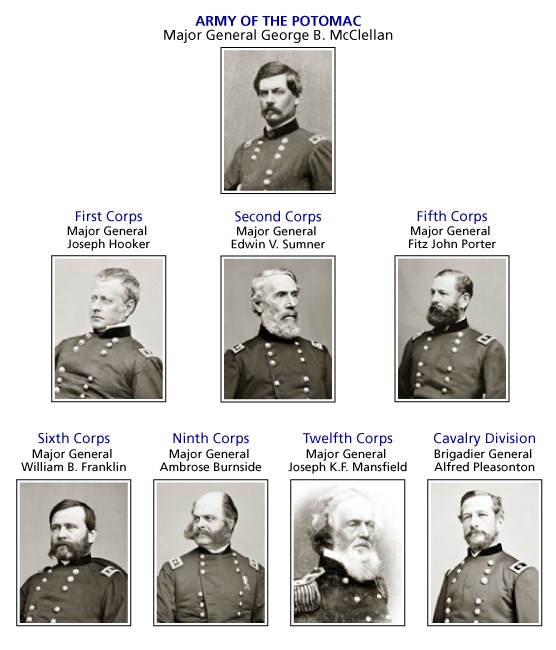
that we would be the United States of the 19th century and leading into the 20th century if General McClellan had not organized the Army of the Potomac in the incredible way he organized the Army of the Potomac.
Stephen K. BannonHOST
And he was relieved for cause because he couldn't deliver victories in the field.
Stephen K. BannonHOST
He wasn't winning.

DanHOST
And that's going to do it for today.
DanHOST
So I previously teased about somebody getting fired, and that's because on this day in 1862, President Lincoln signed the order removing George McClellan as the commander of the Army of the Potomac.
DanHOST
Lincoln had grown frustrated with McClellan's caution, especially his failure to chase Robert E. Lee's army after the Battle of Antietam.
DanHOST
Lincoln reportedly said that McClellan had a case of the slows.

Preston ScottHOST
Okay, it's November 5th.
Preston ScottHOST
Frustrated by Union troops' lack of success, Abraham Lincoln, on this date in 1862, removes George McClellan from command of the Army of the Potomac.
Preston ScottHOST
What a decision that turned out to be.
Preston ScottHOST
You know, we talk often as we do these history segments about how a simple choice can change the entire arc of history.
speaker_6ADVERTISER
Book your next stay with Vrbo now.
KevinSNARRATOR
our regiment being on the reserve supporting a battery our loss was not heavy on the eighteenth our corps relieved the ninth burnside's corps at the lower bridge on the nineteenth we expected another battle but the enemy had retreated during the night we pursued them through sharpsburg capturing many prisoners and several pieces of artillery we went into camp and excepting a two days raid to lee's town remained quiet until october thirtieth when we started for harper's ferry and crossed the river into virginia once more chapter five of memories of the civil war by henry james under arrest although the years have long gone by and i ought to wear a wig i often give a smile or sigh to the memory of that pig and how we carried him that day upon that weary tramp and thought that we would have a feast when once we got to camp but when at last we stopped to rest and cooked that little beast we never even got a bite the general had the feast l m james my company was detailed to guard the ammunition train on its way back into virginia before starting on the march we had general orders read to us forbidding all foraging in maryland on the first day's march towards harper's ferry several of the boys myself included noticed a number of small pigs in a field near the road as we had been on very short rations for about a week it seemed to us a good chance to have a feast when we went into camp so over the fence after the pigs we went as i raised my gun to fire at a pig i saw general griffin who commanded our brigade and his staff passing along the road on the further side of the wagons i waited until i thought he was beyond the sound of my rifle and then fired the bullet passed through the pig struck a stone glanced and went down the road passing within a foot of the general's head for he had stopped for a few moments instead of riding on as i had supposed after i had shot the pig one of the boys ran up and was using the butt of his gun to finish him and stop his squealing when suddenly we were surrounded by the staff of general griffin i made a break for the road but found it was of no use for the general himself stood by the fence so back i went and with the rest of the boys was placed under arrest orders were given to march us to camp without rest and carry the pig along which we took turns in doing it was a long pull and when i could march no longer down i sat the guard repeated the order i am going to rest i said don't let the general see you said the guard i did not rest long but travelled all day without anything to eat for we had left our haversacks and overcoats in the teams which were now a long distance ahead at night we went into camp then had to dress the pig and it was cooked for the supper of the general and his staff and we poor fellows got nothing we pitched the general's tent and were then turned over to the provost guard about eight o'clock i went under guard to the general's tent to do something he wanted done guard to your quarters said the general this man will not run away no general i will not said i and i quickly performed the duty required of me and went back to the provost guard at ten o'clock we were all sent under guard to our regimental headquarters our colonel had just rolled himself up in his blanket for the night and did not care to be disturbed do you know where your company is he demanded yes sir we answered without any regard for facts go to it he ordered and we gladly started free men once more there were one hundred thousand men in the camp and to find one small company in the middle of the night was no easy task but about daylight we found the teams in our haversacks got something to eat and started off on the march again so ended the only time in my life that i was a prisoner or under arrest chapter v in camp comrades known in marches many comrades tried in dangers many comrades bound by memories many brothers ever let us be wounds or sickness may divide us marching orders may divide us but whatever fate betide us brothers ever let us be an old army song the army of the potomac on november tenth eighteen sixty two was massed near warrington virginia where general mcclellan was relieved from command of the army i shall never forget the grief that was manifested by the soldiers on the removal of this popular commander ever mindful of the welfare and comfort of his men he had won a warm place in their hearts and enjoyed the respect and esteem that was never accorded any other commander The following verses were sung in camp and on the march long after he left us.
KevinSNARRATOR
the order came the die was cast mclellan was removed at last while far and near or hill and dale in thrilling notes the accents fell come back to us mclellan the bold the brave the fearless men when he had passed beyond their ken bowed down their heads their tears to hide while still within their hearts they cried come back to us mclellan his chieftains came to say farewell and in the evening camp light fell the tears they strove in vain to hide while from their sorrowed hearts they cried come back to us mclellan go to the warriors on the field charging upon the rebel steel and while they deal the fatal blow hark to the cry now high now low come back to us mclellan go to the soldier sorely tried go to the sick one's lone bedside stand by his cot ere the soldier dies and listen to his feeble cries come back to us mcclellan go to the tented camping-ground where dirt and dust and mud abound and from the restless slumbering ones in murmuring words the entreaty comes come back to us mcclellan jonas a bigelow united states army he was succeeded by general burnside and after a week of rest we started for falmouth va and on the twenty second went into camp at stoneman's switch here we remained most of the time all winter although we expected every day to be ordered off on the march again for the unknown somewhere i well remember the hungry thanksgiving day spent here we were a long ways from our base of supplies at acquia creek and all that we received was brought in wagons for several miles over hard and rough roads from belle plain for a week we lived on hardtack and the morning of thanksgiving day we received the last of the supplies in our regiment half a cracker for each man this was all we had until afternoon our officers were out all the morning hunting in every direction for food and at last succeeded in borrowing twenty boxes of hard bread which was all that the officers and men had that day how we thought of home that day and the good dinners that we had enjoyed on former festival days how little our friends at home would have enjoyed their feast could they have known that we were starving in the course of the day i happened to see near the tent where the officers bought their supplies for they did not draw rations like the rank and file a few beans that had been trodden down into the mud i carefully picked them out and perhaps got half a pint altogether which i washed and stewed and with my tent mate made out our thanksgiving dinner this was not the only time i have gone hungry many a time have i suffered from hunger from cold and from heat but i shall ever remember that particular time for it seemed to make me still more hungry as i thought of former thanksgiving feasts and the food i had wasted but such are the fortunes of war and we bore it as we did all other discomforts as part of the price that must be paid that our flag might again wave over an undivided country End of chapter 6 Chapter 7 of Memories of the Civil War by Henry B. James The Sleeper Fox recording is in the public domain.
KevinSNARRATOR
Fredericksburg of all the terrible sights of war the worst and most fearful sight is the stubborn struggle of gallant men in brave but unequal fight the useless charge and the shattered ranks and the slaughter and the flight edward willet here we remained for some weeks building ourselves log shanties chopping wood standing guard being drilled inspected reviewed and now and then going over towards the river and watching the confederates making their works good and strong against the time when we were ready to attack them while we were making ready they were building and strengthening works that would be beyond the power of mortal man to carry by assault and yet that was what we were called upon to do, when at last General Burnside had got his army ready for active service.

Karl SternHOST
At some point, Harry Hill would promote or partner with such pioneer era greats as Homer Lane, John McMahon, Colonel James H. McLaughlin, and even William Muldoon.
Karl SternHOST
1864 april of 1864 another name you probably possibly not very familiar with although he was a significant wrestler back then george g.w flag he was a long time wrestler even by 1864 and a member of the vermont infantry he leaves the hospital after recovering from a leg wound and wins the grand champion of the army of the potomac in a gettysburg tournament yes It wasn't all fighting amongst the Civil War people.
Karl SternHOST
Yes, the Civil War was horrible, and the fighting, by today's standards, people couldn't even fathom the bloodshed that happened during the American Civil War.
Karl SternHOST
But what you often don't hear about is, what were they doing when they weren't fighting? Well, they were marching from place to place.
Karl SternHOST
There weren't cars back then, so they marched these long marches to wherever they were going to fight or defend, and so you had a lot of time you're sitting around the camp playing cards or things and wrestling yes wrestling so none of these were official titles it's not like the army of the potomac said we're going to crown a wrestling champion in gettysburg now this was the guys in the army said well you know gw flag he's a really good wrestler what about some of these other fellows They would bet money, bet whatever they had, bet red stories, even buttons on their clothing they would bet.
Karl SternHOST
Whatever they had of any value they would bet.
Karl SternHOST
G.W. Flagg became the champion of the Army of the Potomac in Gettysburg.
Karl SternHOST
Flagg was the wrestling champion and physical instructor for the Vermont 2nd Infantry.

Christopher FeinsteinSOUNDBITE_SPEAKER
That's part of what came up that road.
Christopher FeinsteinSOUNDBITE_SPEAKER
The Union Army, the Army of the Potomac, was chasing them.
Christopher FeinsteinSOUNDBITE_SPEAKER
They'd just swapped commanders, again, from Joe Hooker to George Meade.
Christopher FeinsteinSOUNDBITE_SPEAKER
Meade had been in charge for three days.

Allen WestGUEST
So they made him an officer, a major, then lieutenant colonel immediately.
Allen WestGUEST
There he was at the end of the line, the Army of Potomac, there at the Battle of Gettysburg.
Allen WestGUEST
He's told that he cannot surrender, he cannot retreat, or else the 90,000 men of the Army of Potomac would be captured by Robert E. Lee and the Army of Northern Virginia.
Allen WestGUEST
He is the man, a college professor of rhetoric, who said a word that had never been uttered by any leader in the Union Army when he said, bayonets.
Allen WestGUEST
And he led a bayonet charge down Little Round Top that rallied and won the day, the second day of Gettysburg, defeated the Alabamians who were under John Bell Hood.

Lynn ThompsonNARRATOR
THE OPENING OF 1863 HOOKER'S PLANS after the great disaster of fredericksburg general burnside the commander of the union army was superseded by major-general joseph hooker a graduate of west point who having formerly held a high position on the staff of general gideon j pillow in the war with mexico was supposed to be well acquainted with military operations on a large scale he had subsequently left the army and had been engaged in civil pursuits for several years He was a man of fine presence, of great personal magnetism, and had the reputation of being one of our most efficient and successful Corps commanders.
Lynn ThompsonNARRATOR
When the campaign of Chancellorsville commenced, the Army of the Potomac was posted on the left bank of the Rappahannock, opposite Fredericksburg, among the Stafford Hills, in a position which was considered almost impregnable.
Lynn ThompsonNARRATOR
It rested upon the Potomac River, and as all of its supplies came by water, they were not subject to delay or interruption of any kind, nor were they endangered by the movements of the enemy.
Lynn ThompsonNARRATOR
At the period referred to, General
39 MINS LATER
Lynn ThompsonNARRATOR
To provide for the latter contingency, the following order was
Lynn ThompsonNARRATOR
issued.
Lynn ThompsonNARRATOR
Headquarters, Army of the Potomac, Chancellorsville, Virginia, May 2, 1863, 9.30 a.m. Major General Slocum and Major General Howard.
Lynn ThompsonNARRATOR
I am directed by the Major-General Commanding to say that the disposition you have made of your corps has been with a view to a front attack by the enemy.
26 more episodes mention Army of the Potomac.
Create an account to see the whole feed, search across every transcript, and follow the entities you care about.