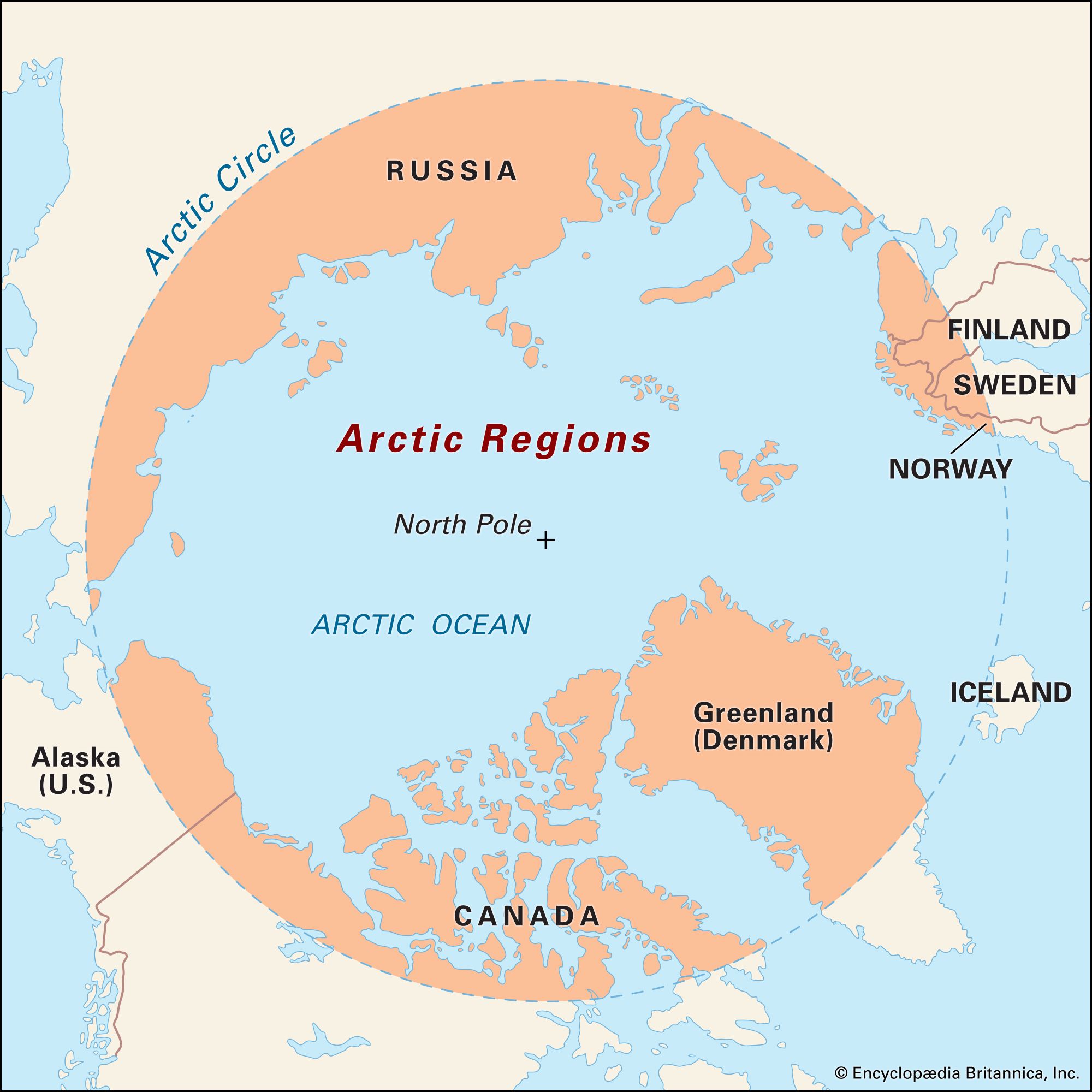
Arctic Circle
127
MENTIONS
63
EPISODES
59
PODCASTS
Search complete. 127 mentions across 63 episodes found for "Arctic Circle".
Oct 30, 2026

MarkAUDIENCE
Yeah, hey guys.
MarkAUDIENCE
Yeah, look, we went up to Scandinavia a couple of years ago and spent some time around the Arctic Circle.
MarkAUDIENCE
We did a stopover on the way back in Singapore.
MarkAUDIENCE
We just needed some more warmth again, just to warm our bodies up.

AnthonyHOST
Airplanes changed that country.
AnthonyHOST
In October of 1924, a young pilot named Noel Wien made the first flight across the Arctic Circle, and within a few years, Bush pilots were flying the mining camps on skis in winter and floats in summer, carrying everything the camps needed.
AnthonyHOST
Walt Allen was one of them.
AnthonyHOST
In January, up there, the sun barely clears the ridges.

RenéHOST
Now we reach into one of the biggest problems for the Flat Earth model, the midnight sun.
RenéHOST
North of the Arctic Circle, the sun can stay about the horizon for 24 hours during summer.
RenéHOST
That actually fits very well in the cladic.
RenéHOST
I'll try again, sorry.

RomanHOST
The reality of Greenland's rare earths industry is that it's currently almost non-existent.
RomanHOST
According to this 2023 survey that was conducted jointly by Denmark and Greenland, so basically it's an internal survey, there are roughly 50 mineral deposits identified as having some potential, half of which are north of the Arctic Circle, making their exploitation extremely difficult.
RomanHOST
Besides that, mining in Greenland overall has to date taken place only at a few sites at a relatively modest scale.
RomanHOST
For the most part, the harsh wintry conditions, a lack of general infrastructure and high operational costs, they keep most major mining operators away.
9 MINS LATER
RomanHOST
Meaning as a practical matter, territorial waters are those that are up to 12 miles from the country shoreline.
RomanHOST
Those waters, they essentially belong to that country just as though it was their own sovereign territory.
RomanHOST
Now, the reason that matters is because approximately 53% of the Arctic Ocean coastline belongs to Russia, and around 20% of Russia's massive land mass is located within the Arctic Circle.
RomanHOST
And roughly 2.5 million Russians live in the Arctic region, making up nearly half of the Arctic total population.

ChrisHOST
You're heading towards where?
KatHOST
The Arctic Circle.
KatHOST
It's a little different for me.
KatHOST
On a cruise.
ChrisHOST
Okay.
KatHOST
I spent a week in Rovianemi and outside of Rovianemi.
KatHOST
Went above the Arctic Circle.
KatHOST
And I think, obviously, this one's a great place to visit in the winter.

Jennie Thwing FlamingHOST
That's a wonderful day trip.
Jennie Thwing FlamingHOST
And then finally, the fourth thing that I wanted to recommend is doing a day trip to the Arctic Circle.
Jennie Thwing FlamingHOST
Now, we've talked about this twice in recent months, driving to the Arctic Circle and whether or not it's worth it.
Jennie Thwing FlamingHOST
And as you know, if you listen to that episode, I think renting a vehicle that will allow you to drive there, which is a barrier.
Jennie Thwing FlamingHOST
And then spending 14 to 16 hours driving to take a picture of a sign.
Jennie Thwing FlamingHOST
That I do not recommend.
Jennie Thwing FlamingHOST
But what I do recommend is doing one of the tours to the Arctic Circle that Northern Alaska Tour Company offers.
Jennie Thwing FlamingHOST
And they have several different options.

Samuel TrappHOST
I'm planning, and I paid for the flights over the weekend for my St. Petersburg deal, and I've been communicating with some organizations over there, hoping to get some...
Samuel TrappHOST
Some valuable content, and it's pretty cool because I'm going to go up to the Arctic Circle.
Samuel TrappHOST
I'm going up to the city of Murmansk, which is where the Russian Northern Fleet is based, and also where their nuclear icebreaker fleets are.
Samuel TrappHOST
And they have a tour of the Lenin.
Samuel TrappHOST
The Lenin is the largest icebreaker and nuclear, and you can get on and go on a tour of it.
Samuel TrappHOST
And the train ride from...
Samuel TrappHOST
From St. Petersburg to the Arctic Circle, this will tell you something.
Samuel TrappHOST
It's like a 24-hour train ride, and I'm getting a Harry Potter-style... you know booth a coo a a luke's that's a lux it's a luxury and it's i mean that's not but i'm traveling in there and and it's uh so inexpensive uh comparison to what it would cost here and uh i'm i want to go up there and one of the interesting things about that is that the during that time period it's going to be um completely dark.

Carrie PickettHOST
The pestilence, right? It's like, oh my gosh, where did this come from, right? I know this sounds silly, but I was invaded, literally invaded by cockroaches when I lived in Murmansk.
Carrie PickettHOST
I was in the Arctic Circle.
Carrie PickettHOST
And there were cockroaches everywhere.
Carrie PickettHOST
Now, praise God, they weren't Texas cockroaches that are like everywhere.

Ross EdgleyGUEST
This feels surreal.
Ross EdgleyGUEST
I mean, we were just talking off air, weren't we? So much of your teachings helped me across the Arctic Circle, just jellyfish bouncing off my face, tongue coming off.
Ross EdgleyGUEST
This feels very weird.
Ross EdgleyGUEST
I'm honored that you're here.
6 MINS LATER
Ross EdgleyGUEST
Like I said, I think I've got a bit more of a handle on it, but equally, and this is something I actually wanted to quiz you about because I love your work that you've been talking about, you know, broadcasting the anterior mid-singulate cortex.
Ross EdgleyGUEST
For me, and this is a massive oversimplification, so I'm going to apologize on where I'm speaking to you, but As a coping mechanism upon hearing that and the podcast that you did with David Goggins, I thought about the anterior med cingulate cortex almost like grit and quit, pain and purpose, like weighing scales constantly like this.
Ross EdgleyGUEST
And for anyone listening, I hope it helps as well that if you've got these weighing scales, pain and purpose, if it's really painful, if your tongue is falling off and swinging across the Arctic Circle, 114 days at sea, then you need a lot of purpose to tip those scales.
Ross EdgleyGUEST
But equally, sometimes you can talk about ocean conservation, all the amazing things that we were doing it for.

speaker_0NARRATOR
That tilt creates the four seasons, long days and short nights.
speaker_0NARRATOR
And, most important for this story, draws to special circles of latitude, the Arctic Circle at 66.5 degrees north.
speaker_0NARRATOR
and the antarctic circle at sixty six point five degrees south inside those circles each year has at least one day when the sun does not set the midnight sun and at least one night when the sun does not rise that is why the definition of polar on earth is not arbitrary it is a direct consequence of the geometry around a tilted axis the south pole the geographic one magnetic polar side lies at ninety degrees south everything from sixty six point five degrees forward is called the polar region and antarctica with its research stations its three kilometer thick ice and its minus eighty degree storms is the most famous part of it but the moon is not the earth and that is exactly where eying set his scalpel down on the table the moon's rotational axis is tilted only about one point five degrees from the plane of its orbit stand at the lunar pole and the sun never climbs more than one point five degrees above the horizon the consequence is a strange astronomical spectacle at the moon's poles there is no day and night of the earthly kind only a landscape of interlocking light and shadow where deep craters can be dark forever and tall peaks can be lit almost eternally so the moon's polar region by that same geometric logic must be far narrower than earth's the polar circle does not sit at sixty six point five degrees it hugs the line at eighty eight point five degrees exactly one point five degrees wide exactly matching the tilt of the axis from there ion reached his conclusion the moon's south pole currently understood as a matter of astronomical geometry is only the band from eighty eight point five to ninety degrees south NASA, in its Artemis Program documents and polar region studies, uses a broader, more practical definition.
speaker_0NARRATOR
The entire region from 80 to 90 degrees south is treated as the lunar south pole for planning purposes, because across that band sunlight is already low enough, shadows already long enough, and water ice already plausible in the dark craters.
speaker_0NARRATOR
but by ayang's strict eighty eight point five degree yard stick the true polar region of the moon is far smaller a quarter the width of nasa's and many times narrower than the sixty six point five to ninety degree band most people picture when they hear the word south pole with earth in mind Now place Chandrayaan-3's numbers on the table.
53 more episodes mention Arctic Circle.
Create an account to see the whole feed, search across every transcript, and follow the entities you care about.