Archaeopteryx
DinosaurWikipedia
70
MENTIONS
21
EPISODES
19
PODCASTS
Search complete. 70 mentions across 21 episodes found for "Archaeopteryx".
Sep 9, 2026

speaker_1HOST
We predicted that birds evolved from theropod dinosaurs.
speaker_1HOST
And then we discovered Archaeopteryx, a stunning fossil with the skeletal structure and teeth of a dinosaur, but fully developed aerodynamic feathers of a bird.
speaker_1HOST
It was found exactly in the late Jurassic rock layers where the transition was predicted to have occurred.
LernerHOST
There's another predictive element Coyne discusses that I find fascinating, retrodictions.

Ken HamHOST
Now, they know most people won't read beyond the headlines to discover the facts for themselves.
Ken HamHOST
But what were the facts? Well, researchers had discovered a new Archaeopteryx fossil.
Ken HamHOST
Now, Archaeopteryx was once thought by evolutionists to be a missing link between birds and dinosaurs.
Ken HamHOST
But now, most researchers agree it was just a bird.
Ken HamHOST
So the headlines should have read, Fossil Bird Discovered, because that's what they found.

Jill EngelNARRATOR
It simply does not go so far.
Jill EngelNARRATOR
To illustrate, if we are teaching the science of ornithology, we take the first, the Archaeopteryx, then the swimming and the scratching birds, and finally reach the songbirds, studying each as a part of the whole.
Jill EngelNARRATOR
Nature study begins with the robin, because a child sees it and is interested in it, and he notes the things about the habits and appearance of the robin that may be perceived by intimate observation.
Jill EngelNARRATOR
In fact, he discovers for himself all that the most advanced book of ornithology would give concerning the ordinary habits of this one bird.

David ParhamGUEST
Darwin famously predicted, according to his model, that there should exist transitional forms.
David ParhamGUEST
Two years later, Archaeopteryx was discovered.
David ParhamGUEST
As if that wasn't good enough, later, Ichthyornis, a beach bird with teeth, was discovered.
David ParhamGUEST
The older Archaeopteryx specimen was too damaged to determine if it had teeth at the time.
David ParhamGUEST
But Darwinists of the time predicted that if seabirds like Ichthyornis had teeth, then it was essential under the evolution model that Archaeopteryx should also have teeth.
David ParhamGUEST
If it didn't, this would be extremely problematic for the theory.
David ParhamGUEST
In 1877, subsequent Archaeopteryx specimens were discovered with indisputable teeth.
David ParhamGUEST
The interpretation that the false record is ordered chronologically repeatedly yields predictions, including risky ones which place the theory itself at stake.

Scott TaylorHOST
Um, there should have been some with feathers.
Scott TaylorHOST
They even had colorful feathers or patterned feathers, which we've been able to figure out from fossils, from looking at fossils and seeing that, one, there were feathers there, like Archaeopteryx, et cetera, um, back in time from Archaeopteryx and forward in time from there, but also that there were, there were color patterns based on melanosomes within the feathers.
Scott TaylorHOST
So what did your evolutionary tree of feather types tell us about how feathers evolved from dinosaur filaments?
Cody LimberGUEST
filaments?Yeah, it's a really good question.

Stephen BrusatteGUEST
It really is to find, because if we found an actual bird on the Isle of Skye in these Jurassic rocks, So a little dinosaur with feathers, with wings that could fly.
Stephen BrusatteGUEST
It would be the oldest in the world because currently the oldest proper true bird fossil from Germany is called Archaeopteryx.
Stephen BrusatteGUEST
It's about 150 million years old.
Stephen BrusatteGUEST
So someday I hope we find this.

Dylan WilmethHOST
For example, I was hooked by the stories of feathered dinosaurs.
Dylan WilmethHOST
When I was growing up, we were told the stories of Archaeopteryx and that birds came from dinosaurs.
Dylan WilmethHOST
But then, around the late '90s, early 2000s, there were some excellent quarries in northeast China, the Liaoning Province, and more and more and more beautiful fossils of dinosaurs covered in bristling fur or protofeathers or actual feathers were coming out, and I was hooked.
Dylan WilmethHOST
It was a side of dinosaurs I had never seen before, and you could see it right there in the rocks.

LilyHOST
Lastly, scientists may have figured out how one of the world's earliest birds got into the air.
LilyHOST
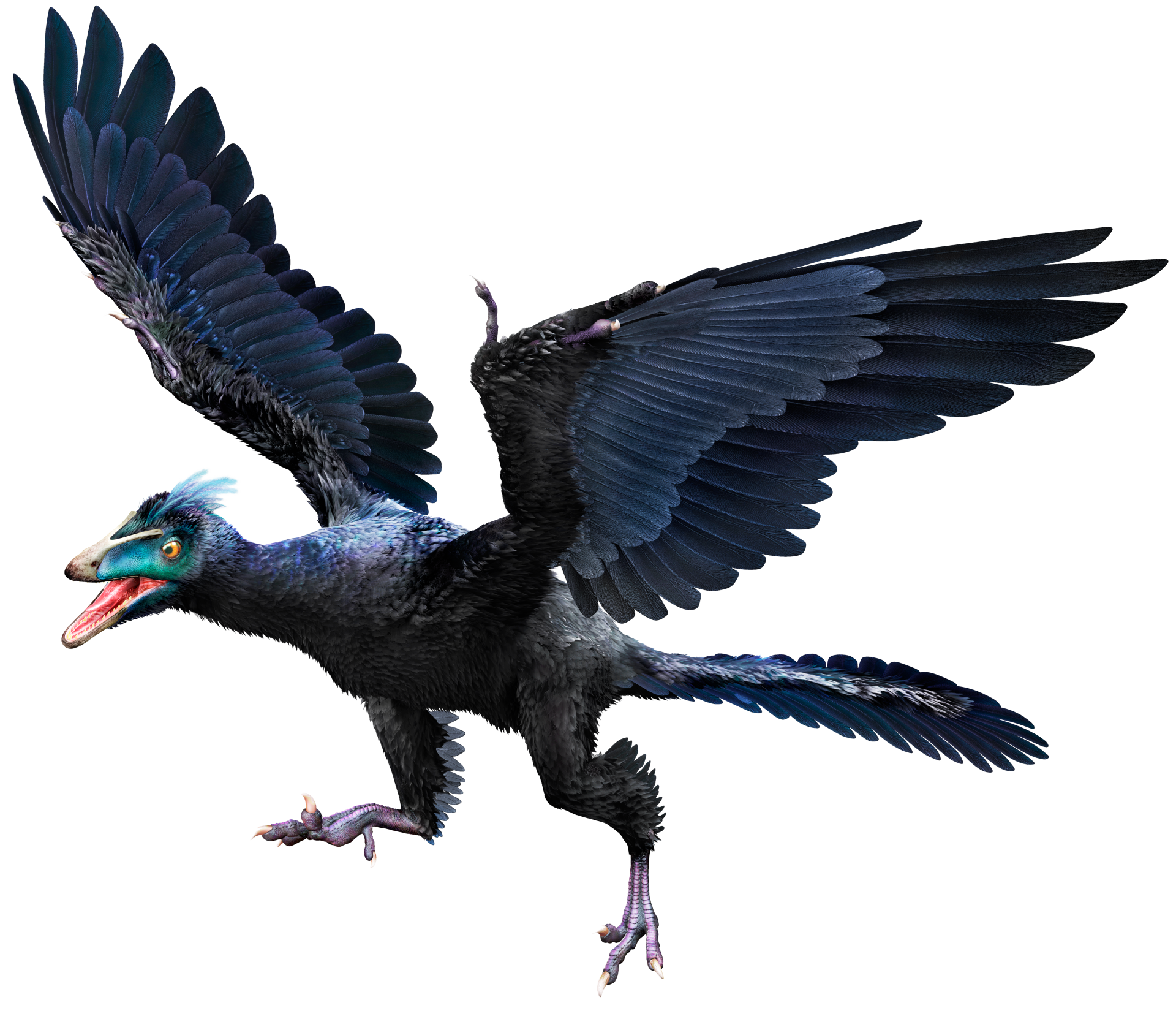
Archaeopteryx lived about 150 million years ago and looked like a mixture of a bird and a dinosaur.
LilyHOST
It had feathers and wings, but also teeth, claws, and a long bony tail.
LilyHOST
Scientists knew it could fly, but its shoulders and chest were not strong enough to take off like most modern birds.
LilyHOST
A new study suggests Archaeopteryx used its powerful legs instead.
LilyHOST
Researchers created a computer model and found that one jump would not have made it fast enough to fly, but two or three quick hops could have built up enough speed.
LilyHOST
It may have jumped, jumped, jumped, and then started flapping its wings.
LilyHOST
Archaeopteryx weighed about 400 grams, and its legs were unusually strong for its size.

Jill EngelNARRATOR
It simply does not go so far.
Jill EngelNARRATOR
To illustrate, if we are teaching the science of ornithology, we take the first, the Archaeopteryx, then the swimming and the scratching birds, and finally reach the songbirds, studying each as a part of the whole.
Jill EngelNARRATOR
Nature study begins with the robin, because the child sees it and is interested in it, and he notes the things about the habits and appearance of the robin that may be perceived by intimate observation.
Jill EngelNARRATOR
In fact, he discovers for himself all that the most advanced book of ornithology would give concerning the ordinary habits of this one bird.

Larry WilsonNARRATOR
Recording by Jeffrey Smith Birds of Old With head, hands, wings, or feet pursues his way, and swims or sinks or wades or creeps or flies.
Larry WilsonNARRATOR
When we come to discuss the topic of the earliest bird, not the one in the proverb, our choice of subjects is indeed limited, being restricted to the famous and oft-described Archaeopteryx from the quarries of Solenhoffen, which at present forms the starting point in the history of the feathered race.
Larry WilsonNARRATOR
Bird-like or at least feathered creatures must have existed before this, as it is improbable that feathers and flight were acquired at one bound, and this lends probability to the view that at least some of the tracks in the Connecticut Valley are really the footprints of birds.
Larry WilsonNARRATOR
Not birds as we now know them, but still creatures wearing feathers, these being the distinctive badge and livery of the order.
Larry WilsonNARRATOR
As for wings, it may be said that they are made on very different patterns in such animals as the pterodactyl, bat, and bird, and that while the end to be achieved is the same, it is reached by very different methods.
Larry WilsonNARRATOR
The wing membrane of a bat is spread between his outstretched fingers, the thumb alone being left free, while in the pterodactyl the thumb is wanting and the membrane supported only by what, in us, is the little finger, a term that is a decided misnomer in the case of the pterodactyl.
Larry WilsonNARRATOR
In birds the fingers have lost their individuality and are modified for the attachment or support of the wing feathers, but in Archaeopteryx the hand has not reached this stage, for the fingers were partly free and tipped with claws.
Larry WilsonNARRATOR
We get some sidelights on the structure of primitive birds by studying the young and the earlier stages of living species, for in a very general way it may be said that the development of the individual is a sort of rough sketch or hasty outline of the development of the class of which it is a member.
11 more episodes mention Archaeopteryx.
Create an account to see the whole feed, search across every transcript, and follow the entities you care about.