Apache Iceberg
SoftwareWikipedia
99
MENTIONS
21
EPISODES
18
PODCASTS
Search complete. 99 mentions across 21 episodes found for "Apache Iceberg".
Sep 18, 2026

Adam GuntherGUEST
There's a lot of things that are going to continue to live on premises.
Adam GuntherGUEST
We've been investing in really big in open table formats and things like Apache Iceberg because it's a hybrid multi-venger environment.
Adam GuntherGUEST
And for us to really help businesses move forward, we want to fit into how they work today, fit in with our MCP model of fitting into the models that they want to work with today and help them get insights in a way that works for them.
Eric KavanaghHOST
Yeah, and the other big point that you kind of hinted at is that if you get the architecture right, you're not unnecessarily burning tokens in an LLM doing something that Vertica was designed to do.

Sanjeev MohanGUEST
But now the question I'm asking is, in the era of AI, do I really need to move data into one comprehensive target, like a consolidated target place? I love the concept of lake house.
Sanjeev MohanGUEST
I love the fact that Iceberg has really unbundled compute from storage in its true manner, not the cloud's disaggregation, but Any engine can now work on my storage as long as iceberg.
Sanjeev MohanGUEST
I love that concept.
Sanjeev MohanGUEST
However, the question that begs is, do I always need to move my data into a lake house? Why can I not leave my data in...

Alexey GrigorevHOST
We have a very special guest today, Sahil.
Alexey GrigorevHOST
Sahil is a senior technical architect at Snowflake, where he works with enterprise customers running Apache Iceberg lake houses with focus on data engineering and TI-ready platforms.
Alexey GrigorevHOST
He's also a maintainer of Schema Charge, an open source database migration project with nearly 500,000 downloads per month.
Alexey GrigorevHOST
And he also contributes to Apache OSI, an open source project for synthesizing semantic model exchange.
Sahil WaliaGUEST
I'm a senior technical architect here.
Sahil WaliaGUEST
I've been here since 2024.
Sahil WaliaGUEST
I directly work with customers who run like Iceberg, Lake Houses.
Sahil WaliaGUEST
I'm usually in the room where I'm talking mostly about data engineering and its adjacent fields.

speaker_0HOST
This week brings several new sub-minor cluster image versions across Debian, Rocky Linux, and Ubuntu.
speaker_0HOST
Key updates in these images include Apache Hudi 1.2.0 support in 3.0 images, Parquet footer caching enabled by default for the Lightning Engine using Velux, and Apache Iceberg 1.10 support in 2.2 images.
speaker_0HOST
The Lakehouse catalog also supports autoloading for image versions 2.2 and later.
speaker_0HOST
There is a breaking change to watch out for.

Michael KennedyHOST
It could be zipped up CSV file stored up there with some metadata, right? Yeah.
Pedro HolandaGUEST
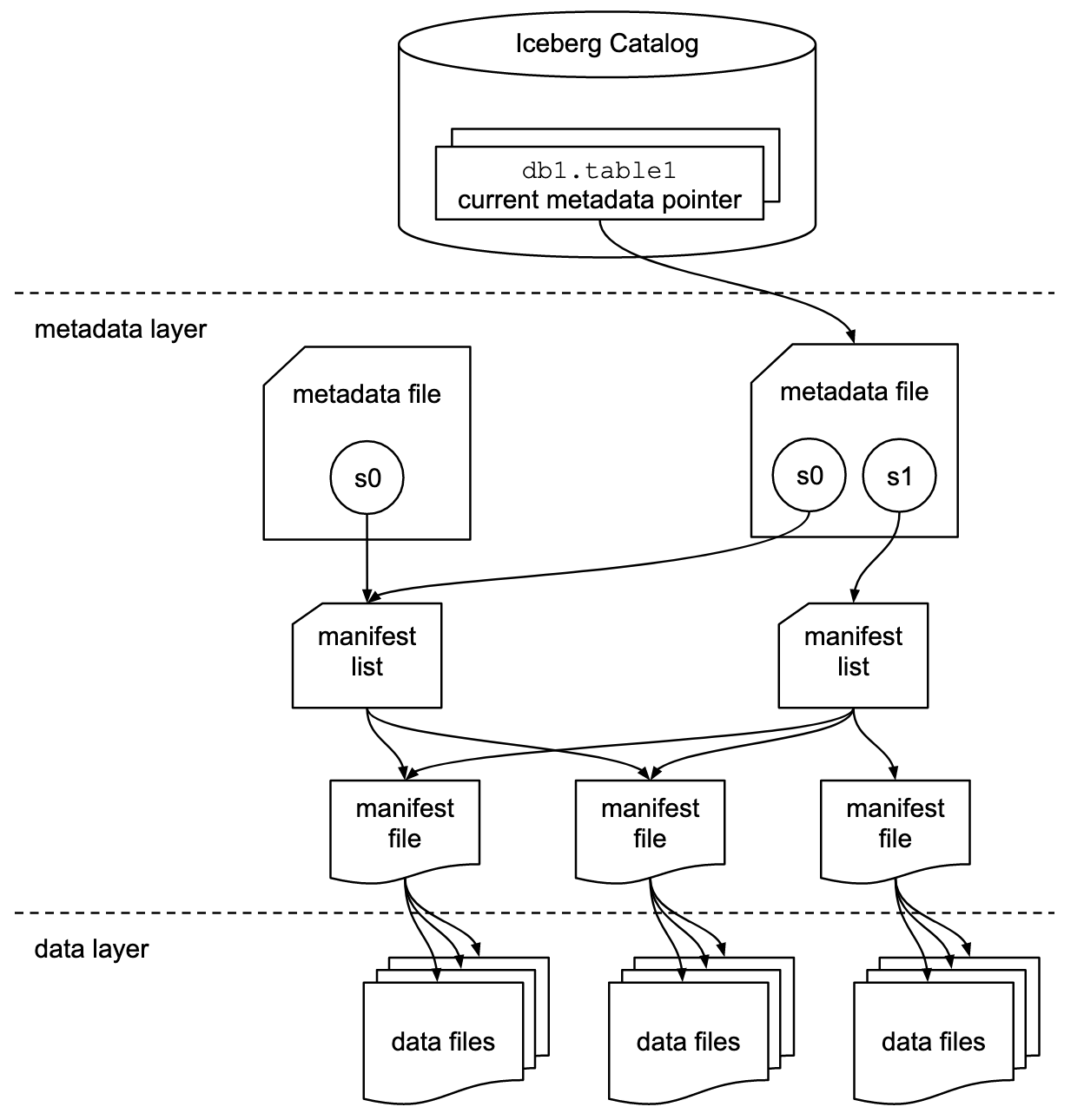
So, of course, in Duck Lake, so maybe one quick thing is that Iceberg, which is, I guess, the other main open table formats, it uses files all over, right? So you have your files in the metadata and then your files that actually store the data.
Pedro HolandaGUEST
In Duck Lake, we'll talk a bit more about this, but the metadata is actually a database system and your files are still parquet files.
Pedro HolandaGUEST
So there's nothing stopping us from a technical point of view to actually replacing these files with CSV files.
18 MINS LATER
Michael KennedyHOST
It's not a direct follow-on.
Michael KennedyHOST
It's not just a more distributed DuckDB, right? This is a bigger idea.
Pedro HolandaGUEST
Yeah, so the basic gist of Duck Lake is that I think market hunters were already looking at data lakes for a while because we had been getting lots of requests for support for Iceberg.
Pedro HolandaGUEST
And I think they were already seeing that having the metadata in files was just not as efficient, right? Like you suddenly have to do so many hoops on these files to get to your data.

Brad ShimminHOST
So what they're going to do is basically embed DuckDB's vectorized query engine inside of their storage tier.
Brad ShimminHOST
So basically you can get like on top of S3, like sub second, you know, really cheap query, you know, a query path across, you know, our beloved Parquet files and Apache Iceberg.
Brad ShimminHOST
So it's a great acquisition.
Brad ShimminHOST
Of course, you know, the worry is always, wait a minute, isn't that open source? What is going to happen to that project? And yeah, this is very much an acqui-hire situation where they're getting the talents.
18 MINS LATER
Brad ShimminHOST
That's pretty cool.
Brad ShimminHOST
Snowflake leapfrogs into the second spot, too.
Brad ShimminHOST
It's like a massive comeback story for them, honestly, with the work they've done on open sourcing several of their technologies like Polaris and Iceberg, which was already open sourced, but I mean, supporting it and introducing a lot of important technologies.
Brad ShimminHOST
um movements they with salesforce together releasing the open semantic interchange for instance um google dropped a bit uh not because of their technology although you know as we know those of us that you inhabit this weird world of agents um you know we've been complaining about their models no longer being at the top you know, rung of the echelon here.

Mehdi OuazzaHOST
So yeah, let's see, let's see where it goes and revisit in, in a couple of months.
Mehdi OuazzaHOST
Um, next, analyze with Iceberg, serve with Lens, a two-format lakehouse.
Mehdi OuazzaHOST
So that's-
Dumky de WildeHOST
Yeah, yeah, yeah.
Dumky de WildeHOST
SeaweedFS is also object storage, and basically what they try to show here is, like, how you can run your data lake with your, um, vector index in, uh, the same place basically.
Dumky de WildeHOST
So what does that mean? Um, we know what a data lake is, right? It's a place where you store your large files or your, or your business data.
Dumky de WildeHOST
Uh, you use Iceberg or Duck Lake, uh, to access that data and then, you know, you put it into your data warehouse to, uh, serve to your business users.
Dumky de WildeHOST
But it allows you to cheaply store a ton of data and still be able to access it relatively- Fast, basically.

Jason ReinhardtGUEST
Um, yeah, lots of amazing technology in the Autonomous Database space, but one that we're particularly focused on at the moment is what we call the Live AI Hub.
Jason ReinhardtGUEST
Um, that's a solution pattern, um, using Autonomous Database, connecting to different sources, um, Oracle, non-Oracle files, utilizing, uh, open technologies like Iceberg, and really then applying that, um, with the overlay ideally of our latest 26 AI technologies as well.
Jason ReinhardtGUEST
So we think it's a, a technology approach which means we can get this new technology in our customers' hands very quickly, um, and yeah, unlock the use of our technology basically.
Franco IucciHOST
So Live AI Hub, what you described to me, it sounded like a lakehouse, but I've got a feeling it's more than that.
Jason ReinhardtGUEST
Um, that's from a, a more traditional relational database source.
Jason ReinhardtGUEST
Um, we can also read inc- load JSON documents and then create views over that with our 26 AI relational duality capability.
Jason ReinhardtGUEST
Um, and then in the lakehouse space, connect to Iceberg, Snowflake, Databricks.
Jason ReinhardtGUEST
Um, so we can connect to those at the source without having to replicate the data.

Adam TimmGUEST
I'm the field CTO for the US public sector at Crunchy Data.
Adam TimmGUEST
I'm going to talk very briefly about how you can bring Iceberg and Parquet into Postgres with a new product from Crunchy Data.
Adam TimmGUEST
Alright, so I do want to spend a little bit of time just kind of posing some thought questions for everyone to kind of set the stage for what we feel this.
Adam TimmGUEST
This the problem that this really solves for both small development teams as well as large enterprises.
Adam TimmGUEST
So no matter where you need data lake capability, Crunchy's got an option for you now.
Adam TimmGUEST
And what this essentially does is it brings data lake capabilities into Postgres and it removes the need for complex ETL pipelines, right? It allows you to query your data where it sits without having to do a full ingest into Postgres.
Adam TimmGUEST
How we're able to do that is we were able to integrate with the open table format Iceberg.
Adam TimmGUEST
For those of you that aren't familiar with it, Iceberg was created by Netflix back in 2017, open sourced in 2018, and is quickly becoming the de facto data lake solution for large enterprises.
Sina KashukGUEST
So that's a limitation that exists.
Sina KashukGUEST
And we're also building a system at Fuse that helps with that, which basically is similar to Iceberg.
Sina KashukGUEST
You just take the data, the very similar specs, you get the metadata of it.
Sina KashukGUEST
And then in this case, you can just, if the client is asking for the data, you don't need to download the data.
11 more episodes mention Apache Iceberg.
Create an account to see the whole feed, search across every transcript, and follow the entities you care about.