Aomori
City in JapanWikipedia
30
MENTIONS
20
EPISODES
19
PODCASTS
Search complete. 30 mentions across 20 episodes found for "Aomori".
Sep 26, 2026

Tony R. VegaHOST
I've done it over the span of... three years and I'm legally blind so every time I do this it's a crazy adventure getting lost along the way and walking through crazy tunnels and yeah I always come back with good stories that I share on the show.
Tony R. VegaHOST
So this year, originally, the plan was to do a tandem bike challenge riding from the top of Aomori, the top of Honshu, through all the prefectures in Tohoku and down to Nihonbashi in Tokyo.
Tony R. VegaHOST
That was going to be around a thousand kilometers, probably a little bit more.
Tony R. VegaHOST
After that, the plan is to do another big walking challenge where I would connect the Izumo Taisha Shrine here in Honolulu.

speaker_0NARRATOR
Centuries-old festivals on verge of extinction across Japan.
speaker_0NARRATOR
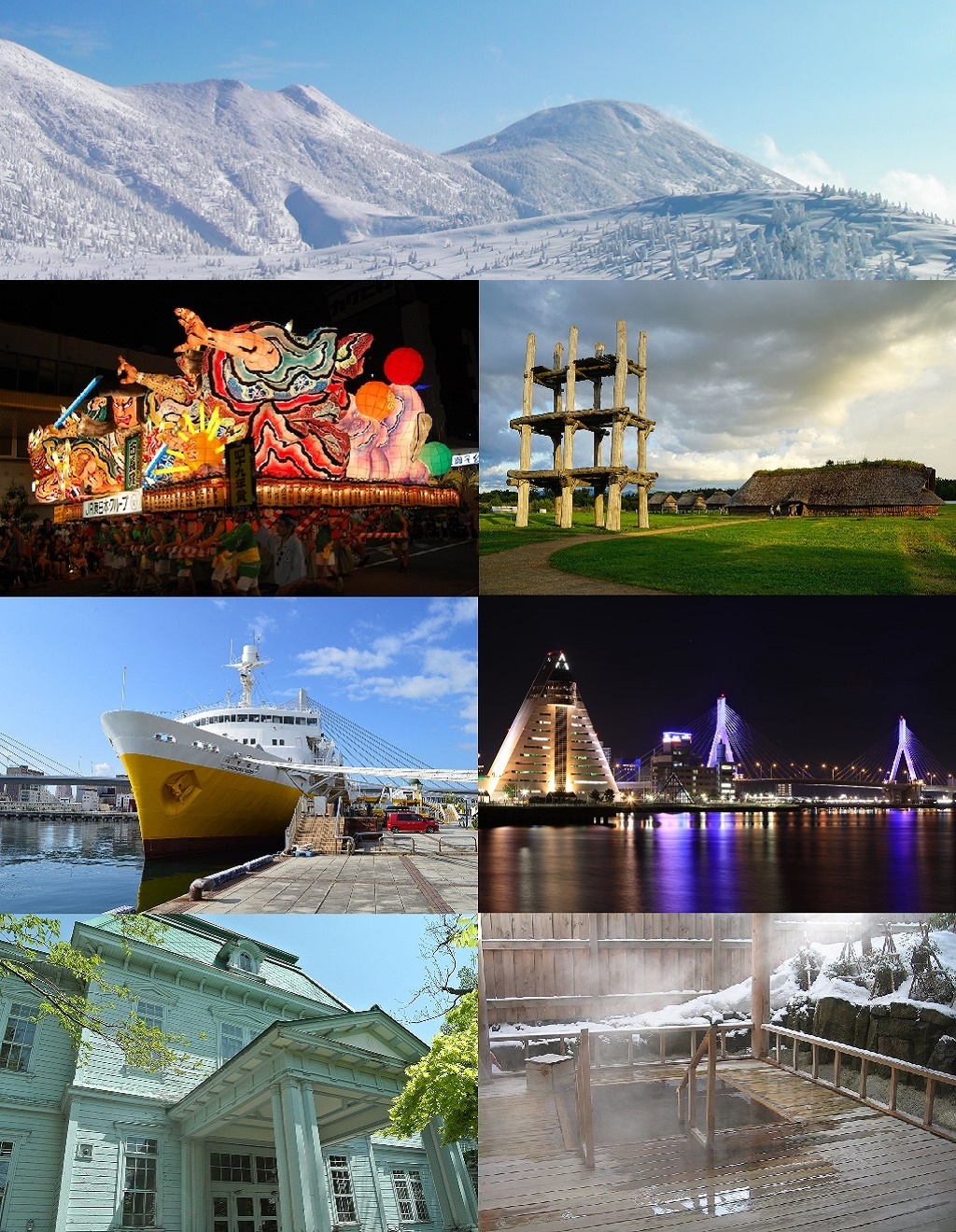
After parading through downtown Aomori accompanied by shouts of Rasara, Rasara, a Panasonic Nebuta appeared at a Nebuta float building shed on August 6, prompting cheers and applause from the crowd.
speaker_0NARRATOR
greetings were given, people were tossed into the air in celebration and a Sanban Hime hand-clapping cheer was performed before the lights inside the float were quietly turned off at a little past 11 pm.
speaker_0NARRATOR
That was how the Panasonic Nebuta Association, which was one of the float operators at the Aomori Nebuta Festival, brought down the curtain on its 50-year history.
speaker_0NARRATOR
Held for six days on August 2-7 every year, the festival attracts about 1 million visitors annually.
speaker_0NARRATOR
Having introduced paid viewing seats and high-priced premium seats, the event itself is one of the most popular festivals in the country.
speaker_0NARRATOR
It was owners of Panasonic-affiliated shops in the city who had helped manage the Panasonic Nebuta Association.
speaker_0NARRATOR
We are shorthanded to decorate and do other behind-the-scenes tasks, said Sachio Nagai, 70, former head of the association.

SandraHOST
count them, hundreds of Japanese drinks and food and you can discover the diverse selection of sake, shoshu, awamori and Japanese whiskeys, wines, beer and cocktails as well as tea and non-alcoholic beverages.
SandraHOST
We're going to be at the dedicated shoshu cocktail workshop on the Friday at five o'clock There's also an Aomori experience in the brand new Japanese Spirit Zone.
SandraHOST
And there's going to be a cocktail bar there with special Shoshu cocktails.
SandraHOST
So consumers can go, but there are also complimentary tickets for trade.

speaker_2NARRATOR
Twenty-nine meters is roughly the height of a nine-story building, delivered as snow over a single winter.
speaker_2NARRATOR
In Japan, the city of Aomori averages about eight meters of snow per year, making it one of the snowiest cities on Earth.
speaker_2NARRATOR
The heavy snowfall in parts of Japan is caused by cold Siberian air masses picking up moisture as they cross the Sea of Japan, in much the same way that the Great Lakes feed snow to Syracuse, only on a far larger scale.
speaker_2NARRATOR
Some villages in the Japanese Alps receive so much snow that residents use tunnels to move between buildings during the deepest months of winter.

Carl SternHOST
These were massive TV tapings they did back then.
Carl SternHOST
All right, October 30th, 1986, All Japan, Aomori, Japan, at the Aomori Perfectional Gymnasium.
Carl SternHOST
Attendance, 3,350 people to see the six-man match of Ashura Hara and Super Strong Machine, who's, of course, Junji Harada.
Carl SternHOST
They, oh, excuse me, it's a tag team match.

ExpatriateNARRATOR
August eighteenth.
ExpatriateNARRATOR
I arrived at Aomori early this morning and lost much temper because I had to lose much time in getting onto the ship.
ExpatriateNARRATOR
The language, of course, was partly the difficulty, but the natives are excruciatingly slow to move.
ExpatriateNARRATOR
After three hours of talking and arguing and going over things again and again, at last I reached the steamer, a very good little ship with nice staterooms and saloons, of course very small.
30 MINS LATER
ExpatriateNARRATOR
I went on board at nine o'clock at night.
ExpatriateNARRATOR
September 10th.
ExpatriateNARRATOR
We should have arrived at ten or eleven o'clock this morning at Aomori on the main island, but there was a storm, the tail of one of the typhoons which are abounding this year, and we did not get in until after four in the afternoon.
ExpatriateNARRATOR
While waiting three hours to catch the train, I saw a little of the town, and spent some time soothing a distracted missionary and his wife recently from America, and not yet accustomed to waiting, entrusting large sums of money to Japanese porters with no guarantee that they would get the tickets they wanted.

AvailleNARRATOR
These awful sudden risings of the sea are called by the Japanese tsunami.
AvailleNARRATOR
The last one occurred on the evening of June 17, 1896, when a wave nearly 200 miles long struck the northeastern provinces of Miyagi, Iwate, and Aomori, wrecking scores of towns and villages, ruining whole districts, and destroying nearly 30,000 human lives.
AvailleNARRATOR
The story of Hamaguchi Gohei is the story of a like calamity which happened long before the era of Meiji on another part of the Japanese coast.
AvailleNARRATOR
He was an old man at the time of the occurrence that made him famous.

EriHOST
Being one of them.
EriHOST
Or up in the north area, like Aomori, where Oirase Gorge is located.
EriHOST
And it's a very, sometimes very off the beaten path.
Don MeyerHOST
very quiet yeah very quiet very traditional to your point

AbayiNARRATOR
These awful sudden risings of the sea are called by the Japanese tsunami.
AbayiNARRATOR
The last one occurred on the evening of June 17, 1896, when a wave nearly 200 miles long struck the northeastern provinces of Miyagi, Iwate, and Aomori, wrecking scores of towns and villages, ruining whole districts, and destroying nearly 30,000 human lives.
AbayiNARRATOR
The story of Hamaguchi Gohei is the story of a like calamity which happened long before the era of Meiji on another part of the Japanese coast.
AbayiNARRATOR
He was an old man at the time of the occurrence that made him famous.

JamesHOST
I think that would be very fair, yes.
JamesHOST
[laughs] I mean, we are, we're leaving not exactly the world's largest metropolis in Aomori City, and we're heading into Akita Prefecture, Akita Prefecture in the northwest of Honshu Island.
JamesHOST
Um, famous for, uh, well, very famous in Japan for three things, um, Japanese sake, Nihonshu, Japanese rice, and allegedly, uh, the most beautiful women in Japan.
JamesHOST
So many people have, uh, rave about those three things.
10 more episodes mention Aomori.
Create an account to see the whole feed, search across every transcript, and follow the entities you care about.