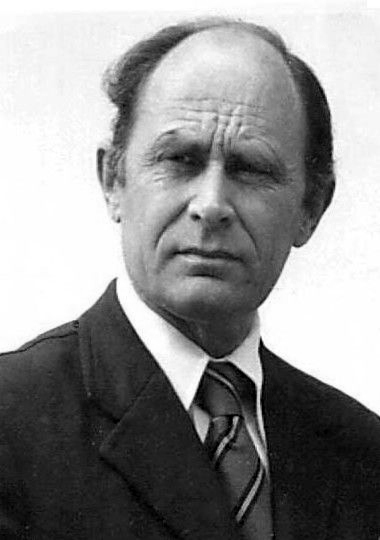
Antony C. Sutton
American writer and ResearcherWikipedia
44
MENTIONS
31
EPISODES
19
PODCASTS
Search complete. 44 mentions across 31 episodes found for "Antony C. Sutton".
Sep 16, 2026

Ryan McMakenNARRATOR
The monopolists may run businesses, but they still owe their wealth to government power, not pleasing the consumer.
Ryan McMakenNARRATOR
Wall Street Monopolists Support for the Bolsheviks Much of the evidence supporting this fact is detailed in Anthony Sutton's work, Wall Street and the Bolshevik Revolution.
Ryan McMakenNARRATOR
Sutton provides great evidence that the traditional idea of all communists and capitalists as bitter enemies is not true, at least when crony capitalists are involved.
Ryan McMakenNARRATOR
Sutton, largely using the US State Department decimal file, reveals many interesting links between US big business and the Bolshevik revolutionaries.

Alex JonesHOST
I wasn't a UFO guy back then, but I thought he was a really smart and amazing broadcaster.
Alex JonesHOST
But it became this whole cottage industry that my show is based on William Cooper, when my show is based on my dad and my grandfather's involved with the John Birch Society, and everything that went back to, uh, you know, Senator Lindbergh opposing the private Federal Reserve and Woodrow Wilson and the New World Order in 1913, and Anthony Sutton, the head, uh, historian at the Senate in the Frank Church committee hearings in '75, '76, '77.
Alex JonesHOST
I mean, people knew about the New World Order.
Alex JonesHOST
And then there's th- I just thought I'd just point this out.

Josh SigurdsonHOST
And they themselves have said, in Klaus Schwab's case, he said that he controls, essentially controls the Canadian parliament.
Josh SigurdsonHOST
And then, of course, you have, and I've talked about this and I just mentioned, you know, Trilaterals Over Washington Volumes 1 and 2 by Anthony C. Sutton and Patrick Wood.
Josh SigurdsonHOST
Patrick Wood's a friend of our show.
Josh SigurdsonHOST
Going into how this has historically been manufactured, I want to, before I finish the video, mention the cultural shift here a little bit.
Alex JonesHOST
And then I thought, I'll get syndicated.
Alex JonesHOST
I'll call a satellite company and put an ISD inbox, and I'll get on WWCR 100,000 watt, and suddenly I had millions of listeners, and so all of the top people, not just the Ted Gundersons and the Mark Kornkees and the Randy Weavers and the just everybody, the guy that made America freedom to fascism, Aaron Russo, and the G. Edward Griffins and the General Partins, and they would all come to town and come speak and come on the show, and I'd go to dinner, and I got to, like, I sat at the feet of all the experts from every angle, Anthony Sutton and Charlotte Iserby, and I mean, I could list hundreds and hundreds of names of just giants.
Alex JonesHOST
Phyllis Schlafly, Pat Buchanan, and some of the good guy, bad guys, Oliver North, and I got to meet their sons, and the son of, you know, the head CIA assassin that ran Operation Killing Kennedy, E. Howard Hunt.
Alex JonesHOST
And then I got to meet Stanley Kubrick's protege, his daughter, Vivian Kubrick, who was the only one in the family that actually worked on his films and learned all those secrets, and I can't tell you.

Ian TrottierGUEST
But the one book that stood out to me was written by a former Stanford Hoover fellow.
Ian TrottierGUEST
His name is Anthony Sutton.
Ian TrottierGUEST
And he wrote a book titled Federal Reserve Conspiracy, not theory.
Ian TrottierGUEST
And he's connecting dots that show that the hijacking of the economic system in the federal government.
Josh SigurdsonHOST
People basically sacrifice themselves to Moloch to build a machine.
Josh SigurdsonHOST
Now, if you go in the 70s and look at what Kissinger did with China and then follow it up by looking at the Rockefeller Foundation and, of course, the Trilateral Commission and their use of propping up China as a guinea pig state for technocracy with Zbigniew Brzezinski and people like that into the Carter administration and after, you can see, and I have a book actually behind me, Trilaterals Over Washington Volumes 1 and 2 by Patrick Wood and Anthony C. Sutton, and I urge people to read it.
Josh SigurdsonHOST
In this book, they detail the historical context here, the nuance of this, where they actually utilize China as a... to prop it up as this behemoth for technocracy.
Josh SigurdsonHOST
And what did that lead to? That led to Sesame Credit in the 2010s and facial recognition and WeChat and all these kinds of things that they use.

Matthew Raphael JohnsonGUEST
It was rebuilt.
Matthew Raphael JohnsonGUEST
Um, Anthony Sutton has a detailed analysis of this, uh, after the war.
Matthew Raphael JohnsonGUEST
You know, the debts that had been incurred during the war were monstrous.
Matthew Raphael JohnsonGUEST
Um, and all of that was, was, was canceled.
Matthew Raphael JohnsonGUEST
So this doesn't make any sense.
Matthew Raphael JohnsonGUEST
I think this is a lot of, uh, psychological warfare here.
Pete QuiñonesHOST
By the way, you mention Anthony Sutton, um, often, um, especially that book.
Pete QuiñonesHOST
Uh, what's your take on his book, Wa- Wall Street and the Rise of Hitler?
Matthew Raphael JohnsonGUEST
You know, when I discovered this, I don't know when it was, it was quite a while ago, but I was...
Matthew Raphael JohnsonGUEST
And then I, then I found Anthony Sutton, and when I discovered him, everything, my whole world changed in terms of, of the USSR.
Matthew Raphael JohnsonGUEST
The 20th century, um, is so mangled in, in history books.
Matthew Raphael JohnsonGUEST
This isn't supposed to happen.
Matthew Raphael JohnsonGUEST
During the, during the, uh, Depression.
Matthew Raphael JohnsonGUEST
You know, I thought he would know better, right? But profits are profits.
Matthew Raphael JohnsonGUEST
And that may have been, if I'm not mistaken, that may have been the first thing to get me to wonder, "Wait a minute, what else did Westerners do?" Bringing me to, to Anthony Sutton.
Pete QuiñonesHOST
But wait a second.
Pete QuiñonesHOST
This did not exclude the financial support of certain Russian bankers, those who, fleeing the revolution, had sought refuge abroad but had transformed, had transformed there into vol- volunteer support of the Bolsheviks.
Pete QuiñonesHOST
An American researcher, Anthony Sutton, has found with half a century of delay archival, uh, documents.
Pete QuiñonesHOST
He tells us that if we are to believe a report sent in 1918 to the State Department by the US ambassador in Stockholm, among these Bolshevik bankers is the infamous Dmitry Rubenstein, that the, that the revolution of February had gotten, that the revolution of February had gotten out of prison, who had reached Stockholm and made himself the financial agent of the Bolsheviks.
Pete QuiñonesHOST
We also find Abram Zvyaginsky, a relative of Trotsky and Lev Kamenev.
Matthew Raphael JohnsonGUEST
Um, some of them were, were leaving, but they were transferring money to the, uh, to the Reds and continued to do so once they left.
Matthew Raphael JohnsonGUEST
Um, they weren't fleeing the Bolsheviks, they were fleeing the war.
Matthew Raphael JohnsonGUEST
But, um, now this is-- I think this is the first time we're, we're mentioning Anthony Sutton.
Matthew Raphael JohnsonGUEST
When I read his three-volume work on, uh, concerning how the US built Soviet Russia, I shouldn't say-- sorry, the Soviet Union, I was never the s- I mean, this was one of those books.

Matthew Raphael JohnsonGUEST
It was quite a while ago, but I was...
Matthew Raphael JohnsonGUEST
And then I, then I found Anthony Sutton, and when I discovered him, everyth- my whole world changed in terms of, of the USSR.
Matthew Raphael JohnsonGUEST
The 20th century, um, is so mangled in, in history books.
Matthew Raphael JohnsonGUEST
This isn't supposed to happen.
speaker_0ADVERTISER
Play bold, win big.
Matthew Raphael JohnsonGUEST
During the, during the, uh, Depression.
Matthew Raphael JohnsonGUEST
You know, I thought he would know better, right? But profits are profits, and that may have been, if I'm not mistaken, that may have been the first thing to get me to wonder, "Wait a minute, what else did Westerners do?" Bringing me to, to Anthony Sutton.
Pete QuiñonesHOST
But wait a second.
21 more episodes mention Antony C. Sutton.
Create an account to see the whole feed, search across every transcript, and follow the entities you care about.