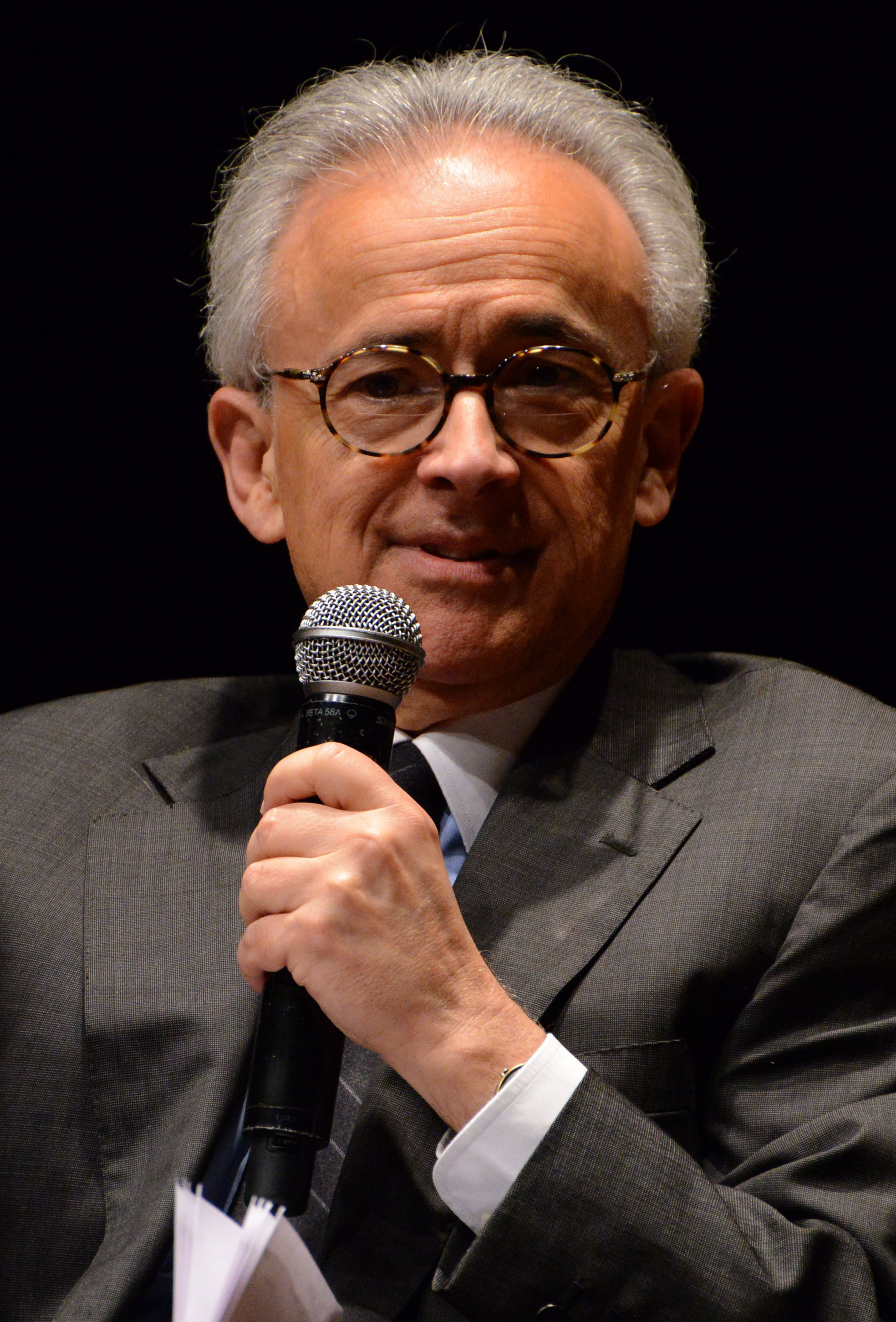
Antonio Damasio
Portuguese neuroscientistWikipedia
54
MENTIONS
37
EPISODES
34
PODCASTS
Search complete. 54 mentions across 37 episodes found for "Antonio Damasio".
Sep 21, 2026

Dave StachowiakHOST
Hmm
Sebastian WernickeGUEST
... there's a wonderful study from a researcher named Antonio Damasio, who writes about this patient who had this kind of damage, and even if he was asked, "What are you going to have for lunch?" He was not able to make up his mind because he was trying to find the perfect rational reason to go, let's say, for the sandwich or the salad.
Sebastian WernickeGUEST
And he would go back and forth in an infinite loop and basically say, "Well, the one thing's gonna taste better, the other one's gonna be healthy, but I had this last time," right? Trying to come to a decision just with data, just with rational thought, and it was impossible.
Sebastian WernickeGUEST
So we know that emotion is the crucial thing that will s- tip the scale once data has said everything that there is to say from data.

Antonia Rathbun LindseyGUEST
And...
Antonia Rathbun LindseyGUEST
Antonio Damasio is this wonderful neurologist, and he wrote it this way, and I just love this.
Antonia Rathbun LindseyGUEST
I have to read it to you.
Antonia Rathbun LindseyGUEST
The living body is the central locus.

Joe BandelGUEST
If you identify one small, manageable fear and take a single deliberate step toward it while staying aware of your body's signals, you'll almost always notice that the anticipated intensity of the fear was much higher than the actual experience of doing the thing.
speaker_0HOST
It's the anticipatory skin conductance response that neuroscientist Antonio Damasio talks about in his somatic marker hypothesis.
speaker_0HOST
Our bodies are constantly tagging options with emotional markers, a gut feeling that says this is good or this is bad before we've even consciously reasoned it out.
speaker_0HOST
Fear is just one of those markers.

Mark LinsenmayerHOST
... references to other thinkers who use those terms.
Mark LinsenmayerHOST
Uh, weren't you d- w- one of them is Damasio.
Mark LinsenmayerHOST
Weren't you wanting us to have Damasio on at some point? I thought you were a Damasio fan-
Wes AlwanHOST
Probably, yeah
Mark LinsenmayerHOST
... several years ago.

Wes AlwanHOST
whenever some specialist network or smaller structure makes a discrimination fixes some element of content and information in quotes in their sense comes into existence signal content fixation micro taking wordless narrative and representation are among the near synonyms in use and he's got
Mark LinsenmayerHOST
references to other thinkers who use those terms One of them is Damasio.
Mark LinsenmayerHOST
Weren't you wanting us to have Damasio on at some point? I thought you were a Damasio fan several years ago.
Wes AlwanHOST
I don't know if I'm a fan.
Wes AlwanHOST
I don't know.

Mark LinsenmayerHOST
Yeah.
Mark LinsenmayerHOST
One of them is Damasio.
Mark LinsenmayerHOST
Weren't you wanting us to have Damasio on at some point? I thought you were a Damasio fan several years ago.
Wes AlwanHOST
I don't know if I'm a fan.
Wes AlwanHOST
I don't know.
Joe BandelGUEST
It simply registers.
Joe BandelGUEST
That aligns closely with cognitive neuroscience research on interoception and somatic markers pioneered by Antonio Damasio at the University of Southern California.
Joe BandelGUEST
Damasio demonstrated that the ventromedial prefrontal cortex constantly processes bodily sensations, gut reactions, subtle visceral cues, to guide complex decision-making long before conscious verbal deliberation even kicks in.
speaker_0HOST
People often mistake inner authority for aggressive stubbornness or rigid individualism.

Henry HawkHOST
Because the body is not separate from decision-making.
Henry HawkHOST
neuroscientist Antonio Damasio, is associated with the somatic marker hypothesis, the idea that bodily states linked to previous experiences can help guide future choices.
Henry HawkHOST
So, perhaps sometimes the body is saying, I've seen something like this before, or this pattern resembles something important, or pay attention, and you can feel it before you can explain it.
Henry HawkHOST
Which raises a practical question.

Julian WalkerHOST
This is great.
Julian WalkerHOST
I, I wanna contrast it a little bit here too with Antonio Damasio's work.
Julian WalkerHOST
Uh, his, his book Descartes' Error, he's a neuroscientist and his work is based on, or what he's most well known for in his work, is based on studying people who have had some kind of injury, uh, where their emotional processing and their rational faculties have been sort of, uh, separated from one another.
Julian WalkerHOST
And contrary to what, you know, a lot of us might think who, who value rationality, their rationality ended up being completely undermined by their inability to process the emotional meaning.

speaker_6NARRATOR
Many people expect to hear an external voice telling them what to do, but an agitated mind turns any impulse into an order and any silence into abandonment.
speaker_6NARRATOR
Antonio Damasio, in his book Descartes' Error, explained that emotion and decision work together, so a strong feeling influences your choices before you examine it.
speaker_6NARRATOR
In this essay, you will understand four laws that explain how actions, habits, and choices alter your life, discover how environment and language train your thoughts, and learn to hear an emotion without obeying it.
speaker_6NARRATOR
You must learn to identify the difference between guidance, fear, and noise.
27 more episodes mention Antonio Damasio.
Create an account to see the whole feed, search across every transcript, and follow the entities you care about.