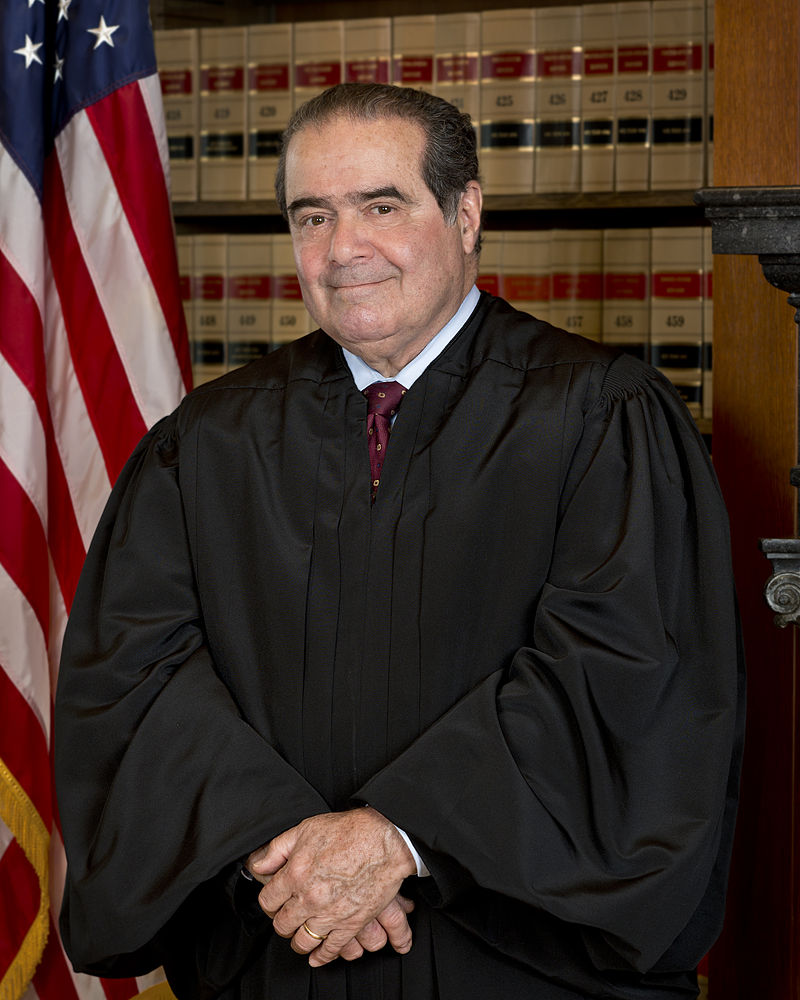
Antonin Scalia
Former Associate Justice of the Supreme Court of the United StatesWikipedia
410
MENTIONS
221
EPISODES
173
PODCASTS
Search complete. 410 mentions across 221 episodes found for "Antonin Scalia".
Sep 17, 2026

speaker_2HOST
They argued they were injured because they had visited Egypt and Sri Lanka in the past to observe endangered crocodiles and elephants, and they intended to go back someday.
speaker_3HOST
And Justice Scalia, writing for the court, just completely destroyed that argument.
speaker_3HOST
A vague someday intention to return to a place without any concrete plans or booked tickets is purely speculative.
speaker_3HOST
It is definitely not an actual or imminent injury.

Casey MattoxGUEST
One, they, they think of the, the Constitution and, and when they think of the Constitution the first thing they think about, uh, very often are the rights in the Constitution, right? The Bill of Rights.
Casey MattoxGUEST
Um, but as, uh, as Justice Scalia, uh, once said, uh, that's, you know, every tinpot dictatorship in world history has had, or at least, uh, in, in recent history has had something like a bill of rights since we created one.
Casey MattoxGUEST
The difference between us and the Soviet Union and North Korea today and so many other places around the world is that we actually have a structure of government that makes sure that those bill, those rights in the Bill of Rights are real.
Casey MattoxGUEST
Um, you've got, you know, uh, different branches of government that are playing off one against another.

Jim DalySOUNDBITE_SPEAKER
And it wasn't.
Jim DalySOUNDBITE_SPEAKER
In fact, uh, I won't have this quote exactly right, but I remember Antonin Scalia-
Stephen WilliamsSOUNDBITE_SPEAKER
Mm
Jim DalySOUNDBITE_SPEAKER
...

David FrenchHOST
So just to back up, Employment Division v. Smith was, uh, this is my bias showing through.
David FrenchHOST
Everyone knows how I feel about Employment Division v. Smith, Scalia's infamous decision that guts the free exercise clause to essentially say, if you're making a free exercise clause claim against a neutral law of general applicability, you're going to lose.
David FrenchHOST
So then it beca- the question became, what's a neutral law of general applicability? Because if it wasn't a neutral law of general applicability, then you could have strict scrutiny.
David FrenchHOST
Or if you had a hybrid claim where you could also make a free spe-speech claim, you could have strict scrutiny, which is why all of a sudden, bingo, presto, a whole bunch of free exercise claims became free speech claims in litigation because you had greater, easier access to strict s- to strict scrutiny.

Ted CruzGUEST
Yes.
Michael BerryHOST
And, and as I said, it's, it's him and Scalia.
Michael BerryHOST
How did he react to you writing this? I mean, this is a, this is not just a, a professor somewhere in...
Michael BerryHOST
writing.

Kimberly Ann JohnsonGUEST
I hope enough people care about it that it's something that we will recover.
Kimberly Ann JohnsonGUEST
Because I, I think there's a reason, for instance, at least among the p- people that I roll with, that we laud Ruth Bader Ginsburg and Scalia, right? We look at these friendships with radically different, as polarized as possible politics, of people who would still go to the opera together and still love to sit down together and were able to.
Kimberly Ann JohnsonGUEST
That's not that long ago, and I think most people do look up to that as something like we should be able to do this.
Kimberly Ann JohnsonGUEST
Yeah.

Roger ParloffPANELIST
There is a 1987 case about.
Roger ParloffPANELIST
the criminal contempt power where the majority said spring court the ability to punish disobedience to judicial orders is regarded as essential to ensuring that the judiciary has a means to vindicate its own authority without complete dependence on other branches Justice Scalia wrote a strong dissent there.
Roger ParloffPANELIST
So that was 1987.
Roger ParloffPANELIST
So where the current court would align on that question is going to be very difficult.

Roger ParloffPANELIST
the criminal contempt power where the majority said, Spring Court, the ability to punish disobedience to judicial orders is regarded as essential to ensuring that the judiciary has a means to vindicate its own authority without complete dependence on other branches.
Roger ParloffPANELIST
But Justice Scalia wrote a strong dissent there.
Roger ParloffPANELIST
So that was 1987.
Roger ParloffPANELIST
So where the current court would align on that question is going to be very difficult.

Thom HartmannHOST
You know, Joe Biden put pro-labor people in charge of the Labor Department.
Thom HartmannHOST
Trump, in both his terms, I mean, his last term, he put Scalia's son in charge of the Labor Department, a professional union buster.
Thom HartmannHOST
They're not multimillionaires.
JamesAUDIENCE
James, I

JoelUNKNOWN
Right.
Joe ThomasHOST
All you have to do is, you know, uh, be Clarence Thomas or, uh, Antonin Scalia and, you know, put the thing right up on the wall against the Constitution.
Joe ThomasHOST
Do you remember...
Joe ThomasHOST
You're, you're a young fella, but you, you might remember transparencies.
211 more episodes mention Antonin Scalia.
Create an account to see the whole feed, search across every transcript, and follow the entities you care about.