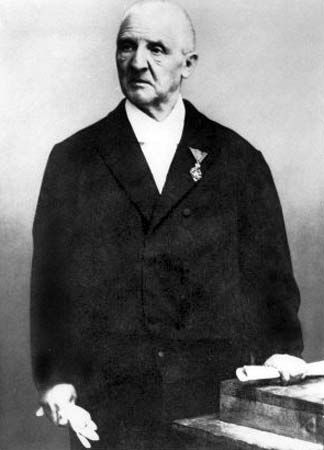
Anton Bruckner
Austrian composer and organistWikipedia
33
MENTIONS
16
EPISODES
16
PODCASTS
Search complete. 33 mentions across 16 episodes found for "Anton Bruckner".
Nov 1, 2026

Marion JonesHOST
the place where Schubert was born and worked, and where so many other famous composers also spent a large part of their working life.
Marion JonesHOST
Haydn, Mozart, Beethoven, the Strauss family, Brahms, Bruckner, Schoenberg, the list is really very long.
Marion JonesHOST
It's also, of course, the home of the Vienna Boys Choir, founded in 1498. a choir in which both Haydn and Schubert were members when they were boys, and which still can be heard today singing mass at the Hofburg Chapel on Sunday mornings.
Marion JonesHOST
I don't think you can just turn up, you'll need to buy tickets, but certainly something to bear in mind.

Lisa SimeoneHOST
At first, work went smoothly, but soon enough, he realized what he was getting himself into.
Lisa SimeoneHOST
After all, Brahms and Bruckner finished their first symphonies while in their 40s and after many years of labor.
Lisa SimeoneHOST
The 26-year-old Tchaikovsky became a bundle of nerves and experienced panic attacks and even hallucinations.
Lisa SimeoneHOST
When the full premiere took place in 1868, the first was constructed more like a tone poem than a symphony.

John BirgeHOST
This is the Composer's Datebook for October 31st.
John BirgeHOST
I'm John Burge.
John BirgeHOST
Since today is Halloween, how about a tale from the crypt with a composer's skull or two tossed in for good measure? Music lovers have always had a thing about composers' skulls.
John BirgeHOST
In 1820, for example, Prince Esterhazy ordered that Haydn's remains be transferred from Vienna to Eisenstadt, only to discover that Haydn's skull was missing.
John BirgeHOST
It had been stolen by two of Haydn's closest friends who had bribed the gravediggers, claiming they did it for pseudoscientific phrenological research.
John BirgeHOST
In 1888, it was the remains of Beethoven and Schubert who were dug up and moved to Vienna's new central cemetery.
John BirgeHOST
Nothing was missing.
John BirgeHOST
But on both occasions, the Austrian composer Anton Bruckner was present and, according to witnesses, managed somehow to lovingly hold the skulls of both Beethoven and Schubert in his hands and speak to them before they were reburied.

John BantherHOST
And then there is a fugue that carries us to the end, and it's a very... strong finish.
John BantherHOST
I mean, it's not a huge Bruckner symphonic end, which of course didn't exist.
John BantherHOST
It feels baroque in a way, especially with the timpani, although it might not be timpani, it might be a different drum 50, 60 years before this.
John BantherHOST
But it feels like a fugue is a good way to carry us to the end, in part because of what Mozart did before with the fugue and that classical energy that I think you were talking about that is around it that brings us to the end.

Benji LanyadoPANELIST
Are the famous people from Linz anyone? A composer.
Benji LanyadoPANELIST
Bruckner, the composer.
Tom WilliamsPANELIST
That's
Benji LanyadoPANELIST
the

Ilya KalerGUEST
I might go from one composer to another one, and listen to everything he ever wrote, you know? And then I'm kind of, I'm getting full of it.
Ilya KalerGUEST
I had the periods of Sibelius and Bruckner and Wagner and Mahler and Berlioz.
Ilya KalerGUEST
You know, you know, people like that.
Robert MillerHOST
I know.

Stanley GrillGUEST
Right.
Stanley GrillGUEST
Let me start off by saying I'm a big Bruckner fan, and I love the way he orchestrates, and that's been a big influence on me.
Stanley GrillGUEST
He orchestrates like an organist, which he was.
Stanley GrillGUEST
And so an organist, the way they can just press a button and switch a whole bank from woodwinds to brass to whatever and alter the sound, um, he does that when he orchestrates.

Jacques LacombeGUEST
That's incredible.
Jacques LacombeGUEST
And Bernstein, I was one of his assistants for his last concert with Bruckner, 9th, a couple of months before he passed away.
Jacques LacombeGUEST
Kleiber, I've seen him...
Jacques LacombeGUEST
both in concert and at the opera in Vienna.

Ben GoldscheiderGUEST
And I knew all the Mahler symphonies.
Ben GoldscheiderGUEST
I knew all the Bruckner symphonies.
Ben GoldscheiderGUEST
I thought I knew all of the great horn repertoire.
Ben GoldscheiderGUEST
And then when I went to Berlin to study, um, my music theory teacher used this piece as a-- well, number one, as an, a piece for analysis, but then we had to do a lot of rhythmic and aural dictation from this piece because there are so many, you know, small cells and, and so on.
Ben GoldscheiderGUEST
Like, I didn't know it existed.
Ben GoldscheiderGUEST
I'm half Czech, and I didn't know this music, and it was a big shock.
Ben GoldscheiderGUEST
Um, and then the extract that we just heard, I chose that because, uh, it kind of connects to Bruckner as well, that I think Janáček builds so much tension and excitement through very short motivic cells that are repeated and elaborated upon.
Ben GoldscheiderGUEST
And again, I was listening through the prism of being a horn player at this da-da, da-da, um, phrase, which gets higher and higher and higher, and you think, "When on earth is it gonna stop?" Um, and it, it left a massive impression on me.

Mark BerryGUEST
Yes.
Samira AhmedHOST
Um, we know, Robin, that there were a number of contemporary composers who went and, you know, involved people like Mahler, Tchaikovsky, Bruckner, Liszt.
Samira AhmedHOST
Tell me about the impact that Bayreuth had on these composers.
Genevieve Robyn ArkleGUEST
I mean, it was huge.
6 more episodes mention Anton Bruckner.
Create an account to see the whole feed, search across every transcript, and follow the entities you care about.