Antiquities Act
28
MENTIONS
21
EPISODES
17
PODCASTS
Search complete. 28 mentions across 21 episodes found for "Antiquities Act".
Sep 24, 2026

Jonathan ThompsonGUEST
I suspect that it will eventually reach the Supreme Court.
Jonathan ThompsonGUEST
And there will be some kind of ruling that will affect the way the Antiquities Act is implemented.
Jonathan ThompsonGUEST
And I think everybody's tired of this being a back and forth political football sort of thing.
Jonathan ThompsonGUEST
I think there's going to be two things going on.

Matt SalmonGUEST
And it's great to not be host and let you take all the heat for everything.
Matt SalmonGUEST
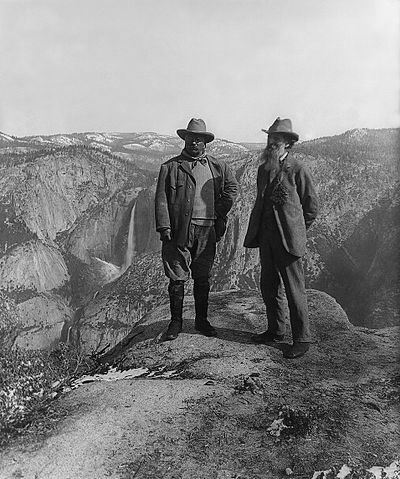
But the Antiquities Act was actually passed in 1906, I think, Teddy Roosevelt.
Matt SalmonGUEST
And he was the one that pushed it through.
Matt SalmonGUEST
He was really Mr. Eco and conservation back in the day before it was cool.
Mike BroomheadHOST
Is that a fair argument, do you think, Mike?
Michael CravensGUEST
Absolutely.
Michael CravensGUEST
You know, to be fair, in full disclosure, the Antiquities Act sometimes, you know, is abused, right? You know, you're supposed to use it to protect the smallest area necessary to protect that item that you are trying to protect.
Michael CravensGUEST
And it is blowing up.
Matt SalmonGUEST
And it's great to not be host and let you take all the heat for everything.
Matt SalmonGUEST
But, you know, the Antiquities Act was actually passed in 1906, I think, Teddy Roosevelt.
Matt SalmonGUEST
And he was the one that pushed it through.
Matt SalmonGUEST
He was really Mr. Eco and conservation back in the day before it was cool.
Mike BroomheadHOST
Is that a fair argument, do you think, Mike?
Michael CravensGUEST
Absolutely.
Michael CravensGUEST
You know, to be fair, in full disclosure, the Antiquities Act sometimes, you know, is abused, right? You know, you're supposed to use it to protect the smallest area necessary to protect that item that you are trying to protect.
Michael CravensGUEST
And it is blowing up.

Don SullivanHOST
But this time, I'm going to be traveling to some more national parks.
Don SullivanHOST
One of the things that happened in the 70s was the usage of the 1872 Antiquities Act to declare as national monuments significant massive areas of the state of Alaska.
Don SullivanHOST
And one of the outcomes of that, specifically on December 2, 1980, was the creation of Wrangell St. Elias National Park.
Don SullivanHOST
It is an absolutely enormous area.

JaredAUDIENCE
Education is important, but they are utilizing the existing legal infrastructure that we have to fight these things legally so that we can prevent them from taking over.
JaredAUDIENCE
They're battling against the Antiquities Act, which, as you guys mentioned, is being completely abused, and that's what's happening.
JaredAUDIENCE
There's other great organizations out there that do lots of cool things about education, and I think that that's important because we want user groups to be better educated and take better care of the land.
JaredAUDIENCE
But at the end of the day, these are legal battles that have to be faced, and they need financial support to do it.

speaker_0NARRATOR
He understood they were never two subjects.
speaker_0NARRATOR
The Antiquities Act of 1906 is what allowed Roosevelt to protect the Grand Canyon, but he couldn't have done anything for the region because the dunes had already been purchased by the industrialists of the time.
speaker_0NARRATOR
Today, the capital is committed, and the government holds a share to keep it committed.
speaker_0NARRATOR
What remains is the decision of what to buy.
Don SullivanHOST
Grant.
Don SullivanHOST
Most people think that the Antiquities Act, the act that allowed the president to nationalize or to effectively memorialize any federal land, was used.
Don SullivanHOST
But the Antiquities Act didn't come around until 1906 with Theodore Roosevelt when he actually created the National Park Service.
Don SullivanHOST
But it was a specific act called the Yellowstone Park, the Yellowstone National Park Protection Act, signed on March 1st, 1872.
Don SullivanHOST
And it was very politically difficult then for President Grant.

Luke MehallHOST
This land is our land now.
Luke MehallHOST
They call it the Antiquities Act.
Luke MehallHOST
You know that Teddy Roosevelt, the racist land protector, the false hero, like so many American presidents, but by precedent left a good idea behind while society climbed towards better ideals.
Luke MehallHOST
Is it better to be idealistic than to be so specific that all this land is to conquer? Because what if we want to prosper? What if we want to encourage thinking, not the drinking of this orange-faced Kool-Aid? Drop it if you think this is just political.

Shawn SpainhourHOST
In nineteen six, he designated the area a game preserve, largely aimed at protecting deer, though this did little to slow private land acquisition.
Shawn SpainhourHOST
Then, on January eleventh, nineteen eight, Roosevelt used the Antiquities Act of nineteen six to designate more than eight hundred thousand acres as Grand Canyon National Monument.
Shawn SpainhourHOST
It was, at the time, an enormous exercise of presidential authority, and it set off exactly the fight you would expect.
Shawn SpainhourHOST
Cameron's lawyers sued, arguing that a monument that large exceeded what the Antiquities Act actually allowed.
Shawn SpainhourHOST
The law specified monuments should be confined to the smallest area compatible with proper care of the resource, and eight hundred thousand acres did not sound small to Cameron's legal team.
Shawn SpainhourHOST
The case reached the Supreme Court.

Chris ClementsCORRESPONDENT
Scott Braden with the Southern Utah Wilderness Alliance says that law doesn't give presidents the power to roll back monuments created by their predecessors.
Scott BradenSOUNDBITE_SPEAKER
We believe the 1906 Antiquities Act gives the President of the United States the authority to create national monuments, not to reduce or destroy them.
Chris ClementsCORRESPONDENT
A White House spokesperson said in a statement that previous Democratic administrations, quote, "abused the Antiquities Act" and that Trump's cuts are restoring common sense land use in those areas.
Chris ClementsCORRESPONDENT
For NPR News, I'm Chris Clements in Flagstaff.
Giles SnyderHOST
This is NPR News.
11 more episodes mention Antiquities Act.
Create an account to see the whole feed, search across every transcript, and follow the entities you care about.