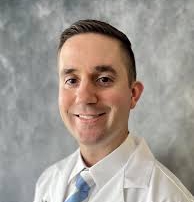
Anthony Dyer
Retired U.S. Air Force Combat Special Missions Aviator (TSgt) and author of the memoir "Moon Child," and mental health advocate for veterans.
6
APPEARANCES
6
PODCASTS
Sep 26, 2026


Anthony DyerGUEST
Yeah, and that's honestly one of the most common themes and feedback, even, you know, the Amazon for Moonshot book review is this common theme of this loss of identity is a big thing.
Anthony DyerGUEST
And sometimes in that life, and I don't wish this on anyone, you do see the worst thing that could happen to someone, you know, and And I think it's, when you get in these moments, it's important to always aviate, navigate, communicate, you know, in a metaphorical type sense and, you know, realize that, hey, you're still going.
Anthony DyerGUEST
People depend on you to still be here, you know, and navigate, figure out, okay, this bad thing in my life happened, this trauma, but what am I going to do about it? Where am I going? And communicate always, always, you know, don't be afraid to talk to someone and reach out and The best way to keep them crashing is simply let somebody know you're struggling to fly.
Anthony DyerGUEST
And honestly, I still want to be my brother's keeper and make sure everybody gets home,

VicHOST
absolutely so man uh just reading that intro i'm i'm super interested about what you're what you're bringing to the show man let me tell me a little bit about yourself what you did in in the military in the air force and then uh how your transition to civilian life went for you so far
Anthony DyerGUEST
yeah yeah no problem uh so uh i joined the air force on july 18th of uh 2000 you know before 9 11 there and then i actually uh i was a guy who had many many jobs at least for the first Part of my career there, I started out as a weapons loader there at Seymour Johnson Air Force Base on the Strike Eagles.
Anthony DyerGUEST
I did approximately five years of that, then five years of Air Force firefighting, doing the ARF stuff there at Charleston Air Force Base, and then I get to a point in my book there where basically I go home on leave, and I realize this whole war on terror, I was sitting on the sidelines, and I really wanted to get in the fight.
Anthony DyerGUEST
I caught the same cracks in the road, and I get to a point where I was like, I don't want to leave cracks.
Anthony DyerGUEST
That's when I decided to be an aero gunner in the mighty 16th Special Operations Squadron on the AC-130 gunship.
Anthony DyerGUEST
and also flew in the uh h860g payfoc helicopter doing the rescue mission and it was just a real privilege and honor and flying fight beside the you know the best men and women the air force has to offer you know in the end make sure the the ground guys gets home that was my whole why all these years and And when the mission settles and that dust settles and you're on your last deployment and you're at your 20, 21st year, your why starts to become almost a burden at that point.
8 MINS LATER
VicHOST
And I'm curious, man, what what your what prompted you to write something about your experiences?


Brian MorrisonHOST
This was my first major mission in search and rescue, and I remember thinking to myself, "Holy cow, what have I got myself into? Is this what search and rescue is gonna be?"
Anthony DyerGUEST
Like basically we could get alerted any time to go pick these guys up and get them out of a bad situation.
Anthony DyerGUEST
That moment, right when I laid down, you know, scramble, scramble, scramble, run to the aircraft.
Anthony DyerGUEST
We get overhead and the JTAC, what it was, was there was twelve bad guys in the tree line, house or bob.
Anthony DyerGUEST
We basically had to do about four gun patterns, you know, a racetrack type pattern, all four guns on the target and that he had marked.
27 MINS LATER


speaker_0HOST
So did you rescue a lot of guys?
Anthony DyerGUEST
So June 8th, 2018, we were in East Africa and, um, you know, we were basically holding down for, for seven days of this, this operation to stand by Casablanca.
Anthony DyerGUEST
Think about like a mass casualty, you know, you're there in case that happens, you're going to get these guys and bring them out.
Anthony DyerGUEST
And naturally day six or seven of that op, um, you know, I went to the talk, the Tactical Operations Center and talked to the intel lieutenant and I was like, ma'am, I was like, you know, it's one of those situations where you eat when you can eat, sleep when you can sleep, you know, because you're at a fob at that point, you know, on these helicopters.
Anthony DyerGUEST
And I went back, she's like, yeah, you know, all is quiet, you're good, you know, and I went back.
Anthony DyerGUEST
As soon as I hit the top bunk, you know, and this is daytime, I think it was about 3 p.m. over there, but I hear, you know, attention on that, scramble, scramble, scramble, right? And at that point, sprinted to the helicopter, longest quarter mile of my life, you know, it felt like.
19 MINS LATER
BrianHOST
And,

Anthony DyerGUEST
So you know, I, I turned basically 18 or almost 18 my senior year in high school.
Anthony DyerGUEST
My, my dad gives me that, that, that cliche dad talk, like, "Son, you're about to be a grown man.
Anthony DyerGUEST
It's time to, you know, get a job, go to college or get out," those three things.
Anthony DyerGUEST
And I talked to a Navy recruiter, and he was talking about being on a boat for six months, as well as a Army, uh, recruiter.
Anthony DyerGUEST
I was like, "I don't do that either." So I talked to my dad sort of about the quality of life of the Air Force.

Marilyn BallHOST
How did you even begin and end? How did that whole transitioning happen for you, and how did you deal with identity?

11 MINS LATER

BillHOST
Do you think that that was a coincidence or is that something that you were you were drawn into because of the action or how did how did you get drawn into the into service like that?