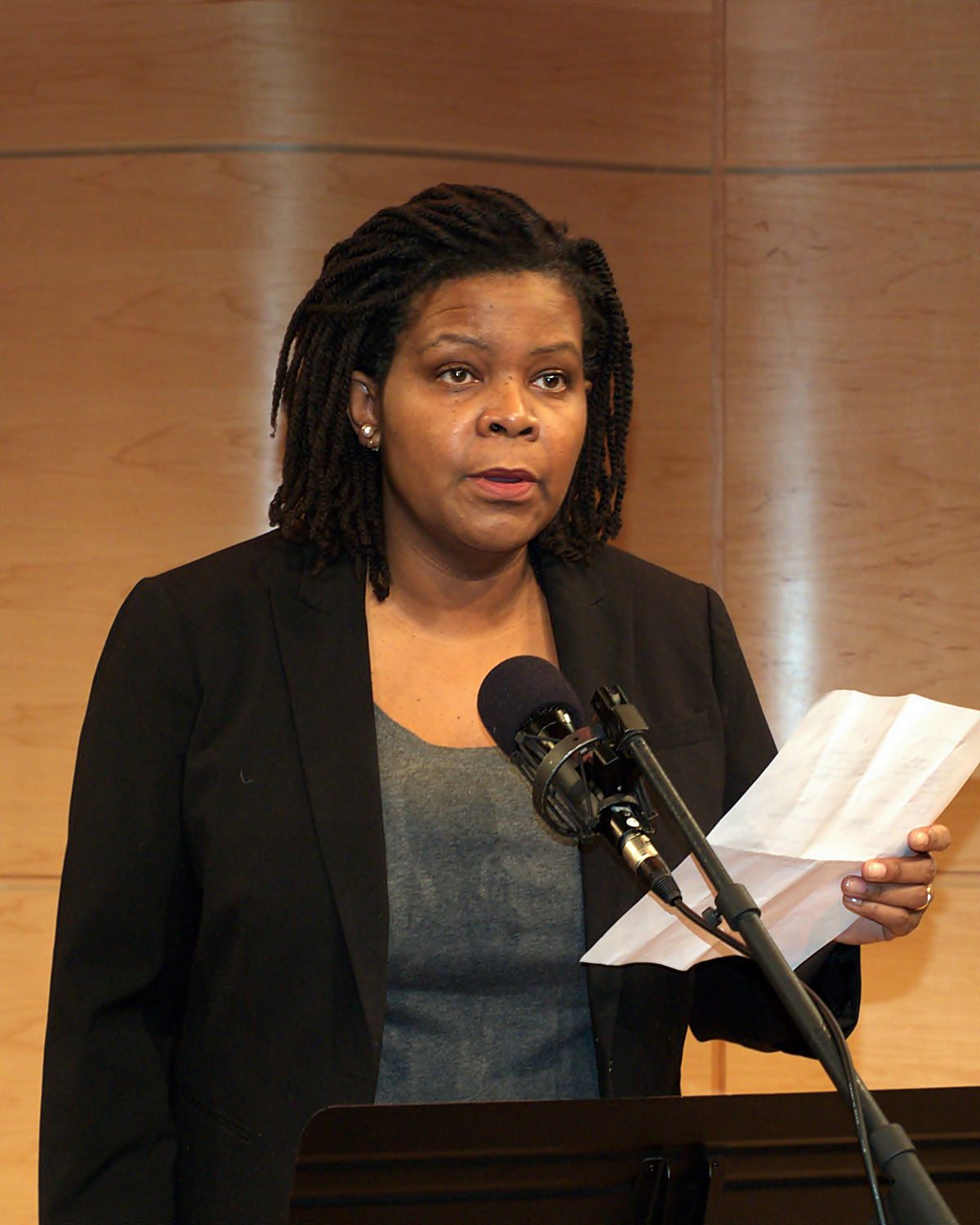
Annette Gordon-Reed
American historian and law professorWikipedia
14
MENTIONS
9
EPISODES
9
PODCASTS
Search complete. 14 mentions across 9 episodes found for "Annette Gordon-Reed".
Nov 24, 2026

AliciaHOST
I'm like, this is something that has already been done.
AliciaHOST
Annette Gordon-Reed did this, I think, what, 30 years ago now at this point? And yes, of course, the scientific DNA sure is, I guess, one more extra step, but...
AliciaHOST
We don't need yet another book about the guy personally.
AliciaHOST
I get that he's a founding father.

Jeremy BaileyGUEST
I mean, this is maybe a different point, but I think it's related and clarifying.
Jeremy BaileyGUEST
So Annette Gordon-Reed and Peter Onuf – point out that basically once he returns from France to the US to serve in Washington's administration, that's when he goes quiet on anti-slavery, right? And the argument there is that he's going to be at some point representing a coalition that includes the South.
Jeremy BaileyGUEST
And so he grows quiet there.
Jeremy BaileyGUEST
I think that's true.

Eric SlauterGUEST
You're seeing him celebrated.
Eric SlauterGUEST
Annette Gordon-Reed wrote a wonderful piece about him in the New York Times.
Eric SlauterGUEST
He's featured in the exhibit that Ted mentioned.
Eric SlauterGUEST
He's featured in this book.

Lizzie PeabodyHOST
Historians, being historians, were skeptical of claims that couldn't be backed up with corroborating evidence.
Lizzie PeabodyHOST
Annette Gordon-Reed later published a Pulitzer Prize-winning book, which offered the most thorough scholarly examination of historical evidence.
Richard KurinGUEST
Annette Gordon-Reed was trained as a lawyer, and basically her position was there was a preponderance of evidence.
Lizzie PeabodyHOST
And in 1998, a retired pathologist named Eugene Foster added some scientific evidence to the mix, a DNA study showing that a descendant of Sally Hemings had the Jefferson Y chromosome, the part of the DNA passed down by the father.
Lizzie PeabodyHOST
It was sensational news.

David RubensteinHOST
Hopefully people will enjoy hearing from these authors, and hopefully they'll want to read more.
speaker_2NARRATOR
Now, from the National Book Festival in Washington, D.C., a discussion about America's past with professor of history at Rice University, presidential historian and New York Times bestselling author Douglas Brinkley, and Harvard professor and Pulitzer Prize winning historian Annette Gordon-Reed.
speaker_2NARRATOR
Beginning now, a conversation with historians Douglas Brinkley and Annette
David RubensteinHOST
Gordon-Reed.

David RubensteinHOST
Hopefully people will enjoy hearing from these authors and hopefully they'll want to read more.
speaker_1NARRATOR
Now, from the National Book Festival in Washington, D.C., a discussion about America's past with professor of history at Rice University, presidential historian and New York Times bestselling author Douglas Brinkley, and Harvard professor and Pulitzer Prize winning historian Annette Gordon-Reed.
speaker_1NARRATOR
Beginning now, a conversation with historians Douglas Brinkley and Annette
David RubensteinHOST
Gordon-Reed.

speaker_0UNKNOWN
Some people may hear this and think, didn't we kind of... already know from the 90s that there was a DNA match? What was not established? What was not proven? So, good question.
speaker_0UNKNOWN
So, in the mid-90s, people like Annette Gordon-Reed and other historians have done good work to show us, okay, there was probably a preponderance of historical evidence, but still not sure.
Steve InskeepHOST
What happens in 1998 is a pathologist, retired guy,
speaker_2UNKNOWN
Foster, University of Virginia, who basically tests.

Risa GoluboffHOST
So the lecture was established to bring, quote, leading scholars and practitioners to Charlottesville to speak on areas of the law undergoing development and of general concern to the profession.
Risa GoluboffHOST
It is our most prestigious lecture here at the law school and has been given by the likes of Ronald Dworkin, Catherine McKinnon, Bruce Ackerman, and Annette Gordon-Reed.
Risa GoluboffHOST
I can't imagine a better fit for today's lecture or for a lecture bearing Claiborne McCorkle's name than tonight's speaker, John Fabian Witt, the Duffy Class of 1960 Professor of Law and Professor of History at Yale University, whose newest book is about people who took enormous risks in the cause of racial and other forms of justice.
Risa GoluboffHOST
And I'll tell you a little bit more about that in a minute.

Ken BurnsGUEST
There's a moment when we talk about what Jeff was saying about these unalienable rights, that the sovereignty comes basically from the people themselves, even though Jefferson, as the owner of hundreds of human beings... couldn't make it a reality in his own life.
Ken BurnsGUEST
At one point, the scholar Annette Gordon-Reed comes in and says slavery bounded every part of his existence from the beginning to the end, and he knew it was wrong.
Ken BurnsGUEST
And so how could you do something if you knew it was wrong? And at that point, she comes on camera after having been speaking off camera, and she looks at us and she says, well, that's the human question for all of us.
Ken BurnsGUEST
Not taking Jefferson off the hook, but putting us up next to Jefferson on that hook of our own contradictions, of our own foibles.