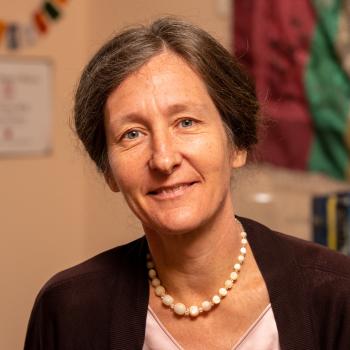
Anna Lembke
American psychiatristWikipedia
21
MENTIONS
19
EPISODES
17
PODCASTS
Search complete. 21 mentions across 19 episodes found for "Anna Lembke".
Sep 17, 2026

Casey McGuire DavidsonHOST
was like a bottle of wine a night when I stopped.
Casey McGuire DavidsonHOST
And Dr. Anna Lembke talks about this.
Casey McGuire DavidsonHOST
And Huberman also did a really good episode on this where he talks about sort of quote unquote moderate drinking.
Casey McGuire DavidsonHOST
So like seven drinks a week for women.

Jeff KrasnoHOST
And this is perhaps one of the great antidotes to our time, to the erosion of trust, to the sense of constant distraction.
Jeff KrasnoHOST
And I believe that you interviewed Anna Lembke, or you mentioned her.
Sophie Grégoire TrudeauGUEST
Yes, the author of Dopamine Nation.
Jeff KrasnoHOST
Right.

speaker_0AUDIENCE
Okay.
John DelonyHOST
And so I want you to read a book by, I mean, she's extraordinary, the great Anna Lembke.
John DelonyHOST
It's called Dopamine Nation.
John DelonyHOST
And as a social scientist, every single social scientist, student, practitioner should read this book.

Munish ChawlaGUEST
So I wanna bring in a little bit of neuroscience.
Munish ChawlaGUEST
You know, why is it that people are having such a hard time with smartphones or, you know, uh, highly processed foods? So part of the answer comes from Anna Lembke.
Munish ChawlaGUEST
She's a psychologist at Stanford, and she wrote the book Dopamine Nation.
Munish ChawlaGUEST
She said, "It's finding balance in the age of indulgence." So what is she talking about? She is saying that we live in a society where highly processed, highly palatable food is easily and cheaply available, that we have all these things, you know, smartphones, cigarettes, alcohol, that there's overabundance, and we have just gotten used to just feeling good.
51 MINS LATER
Munish ChawlaGUEST
For some folks, it's sugar.
Munish ChawlaGUEST
But for some folks, it's pornography.
Munish ChawlaGUEST
So once, let's say, that is something that your brain initially really gave you a high dopamine response for, but like I showed in Anna Lembke's book, you know, those graphs were borrowed from her book, that if you keep doing that over and over, if you're just overusing, you become addicted to that behavior, then the amount of pleasure from watching pornography is ultimately less and less and less.
Munish ChawlaGUEST
The, you know, nature automatically sets a limit on this.

Andrew HubermanGUEST
But, um, I think in the next five years or so, we're just gonna see a slew of studies showing that vaping is just bad for us, especially for the developing brain, because it's bringing in at a very rapid rate high-potency nicotine and high-potency cannabis.
Andrew HubermanGUEST
And you know from Anna Lembke's work, and we know, my colleague at Stanford, that the, the slope of that increase in dopamine and epinephrine, adrenaline, and acetylcholine is so important.
Andrew HubermanGUEST
The sharper that slope, the faster the rise, the more addictive potential these compounds have.
Andrew HubermanGUEST
And so it's so far and away different than the kind of dopamine or epinephrine or acetylcholine increase that one sees with exercise or with cold plunges or with, um, with sex or with these other things-

Elisabetta BurchiHOST
But I would like to end sharing a few potential suggestions.
Elisabetta BurchiHOST
Some of them, uh, come from the work of Anna Lembke, which wrote, uh, Dopamine Nation, and which has written a lot about her clinical work with patients, uh, with addiction.
Elisabetta BurchiHOST
One of her core insights is that we are living in a age of radical oversupply.
Elisabetta BurchiHOST
Indeed, the, the modern world, uh, we have seen it, offers immediate infinite pleasures, and the brain's response to this, uh, is to lower the baseline, to require more stimulation to achieve the same response, to make ordinary life feel flat and insufficient.

Tom MolyneuxHOST
So me and Mary were working on a project the other day and we were talking through a quote in another addiction recovery sort of self-improvement book.
Tom MolyneuxHOST
The book is called Dopamine Nation by Anna Lembke.
Tom MolyneuxHOST
And there's this quote in that book which says, if we wait until we feel the compulsion to use the reflexive pull of seeking pleasure and or avoiding pain is nearly impossible to resist.
Tom MolyneuxHOST
In the throes of desire, there's no deciding.
NicoleAUDIENCE
the first initial, um, getting, getting off of it, uh, kind of quitting cold turkey, which that first book helped.
John DelonyHOST
So, so you read Anna Lembke's, what I think is a masterpiece, Dopamine Nation.
John DelonyHOST
What'd you think of that book?
NicoleAUDIENCE
It was really good.
John DelonyHOST
Um, hey, can I just, can I applaud you?
NicoleAUDIENCE
Mm-hmm.
John DelonyHOST
Um, Anna Lembke was one of a few people who helped me reframe addiction in a powerful way, which is addiction is not the problem, it's what works.
NicoleAUDIENCE
Hmm.

Beige Luciano-AdamsGUEST
And children's brains, you know, adolescent, not just children, but adolescents maybe until the age of 25, maybe even later, they're developing, they're more malleable, they can be particularly vulnerable.
Beige Luciano-AdamsGUEST
In the first bellwether social media addiction case in Los Angeles, we heard extensively from top specialists, including, uh, Dr. Anna Lembke from Stanford.
Beige Luciano-AdamsGUEST
She runs the adolescent addiction program there.
Beige Luciano-AdamsGUEST
And she was, you know, she told the court that around 40% of patients at the school's adolescent recovery clinic, the medical school's adolescent recovery clinic, which has historically treated drugs and alcohol addiction, they're now presenting with social media addiction.
9 more episodes mention Anna Lembke.
Create an account to see the whole feed, search across every transcript, and follow the entities you care about.