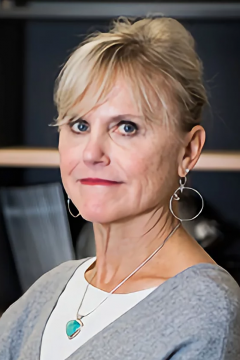
Ann McKee
NeurologistWikipedia
20
MENTIONS
11
EPISODES
10
PODCASTS
Search complete. 20 mentions across 11 episodes found for "Ann McKee".
Oct 8, 2026
Dan PatrickHOST
Was there a year, when you go back through 40 years, the toughest year to write about or chapter in the book was what?
Peter KingGUEST
I would say the toughest year would have been the year that I wrote about Ann McKee, who I think is the conscience of the NFL.
Peter KingGUEST
She's the big CTE doctor who, when in 2010, when James Harrison was, uh, being, uh, uh, quite a violent player in the game, and the NFL was starting to come down on teams, I went to visit Ann McKee in her office in Baltimore, and she showed me Lou Creekmur's brain tissue.
Peter KingGUEST
Um, he was, died severely demented.
Peter KingGUEST
Um, and she was in the process of finding out how many people who, you know, had CTE, um, you know, w- when they, when they died and, and obviously, uh, y- you know, you can only diagnose that post-death.

Dan PatrickHOST
When you go back through 40 years, the toughest year to write about or chapter in the book was what?
Peter KingGUEST
I would say the toughest year would have been the year that I wrote about Ann McKee, who I think is the conscience of the NFL.
Peter KingGUEST
She's the big CTE doctor who, when in 2010, when James Harrison was, uh, uh, being, uh, uh, quite a violent player in the game and the NFL was starting to come down on teams, I went to visit Ann McKee in her office in Baltimore, and she showed me Lou Creekmur's brain tissue.
Peter KingGUEST
Um, he was, died severely demented.
Peter KingGUEST
Um, and she was in the process of finding out how many people who, you know, had CTE, um, you know, w- when they, when they died and, and obviously, uh, y- you know, you can only diagnose that post-death.

Shubhra RoyHOST
In this study, for example, career length predicted how severe CTE was, but not whether it was actually present.
Shubhra RoyHOST
Back a few years ago, we had the opportunity to interview Anne McKee, one of your co-authors on this study, on the same topic.
Shubhra RoyHOST
And one of the major takeaways, at least at that time, was that duration of career did predict CTE presence in those studies.
Shubhra RoyHOST
How should we think about these newer data in that context of those prior studies?

Peter KingGUEST
Um, I would say the one thing that I really wanted to do, that I thought was really important, is I wanted to do something or some things about where the league was right now.
Peter KingGUEST
And I did a chapter on Ann McKee, and I called her the conscience of the NFL because Ann McKee, who obviously as everybody, most people will know, is probably the foremost authority on CTE, um, has really been sounding the alarm, uh, about CTE for a long time.
Peter KingGUEST
And Ann McKee, uh, i- i- when I say that she's tormented, she has m- i, because I went to visit her about a year ago to this month, uh, at her office at Boston University, and she has bobbleheads of Aaron Rodgers and Brett Favre in her office.
Peter KingGUEST
She grew up a Cheesehead, in Wisconsin, loved the Vince Lombardi Packers.
Peter KingGUEST
She's, oh, 70-something right now.

Jonathan CherryGUEST
So I got my PhD in mouse models in Alzheimer's pathology, so just looking at different facets of it.
Jonathan CherryGUEST
And when I was trying to find the next step, the position in Boston University opened with Dr. Ann McKee for, for a postdoc role.
Jonathan CherryGUEST
And as somebody who has had my fair share of head injuries and concussions, that seemed like a really interesting step to take my work and be more translational about it.
Jonathan CherryGUEST
So get out of mouse models and start to look at human biology.
Therese MarkowHOST
So what goes on at that center? I mean, is there a big brain collection and people are looking at brains? What's it all about?
Jonathan CherryGUEST
Yeah.
Jonathan CherryGUEST
So the center was started in, in the late 2000s by Dr. Ann McKee and, and several other collaborators, uh, who came together and wanted to better understand what CTE looked like.
Jonathan CherryGUEST
So like I said, even though this is almost 100 years old, we are maybe in, like, the adolescence right now-

Robert SternGUEST
And he and Dr. Cantu were looking for a research center to collaborate with in some way.
Robert SternGUEST
[lips smack] To make a longer story shorter, but even though it's already too long, we then, after around a year or so, created a formal affiliation between Sports Legacy Institute and Boston University, where my amazing colleague, Dr. Ann McKee, and I were the co-founders and leaders at BU, and Dr. Cantu and Chris Nowinski were the co-founders and leaders from Sports Legacy Institute.
Robert SternGUEST
And we created this Center for the Study of Traumatic Encephalopathy, which changed names to the Boston University CTE Center.
Robert SternGUEST
Chris went on to get his PhD in neuroscience, behavioral neuroscience, and we've had an incredible relationship together through the years.
Robert SternGUEST
... think it tells listeners that things just don't happen.
Rhys GrangerHOST
Yeah.
Rhys GrangerHOST
I think it's great to, well, lack of better term, peek behind the curtain, and actually learn the history of how such an iconic organization with workers, and staff, and people such as yourself, and Dr. Nowinski, and Dr. Ann McKee, and Dr. Cantu actually came together.
Rhys GrangerHOST
Because as soon as you mention concussion, concussion research, everyone now just thinks Boston University Concussion Center and concussion research.

Dan BernsteinHOST
And that is published research that is... peer-reviewed by large data sets and experts.
Dan BernsteinHOST
Just in a brief glance, there was the original publication in neurology, and this has been the Boston University well-known chronic traumatic encephalopathy center with Dr. Ann McKee.
Dan BernsteinHOST
Harvard Medical School, Mass General, they have all looked at these studies and looked at the information.
Dan BernsteinHOST
And there is a believed to be a minimum of a fourfold increase in risk for ALS because one plays football.

Chris NowinskiGUEST
So you get these tiny lesions, usually in the frontal cortex, because that's sort of a physics vulnerability at the depths of the sulcus, the bottom of the valleys of the cortex.
Chris NowinskiGUEST
There's four pathological stages defined by Dr. Ann McKee, starting with these small lesions in the frontal cortex, and then as they spread, stage two means it's starting to spread out from those lesions, but more still in the cortex primarily.
Chris NowinskiGUEST
Then it spreads to the medial temporal lobes.
Chris NowinskiGUEST
You start to see some memory problems and more severe cognitive symptoms.

Greg GlassmanGUEST
I can find it too, I think.
Caleb BeaverHOST
Oh, it was, um, Ann, uh, Ann something.
Greg GlassmanGUEST
Yes.
Caleb BeaverHOST
Uh, it was Ann McKee.
Caleb BeaverHOST
Dr. Ann McKee.
Greg GlassmanGUEST
Ann, Dr. McKee.
Greg GlassmanGUEST
Remember, Sevy, we met her at the Four Seasons in Washington, DC?
Sevan MatossianHOST
What was her specialty?

James WillisHOST
For me, I found
Larry CarrGUEST
the treatment through a referral from Dr. Anne McKee.
Larry CarrGUEST
She is the preeminent CTE expert in the United States.
Larry CarrGUEST
She referred me to the trial at Boston VA, and I was the first official football player with probable CTE to be entered into that trial.
1 more episode mentions Ann McKee.
Create an account to see the whole feed, search across every transcript, and follow the entities you care about.