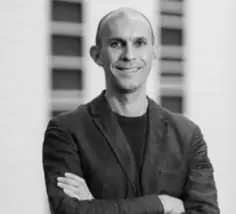
Anil Seth
British neuroscientist and professorWikipedia
43
MENTIONS
31
EPISODES
31
PODCASTS
Search complete. 43 mentions across 31 episodes found for "Anil Seth".
Nov 6, 2026

John W. KrakauerGUEST
It's just that I just don't think people are having these conversations enough.
John W. KrakauerGUEST
Some people are, like Anil Seth.
John W. KrakauerGUEST
Ned Block had his recent paper in TIX.
John W. KrakauerGUEST
Do we need to be made of meat? There is more awareness.
30 MINS LATER
Adam SafronHOST
principles of life that may or may not be necessary for different aspects of intelligence, you could make agentic functioning a part of it.
Adam SafronHOST
You could potentially give it interests of the functional version of affects.
Adam SafronHOST
I'm curious what you think of, I don't know what the term would be, but like Anil Seth would talk about, like the details of the implementation also matter.
Adam SafronHOST
That like the components themselves, life itself, like being biological, that's somehow important for, he would say for consciousness and for intelligence.

Tim HayesHOST
We don't get to understand what their emotional state is, what their thought process is, so we make it up.
Tim HayesHOST
As Anil Seth, and his S-E-T-H is his last name, as he says in his videos and his research about perception, we're all just making our best guess.
Tim HayesHOST
Our brain is inside our cranium not getting any direct sound, not getting any direct sight, not getting any direct physical sensation of touch or heat or cold.
Tim HayesHOST
And it's doing its best to make a guess based on the input of the five solid senses.

Jo BraidHOST
So let's understand why would your brain turn down the signal? That is because our attention is limited and our brains are built to prioritize.
Jo BraidHOST
Neuroscientist Dr. Anil Seth and others showed that your brain is constantly predicting what state your body should be in and using incoming signals.
Jo BraidHOST
So your brain is completely in the dark.
Jo BraidHOST
It's getting incoming electrical signals to correct that prediction.

Joscha BachGUEST
Instead, I think that it is natural.
Joscha BachGUEST
And I suspect that Anil Seth's position of his biological naturalism by making a claim that biological systems are intrinsically different from any other system that is not biological is actually a supernaturalism.
Joscha BachGUEST
He is a biological supernaturalist.
Joscha BachGUEST
He believes that biological systems cannot be fully naturalized, which means you cannot translate them into mathematical models.
40 MINS LATER
Joscha BachGUEST
So it's very difficult to have a proof against it.
Joscha BachGUEST
So it's more evidence for it if we succeed.
Joscha BachGUEST
So what we would have to show in order to convince Anil Seth maybe is that we built a system that is self-organizing, that is not trained on text, that is doing developmental learning, and that naturally gets to the point where it makes self-reports and reports about its conscious experience, and it requires this conscious experience to produce its performance.
Joscha BachGUEST
So I think this would be evidence in favor of it.

Rupert SheldrakeGUEST
In the dreams, it's not anchored to perception and can float free in a kind of realm of possibility.
Rupert SheldrakeGUEST
During waking life, it is anchored to perception and normally what we see is, that's why Anil Seth, the nearest scientist, calls it a controlled hallucination, our normal perception.
Rupert SheldrakeGUEST
So I think that's perfectly valid way.
Rupert SheldrakeGUEST
I mean, he's a neuroscientist and a materialist, and I think he's right about that.

Maciej PotzGUEST
is expected to be associated with this torture or whatever it is.
Maciej PotzGUEST
And also, I think there is the broader argument made by some neuroscientists like Anil Seth, for instance, that perhaps consciousness and maybe even science is tightly connected to our biological nature because it evolved uh as um a reaction to um to some you know evolutionary problems that we had to overcome so maybe we need conscience to for something we don't really know what it is maybe for better interacting with other people or uh whatever it is so the the if this is the case the machine would never have any need for in this sense for consciousness it all we know is that it's not necessarily connected with intelligence so the fact that they develop even superhuman intelligence doesn't necessarily translate to consciousness and these evolutionary incentives for developing consciousness may simply not be in place for AI so I'm quite skeptical at this point but as you said it's good that they are trying to to do some research and even at least establish some criteria that we should be or signs that we should be looking for.
Maciej PotzGUEST
And it's probably more than Richard Dawkins sitting for three days and talking to God and saying, oh, yeah, it's conscious.
James HughesHOST
In your conclusions, you propose change to our political representation system with three different bodies.

Anil SethGUEST
Fortunately, I don't think it's likely or I don't think it's really possible at all under current trajectories.
Dave TroyHOST
You just heard neuroscientist Anil Seth answering what might be the simplest but most important question about AI.
Dave TroyHOST
Even if we could build a conscious machine, should we? I'm Dave Troy, and this is Episode 7, Season 4 of Dave Troy Presents.
Dave TroyHOST
Recently, the question of whether AI might be conscious left the philosophy seminar and landed on the business pages, as AI maker Anthropic has written that possibility into the constitution that it uses to train its clawed models.
Dave TroyHOST
Its rivals call that dangerous, and it's all happening on the eve of what could be the largest stock offering in history.
Dave TroyHOST
My guest today is Dr. Anil Seth.
Dave TroyHOST
He's professor of cognitive and computational neuroscience at the University of Sussex.
Dave TroyHOST
He's the director of the Center for Consciousness Science and the author of Being You, A New Science of Consciousness.

Ken WoodwardHOST
The materials may have mattered here after all, just not in the direction I would have guessed.
Ken WoodwardHOST
Anil Seth is a neuroscientist who studies consciousness.
Ken WoodwardHOST
In his book, Being You, he argues that the brain isn't simply taking in the world as it is.
Ken WoodwardHOST
It's predicting.

Tom PerryGUEST
I don't know.
Glenn OstlundHOST
But so where I go with this, back in 2017, I came across this YouTube video from a neuroscientist named Anil Seth.
Glenn OstlundHOST
And he talks about the brain as a controlled hallucination.
Glenn OstlundHOST
And he's describing the predictive processing, the way that the brain predicts what's going to happen before sensory data actually comes in.

Shai TubaliGUEST
but it is the identification with the thinking process, turning that thinking process into who we are.
Shai TubaliGUEST
This is in what Anil Seth, the neuroscientist with whom I've had the conversation, he describes it as starting to think of ourselves as embodied algorithms.
Shai TubaliGUEST
So this is what we are.
Shai TubaliGUEST
We are just algorithms within a physical form.
21 more episodes mention Anil Seth.
Create an account to see the whole feed, search across every transcript, and follow the entities you care about.