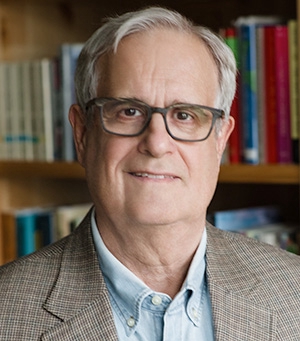
Andrew Rowen
Historical novelist whose novels retell the encounters between Europeans and the Caribbean's Taíno peoples from a bicultural perspective.
3
APPEARANCES
3
PODCASTS
Aug 24, 2026


Andrew RowenGUEST
She was born into the Caonabo family, the, the ruling family of one of the, the five large chiefdoms in Hispaniola at the time of conquest, fourteen ninety-two, when, when Columbus came by first.
Andrew RowenGUEST
And, you know, the primary sources don't record the ages of the Taino chieftains, but she was born in somewhere around fourteen sixty-eight, making her thirty years old at the beginning of the book.
Andrew RowenGUEST
And in her youth, and you can see this in all the primary sources, she was renowned as the island's most beautiful woman, and she then became renowned as the island's greatest poetess.
Andrew RowenGUEST
The Tainos recorded their history and their spiritual stories and so forth in song and dances that they called ariettos, and she was renowned for that.
Andrew RowenGUEST
When she was a young teenager, she was married to the chieftain i- in the, in the neighboring chieftain, Caonabo, and went to live with him in his chiefdom.
10 MINS LATER

PaulHOST
But to go from that to, you know, a specific story about an individual, are-- do you-- is the shift really heavy to like, hey, if I want to know about Anacaona's life, I really have to, unfortunately, have to kind of parse through the Spanish sources just because it is about that individual? Or from some of the work you've seen on the archeological side and the anthropological side, we are able to pull out maybe a little bit more about Anacaona specifically as an individual.
Andrew RowenGUEST
The, it, it's more the anthropological side than the arthrop-- uh, than the archeological side.
Andrew RowenGUEST
The side where anthropologists have, have tried to understand their culture and thought patterns that are relying on interpretation.
Andrew RowenGUEST
There are archeological studies that help you determine where things happened, but it's really the anthropological studies that I find meaningful.
Andrew RowenGUEST
Now, y-you know, I said that European primary sources contain information about, uh, Anacaona and other Taino chieftains, and there's enough there to construct what happened in her life with, you know, I believe a fairly high degree of confidence.
Andrew RowenGUEST
Most of the information about her begins in 1495, which is when the conquest is going on.
Andrew RowenGUEST
But the Spanish chroniclers and reports also provide you some biographical information about, um, her prior to contact, prior to 1492.
13 MINS LATER
RichieHOST
Was there anything that surprised you when you were doing your research on this particular part of trying to understand what those cultural or, like, social norms were across this particular region?

Andrew RowenGUEST
Zaragua was the most powerful chieftain, and it's located in the southwestern portion.
Andrew RowenGUEST
Basically, you could think of it as the southern half of what we now know as the country of Haiti, from a little bit above Port-au-Prince down through the rest of the country of Haiti.
Andrew RowenGUEST
There's no precise detail given in the chroniclers making her about 30 at the beginning of my book.
12 MINS LATER

Josh JohnsonHOST
So our two figures we focused on, Anacona and Columbus, how do you wrap their stories up in 1502? What happens to Columbus? What happens to Anacona? And then sort of, I guess, how's the stage set for how things move on beyond that?