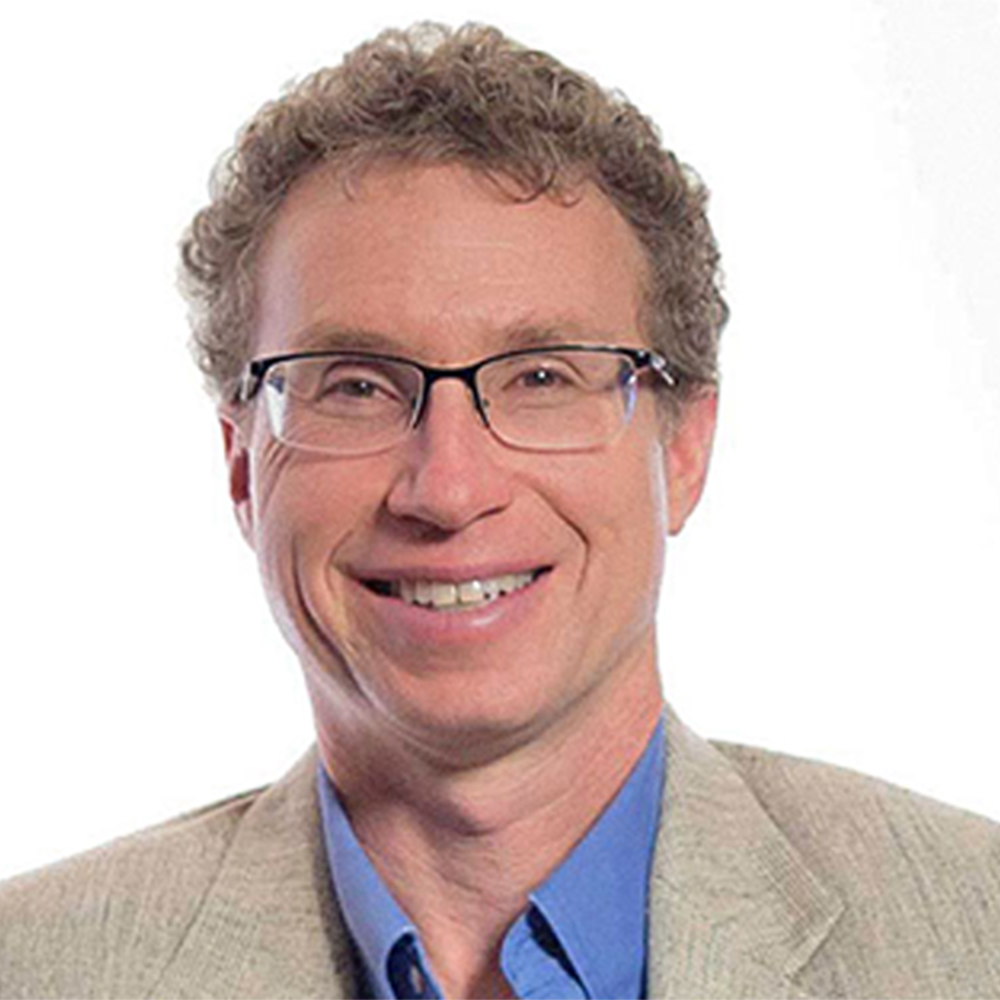
Andrew B. Newberg
American neuroscientist
6
APPEARANCES
6
PODCASTS
Oct 22, 2026


Danielle LinHOST
What is neurotheology? I mean, how does that word become coined? And what were you attempting when that came about?
Andrew NewbergGUEST
For me, to make it work, I try to define both sides of that, the neuro side and the theology side, in very broad terms.
Andrew NewbergGUEST
But if we define the neuro side as our thoughts, our feelings, our psychology, and even when we start to relate that to the biology of the human brain and how the brain ultimately is deeply interconnected with the whole body, we're almost talking just about who we are as people when we talk about the neuro side and what makes us think, what makes us believe certain things.
Andrew NewbergGUEST
And, of course, theology, to me, well, theology itself is a very clear, deductive approach to understanding what religious beliefs are all about.
24 MINS LATER
Danielle LinHOST
then that kind of begs the question, if people believe they're going to be rich or people believe they're going to be thin or people believe they're going to have the perfect relationship, what's missing in all the belief system that needs to match up so people can actually attain the life that they desire?


Andrew NewbergGUEST
I don't know if I would ever be able to tell people how to lead their lives.
Andrew NewbergGUEST
And I don't know if this is the best way to answer your question, but to me, what life is really about is about asking questions and to explore and to be open to different ideas.
Andrew NewbergGUEST
Now, on one hand, on a very pragmatic level, And it sounds like a lot of people in your audience are going to be at a level where they need to be pragmatic.
Andrew NewbergGUEST
I mean, we have to live our lives and we have to come up with a spiritual platform or a political perspective or a moral perspective that we live our lives by.
16 MINS LATER

Rudi RiekstinsHOST
And I would love for you to speak a little bit into what would we gain by reading this book? Like what was your mission in putting this body of work out? And then if you could shift for us in a response, how should we look at sex and spirituality and how does that play into the brain, God and our everyday life?


Jalees KhanHOST
What does seeing someone else's perfect life online make our brains question our own?
Andrew NewbergGUEST
Well, I think the, the bottom line is, is that as human beings, um, we are always comparing ourselves.
Andrew NewbergGUEST
Every animal in a social group is always looking to see where, where we fit in.
Andrew NewbergGUEST
And h- you know, in, in history, before we had all of the social media, it wasn't constant.
Andrew NewbergGUEST
So, you know, when you were in school, you might determine how you were, uh, in, how you were, uh, compared in relation to other students with you.
Jalees KhanHOST
Um, how does constantly comparing ourselves with others affect our sense of identity and self-worth?


Simon MundieHOST
Is that something, what I've just described there, is that something that chimes across people who have this experience? What I've just described there, that sense of non-separation.
Andrew NewbergGUEST
So again, we're hitting actually on some really deep points right away, which is great, but sometimes it takes a little time to get there.
Andrew NewbergGUEST
First of all, as far as the perception of reality goes, this in and of itself is really a fascinating issue.
Andrew NewbergGUEST
The computer that I'm working on, talking into your image, my dogs that are next to me, the cars that are out there, the sun that's in the sky.
16 MINS LATER
Simon MundieHOST
So what can you say about that, the altered traits, this lifelong potential change?

speaker_2UNKNOWN
(laughs)
Andrew NewbergGUEST
So here's our brain, and there are some very important areas for us to think about.
Andrew NewbergGUEST
Now, I have to caveat everything I'm about to say by telling you that the brain is incredibly complex, so there's no way for us to talk about all of it right now.
Andrew NewbergGUEST
I'm going to focus on the things that the brain does that are most relevant to our ability to have different kinds of spiritual experiences and engage in different religious or spiritual practices, so I'm gonna kind of just hit those highlights.
Andrew NewbergGUEST
And the other thing that I also really want to emphasize is that I'm gonna talk about different parts of the brain.
Andrew NewbergGUEST
We're gonna talk about the frontal lobe and the temporal lobe and things like that.
Andrew NewbergGUEST
Uh, the brain operates as an integrated whole, so even though the frontal lobe does certain specific things, it's working with other areas to help us do all of the things that our brain does.
30 MINS LATER
speaker_3UNKNOWN
(laughs)


John R. MilesHOST
How does your research around these religious practices and beliefs show that religion shapes our brains and fosters a sense of connection?
Andrew NewbergGUEST
Well, this may be something that is maybe a little easier to nail down, at least as far as the brain goes.
Andrew NewbergGUEST
When we have done some of our brain scan studies and we look at what goes on when people are engaged in different practices, different rituals, one of the things that we had always proposed was that there's an area of our brain called the parietal lobe that takes sensory information and helps us to get a spatial representation of ourself.
Andrew NewbergGUEST
And that when people are engaged in these kinds of practices, as the practice goes on, this area of the brain quiets down.
Andrew NewbergGUEST
And so when that happens, what these practices, what these rituals are doing is we then lose that spatial sense of ourself.
Andrew NewbergGUEST
And we actually begin to break down the boundary between ourself and the other.
19 MINS LATER