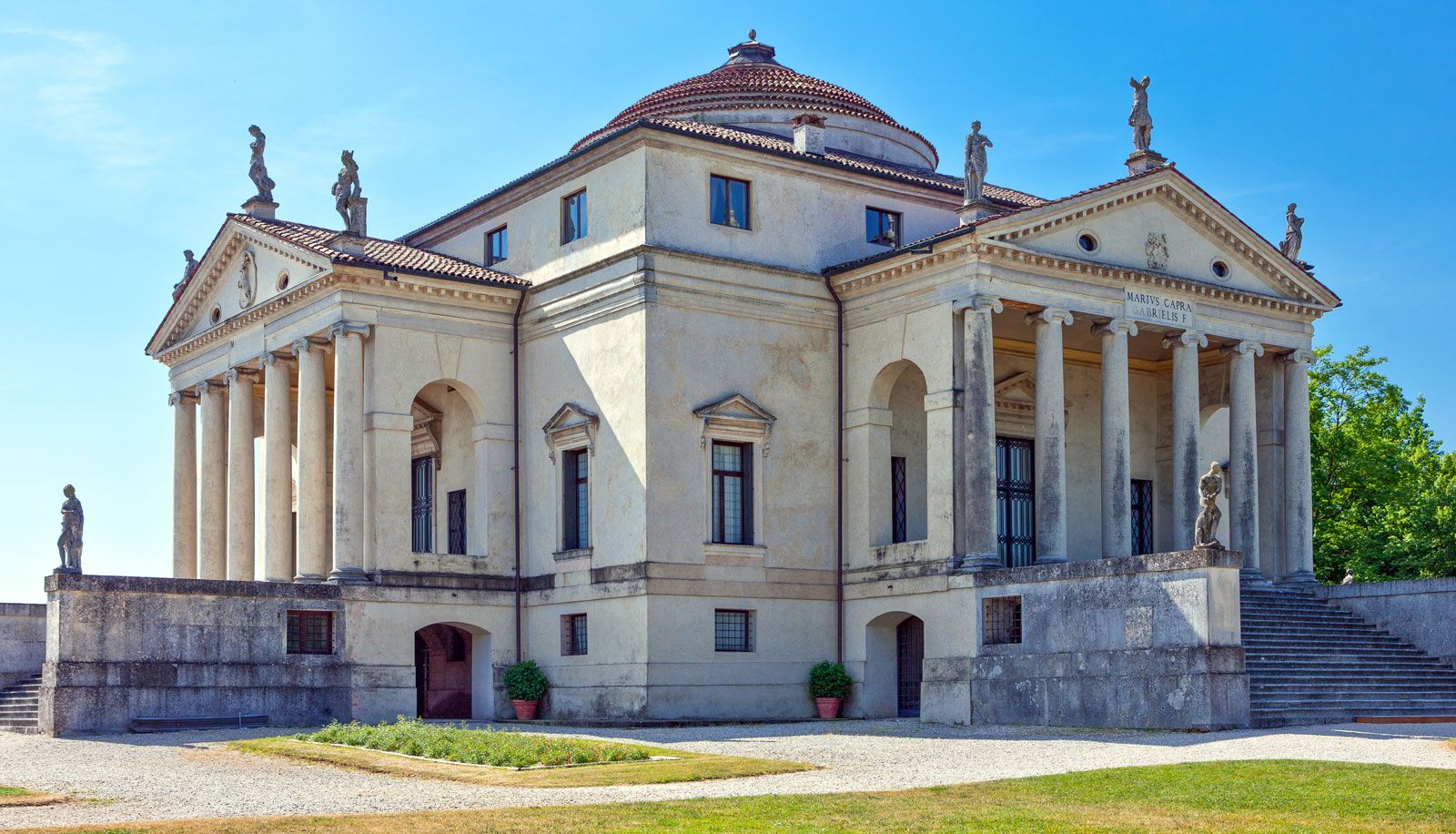
Andrea Palladio
Italian architectWikipedia
7
MENTIONS
5
EPISODES
5
PODCASTS
Search complete. 7 mentions across 5 episodes found for "Andrea Palladio".
Sep 27, 2026

Luis de MiguelHOST
I mean, here's a guy that really, I mean, he could really hold his nuts.
Luis de MiguelHOST
So anyway, then you have Andrea Palladio, which is a beautiful name.
Luis de MiguelHOST
Frankly, for an architect to be named Andrea Palladio, except that he made that up because he was really Andrea Di Pietro della Gondola.
Luis de MiguelHOST
Now I'm just venturing out here why perhaps he was called De La Gondola, those famous boats in Venice.
Luis de MiguelHOST
There's an expression during the war.

speaker_1NARRATOR
Architects and engineers were asked to assess the building and propose solutions.
speaker_1NARRATOR
Their consultations included Antonio da Ponte, Andrea Palladio, Francesco Sansovino and other experienced figures.
speaker_1NARRATOR
The choice was not merely between different methods of repair.
speaker_1NARRATOR
It raised a larger question about what Venice wanted its seat of government to be.

Robyn RichardsonHOST
That makes sense.
Robyn RichardsonHOST
Well, and then there's also Andrea Palladio's, I'm not going to say this right, Quattro Libri dell'Architettura.
Robyn RichardsonHOST
which was mass printed.
Robyn RichardsonHOST
And this was the single most influential design document in Western history.

Theo WrenfieldNARRATOR
Renaissance architectural treatises began to address brick construction in serious theoretical terms for the first time since antiquity.
Theo WrenfieldNARRATOR
Andrea Palladio, whose influence on Western architecture can hardly be overstated, included detailed discussions of brick building in his Four Books of Architecture, published in 1570.
Theo WrenfieldNARRATOR
Palladio described proper brick proportions, laying techniques, and the integration of brick with other materials.
Theo WrenfieldNARRATOR
His writings helped elevate brick construction from craft tradition to architectural theory, giving master builders a framework for understanding and explaining their practices.
Theo WrenfieldNARRATOR
The practical innovations of Renaissance brick construction were as significant as the aesthetic achievements.

speaker_4NARRATOR
The combination of a classical portico and a large dome can be seen in many 19th and 20th century public buildings, including libraries and city halls.
speaker_4NARRATOR
Thomas Jefferson used the design as the basis for the library at the University of Virginia, relying on drawings by Andrea Palladio.
speaker_4NARRATOR
In Oslo, a miniature version of the dome was included in the Henriette Wegener Pavilion in 1824.
speaker_4NARRATOR
The architect Carl Ludwig Engel also drew inspiration from the structure for the Nokia church in 1837.