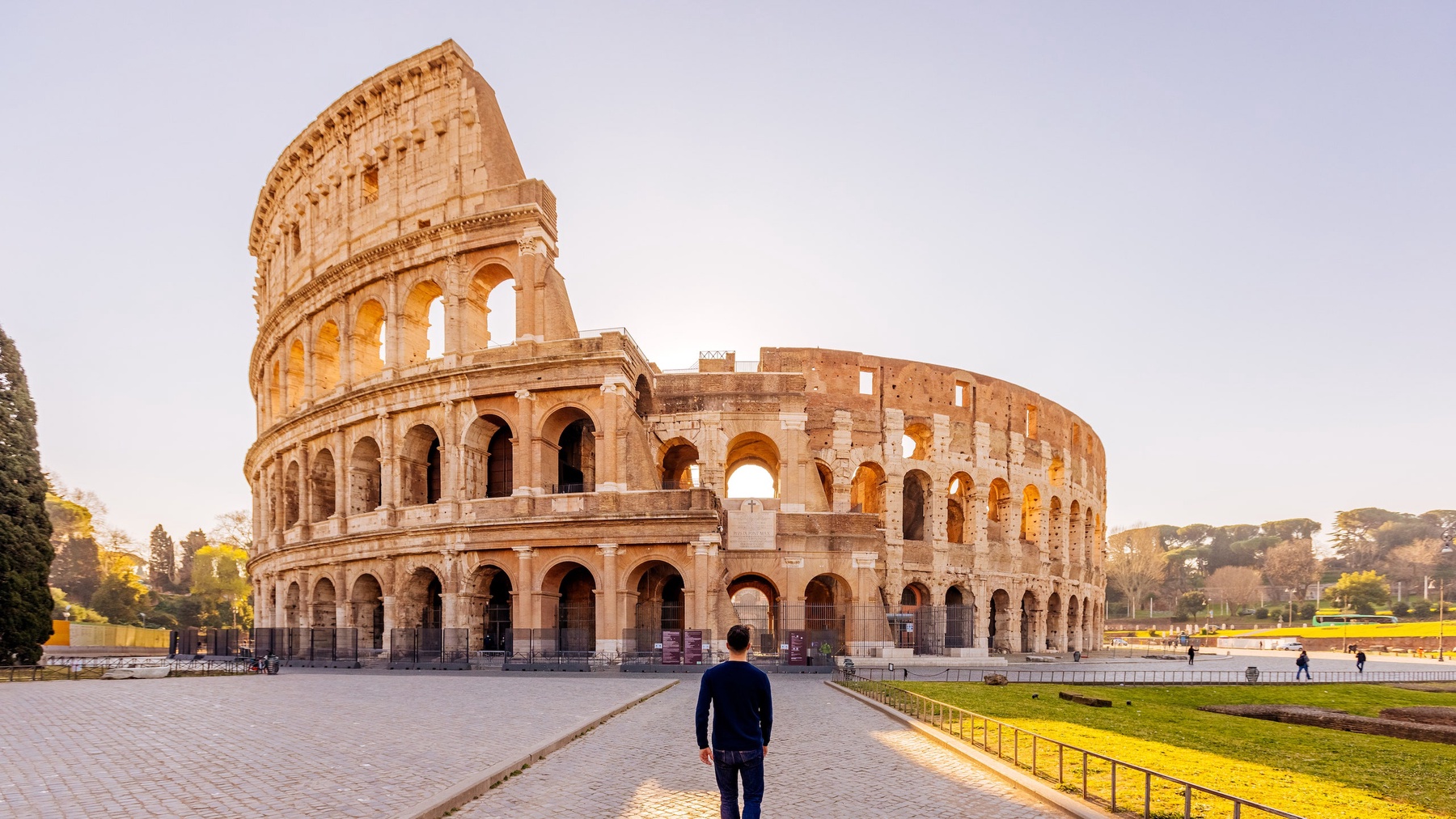
Ancient Roman architecture
Architectural styleWikipedia
267
MENTIONS
11
EPISODES
11
PODCASTS
Search complete. 267 mentions across 11 episodes found for "Ancient Roman architecture".
Oct 16, 2026

speaker_3HOST
The Romans did not invent the arch, but they used it more extensively than any previous civilization, building thousands of bridges, aqueducts, and buildings with semicircular arches.
speaker_3HOST
A Roman aqueduct like the Pont du Gard in Southern France carries water across a valley using three tiers of arches stacked on top of each other, and it still stands after nearly two thousand years.
speaker_3HOST
The reason arches push outward at their bases is that the curved shape converts vertical loads into diagonal forces that try to spread the supports apart.
speaker_3HOST
This sideways push is called thrust and dealing with it has been one of the central problems of architecture for thousands of years.
speaker_3HOST
A barrel vault is essentially a long arch extended in a straight line like a tunnel, and it was the simplest way the Romans roofed large spaces.
speaker_3HOST
A groin vault is what you get when two barrel vaults cross each other at right angles.
speaker_3HOST
The result is a vaulted ceiling supported at just four corner points, which leaves the walls free for windows.
speaker_3HOST
The Pantheon in Rome, completed around one twenty-five AD, has the largest unreinforced concrete dome ever built.

Paris HiltonADVERTISER
For The Stay.
Drowsy HistorianHOST
You're not an emperor, an engineer, or a famous Roman general.
Drowsy HistorianHOST
You're just a quarry foreman, overseeing the men who cut, shape, and move enormous blocks of stone while Rome quietly builds one of its great aqueducts.
Drowsy HistorianHOST
Before we begin, just a quiet note.
Drowsy HistorianHOST
In daylight, it will be an enormous working place of pale rock, rough ledges, timber supports, tools, ropes, carts, and men moving steadily from one task to another.
Drowsy HistorianHOST
At this hour, however, it almost looks peaceful.
Drowsy HistorianHOST
The cut faces of the stone catch the weak light from the eastern sky, and the great walls rise in shadow like the sides of some ancient amphitheater made by nature rather than by Roman hands.
Drowsy HistorianHOST
You begin walking toward it, your sandals pressing into the dusty ground, and with every step, you become more aware of the small sounds around you.

speaker_0NARRATOR
Scientists are racing to reinvent concrete before we pour millions more tons of it.
speaker_0NARRATOR
Romans lived through a true architectural revolution, and at the foundation of this revolution, literally, was a concrete discovery, said Admir Masic, a material science professor at MIT who made waves a few years ago for unearthing the fast-hardening secret sauce for why Roman concrete is so durable.
speaker_0NARRATOR
They were able to take a pile of dirt and mix it together, add water, and turn it into solid rock of any arbitrary size.
speaker_0NARRATOR
It literally changed everything.
speaker_0NARRATOR
Together, they suggest that in a not-so-distant future, concrete, yes, concrete, one of the dirtiest substances ever concocted, could help save the planet, transforming our built environment while actually intervening in the climate for the better.
speaker_0NARRATOR
How concrete built and polluted the modern world.
speaker_0NARRATOR
It's no wonder that luminaries of the neoconcrete age, Thomas Edison among them, marveled at the stuff, just as their Roman predecessors had.
speaker_0NARRATOR
They saw it as a harbinger of utopia, of a world in which anything and everything—a home, an interstate highway, a water pipe, a subway system, or a grand piano—could be molded and poured for a fraction of ordinary costs.

speaker_13ADVERTISER
That's claude.ai/spotify.
Alice RobertsHOST
far Roman culture and influence spread into rural Britain.
Alice RobertsHOST
But our final dig in Hampshire's Meon Stoke valley is shedding new light on this mystery.
Alice RobertsHOST
In the 1980s, archeologists digging here discovered a Roman building of such importance that it's now housed in the British Museum.
Alice RobertsHOST
With little to go on except its quality and its rural location, it was labeled a villa.
Alice RobertsHOST
But a new investigation of the site is leading archeologists to a radical rethink.
Tony KingGUEST
Now, this hexagonal building has put a whole new, uh, idea to us that, in fact, this might not be a villa.
Tony KingGUEST
It might be a religious site.

Lyssia KatanHOST
[fingers snapping] What if the ancient Romans understood something about how to live that we've since completely forgotten? Welcome to Room to Think.
Lyssia KatanHOST
Today, I'm sitting down with architect, leadership coach, and bestselling author Diane Van Buren to talk about what Rome can teach us about beauty, architecture, and the spaces we create today.
Lyssia KatanHOST
We talk about why piazzas bring people together, what fountains and public spaces add to our lives, and why so many modern cities and homes have moved away from beauty, ornament, and craftsmanship.
Lyssia KatanHOST
Most importantly, we explore how we can bring some of that beauty back into the way we live now, because maybe the future of how we live has something to learn from the past.
Lyssia KatanHOST
I, I agree.
Lyssia KatanHOST
I did some-- I studied abroad there as well, and, and it's, it's fascinating.
Lyssia KatanHOST
But at such a young age, what did being surrounded by so much art and, and architecture teach you?
Diane Van BurenGUEST
Yeah, I love that you asked this because, um, I was 15 when I went, and I was trying to be very cool, as 15-year-old girls especially will be, you know, at the airport as I was flying alone to go to the high school, and trying to hide my zest for, oh, independence and all that.

Rod LambertsHOST
So their astounding durability wasn't just reserved for concrete and mega structures and temples and stuff like, like things of grand cultural importance.
Rod LambertsHOST
Heaps of Roman structures, big and small, still exist today, and they're in, comparatively speaking, crazy good condition.
Will GrantHOST
Come and see them.
Rod LambertsHOST
Comparatively speaking, they do way better than most other engineering.
Rod LambertsHOST
Sounds fair enough.
Rod LambertsHOST
So research up to this point, he was saying-
Will GrantHOST
Is it using slaves? 'Cause I think, I think that was a big part of, of Roman engineering
Rod LambertsHOST
They put enslaved people.

CamHOST
We've got a fun episode for you today.
CamHOST
It's the second episode in a short series on the Roman Emperor Hadrian.
EmilyHOST
In our last episode, we talked about Hadrian and how he approached governing the Roman world, which he ruled from 117 CE to 138.
EmilyHOST
And we spent a lot of time talking about how much he traveled outside of Rome, about half the time he spent as emperor.
CamHOST
Yeah, and among other things, he spent a lot of that time in Athens.
CamHOST
Athens, in fact, was the city of the Roman Empire that he probably spent more time in than any other city, other than maybe Rome itself.
EmilyHOST
He generally seems to have loved Athens, and we can't really blame him, can we? We also love Athens.
EmilyHOST
[laughs]
3 more episodes mention Ancient Roman architecture.
Create an account to see the whole feed, search across every transcript, and follow the entities you care about.