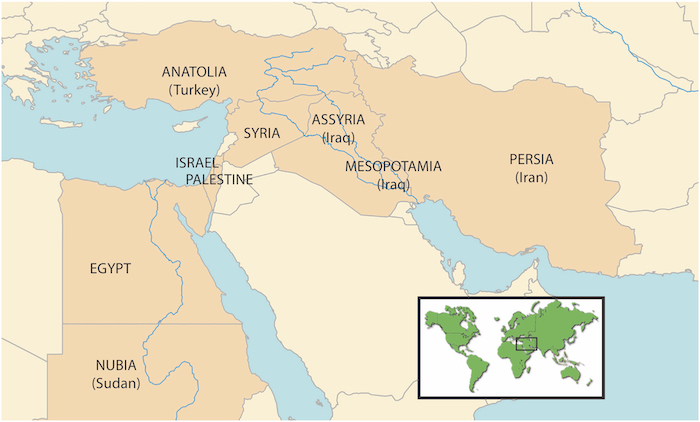
Ancient Near East
37
MENTIONS
17
EPISODES
17
PODCASTS
Search complete. 37 mentions across 17 episodes found for "Ancient Near East".
Oct 29, 2026

Jay DyerHOST
And there's quite a bit that attests to the fact that the general belief is that the reason they're rebuked is precisely because they were worshipping or adoring some form of serpent, or that the object itself was a serpentine magical object.
Jay DyerHOST
And I even was going into reading ancient Near Eastern theories of staff magic, right? Like Aaron's staff, Moses' staff that turns to a snake and whatnot.
Jay DyerHOST
And the Johnny's and John Murray's, their staff that turns into a snake and whatnot.
Jay DyerHOST
So there is, you can think about the caduceus too in a similar way, but those are essentially non-Christian pagan usage of this symbol or this image.
42 MINS LATER
Jay DyerHOST
So that's a huge knock, I think, against especially the evangelical Protestant tradition, which is anti-liturgical for the most part.
Jay DyerHOST
Crosses and images of crosses were venerated since the early days of the church.
Jay DyerHOST
The ancient Near Eastern world honored signets, battle standards, statues, cups.
Jay DyerHOST
And if they were iconoclasts, we would have seen the early church adopting that very clear stance.

Jackson LaneHOST
Mm-hmm.
John OrtbergGUEST
But if you were to say, based on very careful reading of the conversation that was going on in ancient Near Eastern literature, and what were the kind of questions that they were seeking to answer about the nature of the human condition, and what were the images and metaphors that got used to create the kind of stories that were trying to answer the questions they were asking, not the questions that we're asking – To base someone's commitment to orthodoxy on their best read of that ancient Near Eastern literature and the place of Genesis within it, I think it's a mistake, if not an indication of bad faith.
Jackson LaneHOST
Well said.
Jackson LaneHOST
You and Tremper also talked about, and again, this is in light of the conflict in the Middle East, can be a sensitive topic for people.

JeremyUNKNOWN
And God sees her.
JeremyUNKNOWN
Hagar is the only woman in all of ancient Near East literature, not just in the Old Testament, but in all of ancient Near East literature, called by name by a god.
JeremyUNKNOWN
This slave woman, driven out into the wilderness, mistreated, unchosen, abused, exiled.
JeremyUNKNOWN
God calls her by name.

Joel MuddamalleHOST
One, give us the kind of non-Divine Council, non-Duramean 32 worldview approach.
Joel MuddamalleHOST
Like, if you did not have that in your mind, you're not reading the Hebrew Bible in the context of its ancient Near Eastern context or the New Testament in the context of its Greco-Roman and Hebraic reads as well.
Joel MuddamalleHOST
Like, What would be the typical way to teach or preach this? And what does the Divine Council worldview actually help us uncover and see and why does it matter? So are you talking about with just Psalm 89 itself? Yeah, well, you can go wherever you want.
Joel MuddamalleHOST
Psalm 89, or even, you know, Jesus preaching at the gates of hell, like the location leading to incessant Philippi being, you know.

Joshua LewisHOST
In this program, we've got Black Sheep Scout with us, and we're going to be discussing all kinds of fun stuff.
Joshua LewisHOST
Ancient Near East is going to be a fun program.
Joshua LewisHOST
You guys stay tuned.
Joshua LewisHOST
Hey guys, welcome back to the wonderful world of Remnant Radio.
Joshua LewisHOST
Today we've got a guest with us who goes by the name of Black Sheep Scott, and we're going to be tackling today, man, all kinds of fun stuff, ancient Near East.
Joshua LewisHOST
We're going to be talking about some of the Nephilim stuff, demon stuff.
Joshua LewisHOST
It's going to be an interesting program for us today, as always.

Jenny MathenyGUEST
And so, and so, so kind of thinking about the image of God, so that's been kind of a big question, right? Like, what does it mean to be created in the image and likeness of God? We only have, like, four verses in the Old Testament that reference the Imago Dei, and they're all four in Genesis.
Jenny MathenyGUEST
And because there's so few references, and those who, for those that have studied this, often we have to go to, like- The ancient Near Eastern texts and ideas to kind of investigate the term, to understand it in the historical context, to see how these connections surface.
Jenny MathenyGUEST
And what really comes to the fore is that it is a royal language and kinship language.
Jenny MathenyGUEST
And, and for those who wanna do a deep dive, I would recommend Kathryn McDowell's book here, The Image of God in the Garden of Eden.
10 MINS LATER
Jenny MathenyGUEST
It's this, like, categor- categorization, like, enables us to see that it's kind of a really ambiguous term, but at the same time, understanding it in the backdrop of herem, I think, can be helpful.
Jenny MathenyGUEST
So especially thinking about Rahab.
Jenny MathenyGUEST
When compared to other Ancient Near Eastern accounts, we, we see the language of hyperbole everywhere, right? So we consider the Canaanite Rahab.
Jenny MathenyGUEST
We realize quickly that this text in the Old Testament is not going to dichotomize, right, insiders and-

speaker_0NARRATOR
And now his physical condition mirrors the blindness that already existed internally.
speaker_0NARRATOR
Ancient Near Eastern warfare often involved public humiliation of defeated enemies.
speaker_0NARRATOR
Prisoners could be mutilated, paraded, and mocked before crowds.
speaker_0NARRATOR
For the Philistines, Samson’s downfall was more than military victory.

Ryan TietzGUEST
No. Yeah, so I know.
Ryan TietzGUEST
I mean, we're, we really are, in this part, whole part, we're up against the fact that the Bible is written for us or, but not necessarily to us, so we have to put in our Ancient Near Eastern frame of reference.
Ryan TietzGUEST
So we have, what, 7,000 sheep, so we have our, a massive amount of flocks.
Ryan TietzGUEST
So this is, we're talking wool and milk here.
Ryan TietzGUEST
I'm a university brat, so that's just where I am.
Ryan TietzGUEST
And then he has, and he has a household to cover it, so the many servants here.
Ryan TietzGUEST
Again, put on our Ancient Near Eastern eyes here, and that's a different issue entirely.
Ryan TietzGUEST
I mean, this is a guy who is, he really is, and I li- I like the example of Solomon here, sort of putting this in that patriarchal period context.

Joshua BermanHOST
So what comes out about revenge in those compositions?
Deborah GellerGUEST
So one thing that became very striking when I started studying the ancient Near Eastern ethics and narratives is that the stories are occurring in what I would call an honor culture.
Deborah GellerGUEST
And in such a culture, a person's or God's standing depends very heavily on how that individual is perceived by others and acknowledged by others.
Deborah GellerGUEST
So an insult is not simply an unpleasant experience.
Joshua BermanHOST
But, okay, so honor is really important and therefore has to be defended actively, publicly in the public eye.
Joshua BermanHOST
Okay, go ahead.
Deborah GellerGUEST
I think what you just mentioned about Barrett and Hamilton with their teams is something that I also saw again and again in these ancient Near Eastern stories, that the question is not just, you know, as you said, who hurt me and who's diminished my standing and how do I restore it? But it's also who's on my team? Who's got my back? And so in all of these stories, there are allies that help arrange and plan and plot the revenge for And there's also a team or an elder or a parent or something that the Avenger will go to for permission and or advice.
Deborah GellerGUEST
So sometimes the formal counsel, sometimes it's just a mentor or a parent or some other authority figure.

Kevin CainHOST
Good place.
Kevin CainHOST
And Master of Philosophy and PhD, Bible and Ancient Near East, Hebrew Union College.
Kevin CainHOST
Whoa.
Kevin CainHOST
So this, this- Hmm ...
7 more episodes mention Ancient Near East.
Create an account to see the whole feed, search across every transcript, and follow the entities you care about.