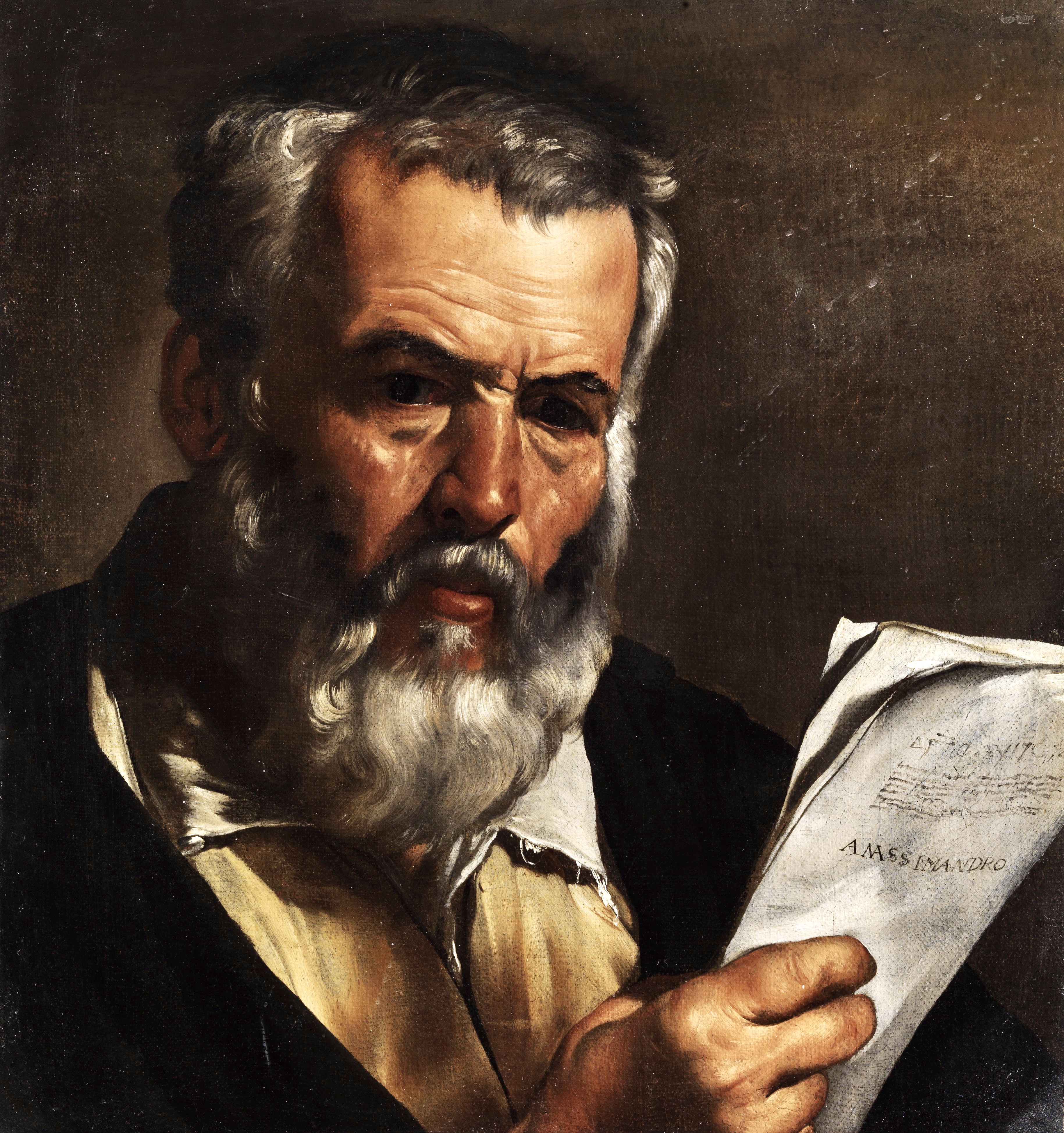
Anaximander
PhilosopherWikipedia
136
MENTIONS
29
EPISODES
27
PODCASTS
Search complete. 136 mentions across 29 episodes found for "Anaximander".
Oct 2, 2026

Pamela NagamiNARRATOR
End of Section 2 Section 3 of Early Greek Philosophy by Alfred William Benn This LibriVox recording is in the public domain, read by Pamela Nagami Chapter 1 The School of Miletus Part 3 6.
Pamela NagamiNARRATOR
Anaximander I have said that Thales probably learned what astronomy he knew from Babylon, and that his view of the relation between earth and water was Semitic.
Pamela NagamiNARRATOR
Now it is certain that the philosopher was not of pure Greek race, and one rather doubtful pedigree even makes him belong to a Phoenician, that is to say a Semitic family.
Pamela NagamiNARRATOR
There seems to be very insufficient grounds for the belief, but were it true, philosophy would remain a product of European, not of Asiatic culture, while the fertilizing stimulus that first started Greek thought seems to have come not from any Semitic source, but from Egypt.
Pamela NagamiNARRATOR
At any rate the beginnings of speculation at Miletus coincide with the permanent establishment of a Milesian colony at Nucratis in the Delta, a concession due to the liberality of the very enlightened Pharaoh Amasis.
Pamela NagamiNARRATOR
With Anaximander the pupil of Thales, and like him a Milesian, born 610 BC, we already stand on more solid ground.
Pamela NagamiNARRATOR
This marvelous thinker may be called the second founder of philosophy, for he first gave it literary expression in a book of which some fragments still survive.
Pamela NagamiNARRATOR
According to him the primary substance whence all things arise is not water, nor indeed any form of matter known to us, but an infinite something without limit in space or time.

KylieHOST
The first champions, though, for aliens and life outside of Earth was ancient Greece and Rome.
KylieHOST
Anaximander proposed that Earth was essentially floating in an infinite world.
KylieHOST
And this thought was to remove the idea that there had to be some sort of absolute or absolute down in the central location of Earth.
KylieHOST
This was discovered in the sixth century BCE in Greece.

Raven LeeHOST
But basically, he was the one, though, that started the hi- he was the one that actually-
The Cajun KnightHOST
Anaximander
Raven LeeHOST
... thank you.
Raven LeeHOST
He theorized that the Earth was a cylinder whose diameter was three times the height.

Anna SimonNARRATOR
That they may benefit us by their example as well as learning.
Anna SimonNARRATOR
The sacred memory of Salomo, Thales, Anaximander, Xenophanes, Melissus, Occolus, Democritus, Parmenides, Lycurgus, Confucius, Cleobulina, Theano, Pamphila, Serelia, Hypatia.
Anna SimonNARRATOR
May it tend to our advantage.
Anna SimonNARRATOR
Let us praise all other philosophical companies and commemorate the male and female votaries of truth.

Joshua RueblGUEST
I do think Christianity, they try to downplay this dark age, but it really did cause a dark age.
Joshua RueblGUEST
They were grasping toward things in Rome, even though it wasn't as scientifically accurate as you see now about evolution or what we know now through the DNA testing in the human genome, like the atomism, Anaximander, even though he thought the world was a cylinder.
Joshua RueblGUEST
He started to intuit evolution that we used to be sea creatures or what have you.
Joshua RueblGUEST
But they were moving in that direction.

Pamela NagamiNARRATOR
Each term first becomes intelligible as the antithesis and contradiction of the other.
Pamela NagamiNARRATOR
we have better grounds for crediting anaximenes with what would now be called a mechanical theory of nature as distinguished from what by another modernism may be described as the specific energies or occult qualities of his predecessor Anaximander taught that such antithetical pairs as wet and dry, hot and cold, etc., were separated out or differentiated from the homogeneous infinite where they had previously existed in a latent state.
Pamela NagamiNARRATOR
To Anaximenes, on the other hand, heat and cold, like the solid liquid and gaseous states of matter, were all merely so many products of rarefication and condensation.
Pamela NagamiNARRATOR
air squeezed together becomes cloudy vapour under additional pressure vapour turn to rain and rain by the same process to vegetable and animal substances which ultimately pass into air again observing with perfect accuracy that heat and cold are somehow connected with dilatation and compression this early precursor of bacon unfortunately reversed the real relation by supposing that air is chilled by being condensed and warmed by being expanded and that is why says anaximenes we press our lips together when we want to blow cold and open them when we want to blow hot in studying the errors of such a man we must remember that to ask questions and answer them wrongly helps progress incomparably more than not to ask them at all good care is taken says a german proverb that the trees shall not grow into the sky milesian philosophy with its splendid promise of positive knowledge perished after the third generation first choked by rank undergrowths of superstition then uprooted by earthquake and storm but the same causes that put an end to speculation in one part of hellas favoured its rise and propagation from new centres of intelligence elsewhere It was just this multiplication of intellectual centres leading to the cross-fertilisation of mental growths that gave the Greek genius such an extraordinary productivity, a productivity of which the world's history affords no second example.
35 MINS LATER
Pamela NagamiNARRATOR
The Thracians give theirs fair hair and blue eyes.
Pamela NagamiNARRATOR
If oxen or lions had hands and could paint, they too would make gods in their own image.
Pamela NagamiNARRATOR
so much for the aristocratic olympian religion of the poets as to the popular chthonian religion of the mysteries with its suffering and dying gods he is reported to have dismissed it with even briefer and more cutting sarcasm asked by the eleates should they sacrifice to loicothea and mourn for her or not he advised them not to mourn if they believed her to be a goddess not to sacrifice if they believed her to be a woman For himself, Xenophanes, like Anaximander, believed in an infinite source of existence, but unlike his Milesian predecessor, he identified this one and eternal element with the visible earth, which he supposed to stretch downward beneath our feet without end.
Pamela NagamiNARRATOR
This infinite and eternal reality is God and the only God, resembling mortals neither in form nor thought, but perceiving and thinking through its whole extent.

Christabel CaneHOST
It's in modern day Turkey.
Christabel CaneHOST
Anaximander is philosophizing in Miletus.
Christabel CaneHOST
He's one of the priests of classics.
Steve CrossHOST
Anaximander.
Christabel CaneHOST
Anaximander.
Steve CrossHOST
So the opposite of Axamander.
Christabel CaneHOST
Yes, we'll be doing lots of opposites.
Steve CrossHOST
Above.

Carlo RovelliGUEST
And I think that the majority of the step ahead in civilization came from confronting with people different ideas.
Carlo RovelliGUEST
My first book is about Anaximander.
Carlo RovelliGUEST
It's one of the beginning of Greek philosophical thinking who clearly was also reacting to the connection with Babylonians, Egyptians and so on.
Carlo RovelliGUEST
And it goes on and on and on.
19 more episodes mention Anaximander.
Create an account to see the whole feed, search across every transcript, and follow the entities you care about.