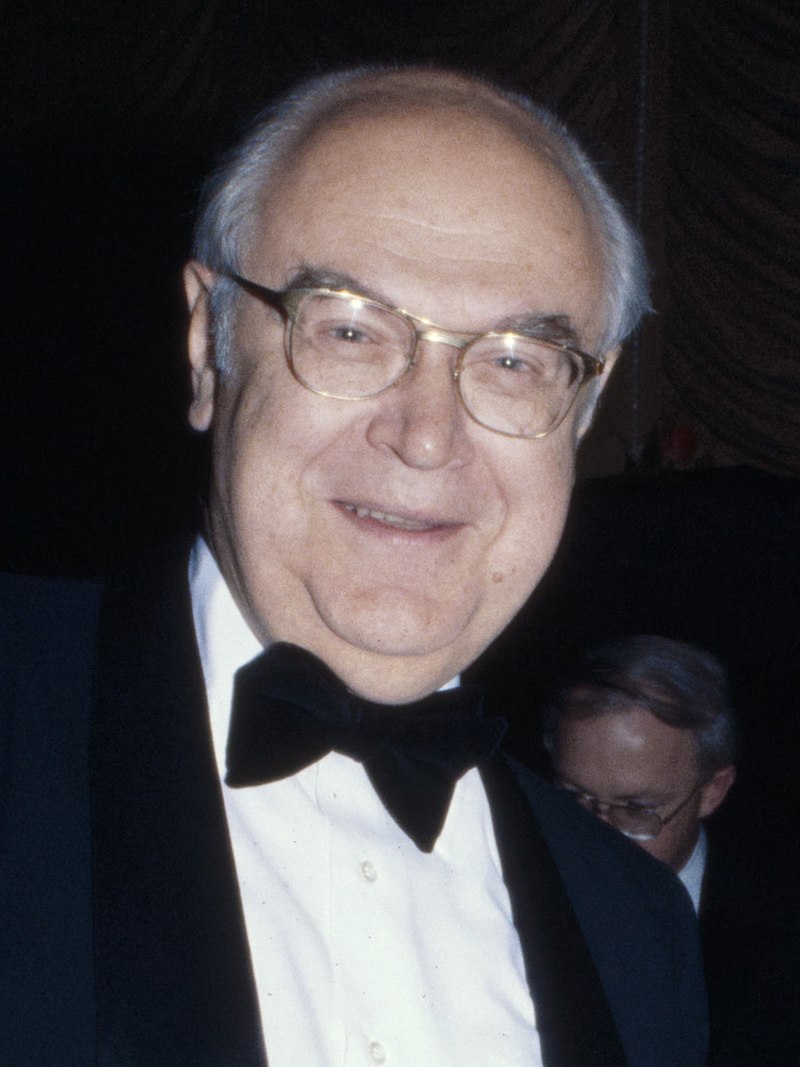
Anatoli Dobrynin
Statesman and diplomatWikipedia
26
MENTIONS
9
EPISODES
8
PODCASTS
Search complete. 26 mentions across 9 episodes found for "Anatoli Dobrynin".
Oct 20, 2026

Fredrik LogevallGUEST
And then finally, when even that method didn't seem quite to give the kind of urgency or that there was a kind of stalemate, you have the back channel.
Fredrik LogevallGUEST
which is direct interactions between, in particular here, Robert Kennedy and the Soviet ambassador, Anatoly Dobrynin, in the climactic days of the crisis, where they could actually communicate face-to-face.
Jane PerlezHOST
So Robert Kennedy would go over to the Soviet embassy in Washington on 16th Street, and they would discuss it, and then Drabinin would get on the telephone to Moscow? I'm not actually
Fredrik LogevallGUEST
quite sure yet, but certainly he did get the word immediately to Moscow.

speaker_2NARRATOR
Soviet participation, the Office of the Historian explains, was doomed because Stalin would not open his closed society to Westerners.
speaker_2NARRATOR
A report from the American ambassador in Prague records Czechoslovak leaders being told that taking part would be an act aimed against the Soviet Union, and their cabinet withdrew its acceptance.
speaker_2NARRATOR
In 1950, a poster contest drew more than ten thousand entries.
speaker_2NARRATOR
The winner showed a single ship whose sails were made from every country's flag.
37 MINS LATER
speaker_2NARRATOR
From quiet men with books, we turn to a quiet object hanging on a wall.
speaker_2NARRATOR
5.3.
speaker_2NARRATOR
In 1945, a group of Soviet schoolchildren presented a gift to the American ambassador in Moscow, Averell Harriman.
speaker_2NARRATOR
It was a hand-carved wooden version of the Great Seal of the United States.

Vince HoughtonGUEST
So the vast majority of people who had been trying to leave were not allowed to and had gotten to the point where it was impossible.
Vince HoughtonGUEST
And Anatoly Dobrynin, who was the longtime ambassador to the United States of the Soviet Union, actually in his book quips that it would be easier to become a cosmonaut in the Soviet Union then to leave as a refusenik because more people percentage-wise were qualifying for cosmonaut training than refuseniks being allowed to leave the Soviet Union.
Vince HoughtonGUEST
That gives you an idea of why what people were doing was so important because you had to figure out a way to do it.
Vince HoughtonGUEST
They're not going to be able to do it on their own.

Gurnel ScottCORRESPONDENT
There were a lot of conversations that went on, uh, as this, as these 13 days played out.
Gurnel ScottCORRESPONDENT
And, uh, the attorney general at the time, uh, Robert F. Kennedy, had some conversations with Anatoly Dobrynin, the Soviet ambassador at the time.
Gurnel ScottCORRESPONDENT
Talk to me a little bit about what we know about those conversations and how it played into how we navigated this very tenuous time.
Graham AllisonGUEST
A very good point, and a very important point t- both for the details and the generic.
Graham AllisonGUEST
So people misunderstand how important private, candid communications can be.
Graham AllisonGUEST
Now, private, candid communications can include people misleading each other, as indeed Khrushchev had done about the fact that he was gonna install missiles in Cuba.
Graham AllisonGUEST
On the other hand, the private channel that was established between his brother, who also happened to be the attorney general, and Dobrynin, the long-term serv- serving, uh, Soviet ambassador in, in Moscow, were essential in ultimately resolving the crisis.
Graham AllisonGUEST
So I had the good fortune when I was writing my book to interview at length both Bobby Kennedy and, uh, Dobrynin.

Izabella TabarovskyGUEST
They're tasking their advisors with communicating these anti-Zionist ideas to the political classes that they interact with.
Izabella TabarovskyGUEST
There is this really incredible correspondence between the Ministry of Foreign Affairs in Moscow and the Soviet ambassador in Washington, Anatoly Dobrynin from 1970, where he is being told, go and speak to everybody who will listen to you on the Hill Go and speak to progressive Jews and tell them how dangerous Zionism is.
Izabella TabarovskyGUEST
Go and talk to non-Jews and tell them that Zionists are undermining the prospects for peace between the Soviet Union and the United States.
Izabella TabarovskyGUEST
So there is that component.

Dan SnowHOST
He's gonna home in on that first letter that Khrushchev sent saying that he would back down in return for a non-invasion of Cuba pledge.
Dan SnowHOST
And so that very same night, that very same night, while submarine B-59 and its American pursuers are tiptoeing around nuclear catastrophe, JFK sends his brother, Robert Kennedy, to meet the Soviet ambassador, Anatoly Dobrynin.
Dan SnowHOST
They were alone.
Dan SnowHOST
It was a private meeting.
Dan SnowHOST
The Soviet ambassador later reports that Bobby Kennedy was deeply stressed.
Dan SnowHOST
Bobby Kennedy states unambiguously that the Soviets had to agree to remove those missiles within 24 hours, or the US would invade Cuba.
Dan SnowHOST
Now, between themselves, RFK, Bobby Kennedy, is saying, "There's a bonus.
Dan SnowHOST
We will give you a concession.

Dan SnowHOST
He's going to ignore Khrushchev's harsh language, bellicose language, he's going to home in on that first letter that Khrushchev sent saying that he would back down in return for a non-invasion of Cuba pledge.
Dan SnowHOST
And so that very same night, that very same night, while submarine B-59 and its American pursuers are tiptoeing around nuclear catastrophe, JFK sends his brother, Robert Kennedy, to meet the Soviet ambassador, Anatoly Dobrynin.
Dan SnowHOST
They were alone.
Dan SnowHOST
It was a private meeting.

William CooperHOST
especially its important agents of influence among politicians, businessmen, scientists, and of course, Western journalists.
William CooperHOST
Anatoly Golitsyn prepared a special memorandum on Anatoly Dobrynin for the CIA which confirmed Dobrynin's use of KGB agents along strategic lines.
William CooperHOST
The late Mr. James Angleton concluded that the memorandum should be published in declassified form in order to neutralize Dobrynin's political influence in Washington and have him expelled for interference in the internal affairs of the United States.
William CooperHOST
The findings of the memorandum were, however, disregarded after the Watergate hearings which destabilized the American intelligence and counterintelligence services.
1 more episode mentions Anatoli Dobrynin.
Create an account to see the whole feed, search across every transcript, and follow the entities you care about.