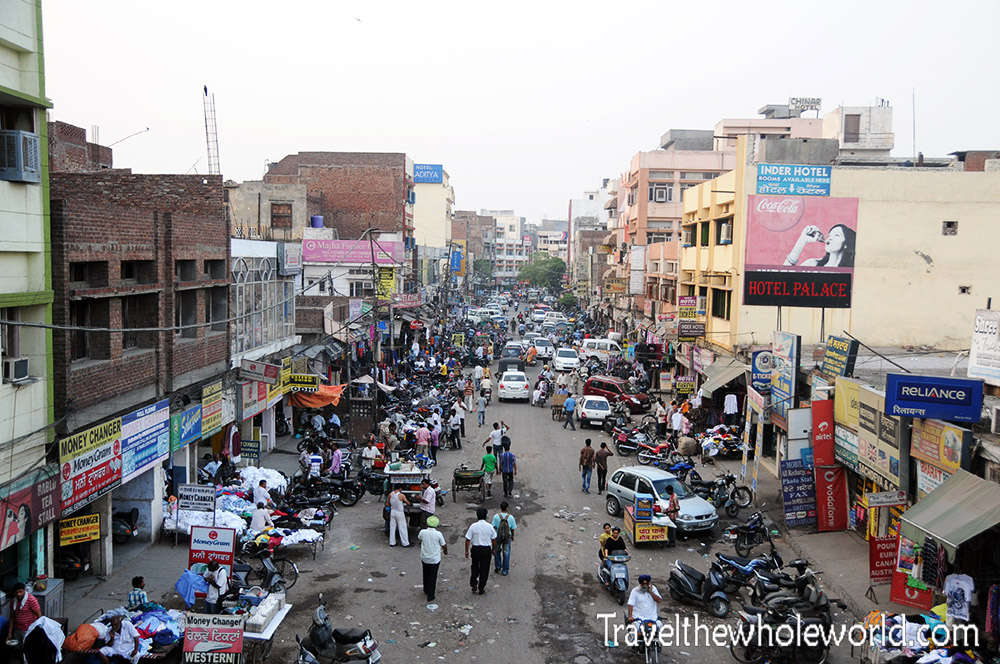
Amritsar
City in IndiaWikipedia
154
MENTIONS
67
EPISODES
61
PODCASTS
Search complete. 154 mentions across 67 episodes found for "Amritsar".
Nov 4, 2026

Rudyard LynchHOST
And it happened, I believe, in the 1920s or the 30s.
Rudyard LynchHOST
And leading up to it, in 1921, the massacre at Amritsar was a big deal, where there was, I believe, a protest.
Rudyard LynchHOST
And then a British officer fired on an Indian crowd.
Rudyard LynchHOST
And the British government never gave him crap for it.
Rudyard LynchHOST
And it's been one of the foundational moments because during World War I, the British promised India that they'd give them a parliament if the Indians served in the war to fight for the British.
Rudyard LynchHOST
And then after the war, the British didn't.
Rudyard LynchHOST
And this created all of this resentment that was bubbling up under the surface that Amritsar was a symbol for.
Rudyard LynchHOST
And until that point, a lot of India's elite had this ideal that they would remain part of the British Empire.

Sherbir PanagGUEST
and who watched all of us fight each other by calling us you know calling each other traitors and anti-nationals and you go to this country and you go to that country and this gang and that gang and khan market and whatever have you and said listen why it's a border state why not why not add fuel to fire and that's very very evident from the numbers
Kushal MehraHOST
Yeah, you know what the funny thing is, when I had gone to Khankot, Pannu's village, which is very near Amritsar, like I think 18-20 kilometers, not too far, he stays in Khankot.
Kushal MehraHOST
So I just, you know, in my like study tour in 24, I had asked him like, this is when
Kushal MehraHOST
Pannu's brand value was in Canada, okay? I'm talking about that time, whatever 2% brand value was there.
33 MINS LATER
Kushal MehraHOST
Two accused are arrested.
Kushal MehraHOST
Then ASI Harjeet Singh shot dead from behind on 18 September.
Kushal MehraHOST
The one accused from Amritsar killed in an encounter.
Kushal MehraHOST
Then ASI Sukhchand Singh shot, survived with injury on 4 October.

AlistairNARRATOR
Subsection, A Gentle Rebel, Gandhi.
AlistairNARRATOR
yet the cry for swaraj self-government was not appeased it was after the announcement of what british statesmen considered so open-handed a grant of freedom that the nationalist agitation reached unprecedented heights not only were indian extremists disappointed in the reforms but there were other grievances bitter was the feeling against the rollet act which gave the administration power to make arbitrary arrests and inflict summary punishment for the suppression of revolutionary violence more bitter was the indignation following the amritsar massacre at amritsar in the punjaub natives had committed several outrages attacks on banks and particularly an attack on an englishwoman general dyer the district military commander endeavored to restore respect for british authority
AlistairNARRATOR
when several thousand unarmed
AlistairNARRATOR
civilians essayed to hold a mass meeting against his general order he mowed them down with machine guns without warning or chance to disperse his men stopped firing when their ammunition gave out after killing four or five hundred and wounding about fifteen hundred and then he marched his soldiers off leaving the field covered with dead and dying when he was later giving testimony regarding the affair He said he could have dispersed them, probably without firing a shot, but
AlistairNARRATOR
they would have all come back and laughed at me, and I should have made what I considered a fool out of myself.
AlistairNARRATOR
whether shooting down two thousand unarmed civilians saved general dyer from folly or not though it may be an interesting question was not the main point the significant thing was that dyer believed as many englishmen believed that such action as his was necessary to cow india i was in england at the time that dyer's case was being discussed and well remember how strong was the feeling in imperialist circles that dyer had performed a courageous and necessary exploit the point of view is interesting when considered in connection with the affirmation which the same imperialists frequently make that india is loyal to england and that england's mission in india is one of peace and humanity it is only fair to add however that the prevailing english sentiment was condemnation of dyer's deed as an unwarranted bit of frightfulness in india of course the amritsar victims were martyrs and dyer's deed a bloody crime the blood of martyrs is always a stimulant to nationalism a third powerful factor was the khilafat movement when in nineteen twenty the great powers imposed on turkey a carthaginian peace dismembering the ottoman empire great was the anger of the moslems in india who had supported england in the war in the belief that great britain was a friend of islam there developed in india a fanatical mohammedan agitation against the dismemberment of turkey because turkey was mohammedan and the turkish sultan was caliph of islam all these elements of unrest were fused under the leadership of that strange and saintly patriot that gentle yet inflammatory revolutionist mohandas k gandhi gandhi was a hindu belonging to one of the higher castes educated in india and in the university of london with the intention of becoming a lawyer in india being called to natal south africa by indian clients he sprang into prominence there as a leader of a movement of passive resistance to the laws discriminating against indians he became an ardent nationalist a believer in self-government for india yet an opponent to violent revolution and an admirer of british institutions at this stage in his career all that he asked was the extension of british principles of parliamentary government and personal liberty to india at the outbreak of the great war he organized an indian ambulance corps then later aided recruiting in india inspired by the hope of self-government as a reward for loyalty but the events of nineteen eighteen to nineteen twenty described above were too much for his loyalty he became the leader of the most amazing campaign for independence not by arms but by the power of love and moral purity was india to gain freedom not might but sheer right would triumph he believed by simply refusing to cooperate with the british government india could overthrow it gradually the practical details of the non-corporation plan were unfolded first all indians must resign any officers or honors they held from the british government this was done to some extent but british rule did not collapse second indians were to boycott the british schools and establish national schools of their own that thousands of youths in the higher schools and universities followed this behest risking their future careers was a magnificent if tragic demonstration but eloquent descriptions of national schools in which the indian youths would learn to be self reliant proud of their nation were difficult to translate into buildings and actual curricula the third item was more telling the boycott india must boycott foreign goods above all british cotton cloth gandhi's argument for this measure is worth summarizing every person in india used on the average he claimed thirteen yards of cotton cloth per annum this made a total of four billion yards half of which was imported Now, if India supplied her own cloth, the chief reason, so he claimed, for British or any foreign imperialism in India would disappear.
AlistairNARRATOR
India would be freed.
AlistairNARRATOR
Let every Indian home have its charka, spinning wheel.

Richard ThorneNARRATOR
As you know, the British government outlawed Kali worship many years ago.
Richard ThorneNARRATOR
But we had heard of a lost temple some 15 miles northwest of the Indian city of Amritsar.
Richard ThorneNARRATOR
We'd heard also that she held in each of her forehands jewels of tremendous wealth.
Richard ThorneNARRATOR
each one a fortune in itself.
Richard ThorneNARRATOR
We set out from Amritsar.
Richard ThorneNARRATOR
None of us knew that we were walking to certain death.
Richard ThorneNARRATOR
It is a particularly barren country, rocky and mountainous.
13 MINS LATER
speaker_4VOICE_ACTOR
And it took Henry and the jewels back with it.

Robert TombsGUEST
I know how I would teach it.
Robert TombsGUEST
And it would be to make sure that children know about many aspects of the empire and not just about, you know, the Amritsar massacre or the Indian mutiny, but they all know about history.
Robert TombsGUEST
irrigation works they will know about education they will know about all sorts of things that the empire did and why people who the people were running it it's not terribly difficult I mean the practical I said the other problem is practical and it's really in a sense how you cram everything in Because the British Empire was such a huge institution.
Robert TombsGUEST
I can't remember how many elements of it there were, but it was hundreds.

Ramanpreet SinghGUEST
And then, yeah.
Ramanpreet SinghGUEST
Where were you brought up? In Amritsar.
Ramanpreet SinghGUEST
Oh, okay.
Ramanpreet SinghGUEST
Yeah.
Ramanpreet SinghGUEST
So I was born and brought up in Amritsar.
Ramanpreet SinghGUEST
And my parents did a wonderful job, right? But still, it's not common to talk about what is the purpose of your life, why you came in this world and all that stuff.
Ramanpreet SinghGUEST
But when I started reading the Gurbani, I still didn't know the meanings.

Ambika AnandHOST
Okay.
Ambika AnandHOST
You also, you are synonymous with iconic high rises and you're building a new project in Amritsar as well, which is supposed to be the highest building in Amritsar.
Ambika AnandHOST
Take us through that.
Reza KabulGUEST
So after we did Sripati in 2005, we completed it.
Reza KabulGUEST
After that, we got a lot of towers that is coming up.
Reza KabulGUEST
And now we are doing this Amritsar, which is a five-star luxury property.
Reza KabulGUEST
It's a Pullman.
Reza KabulGUEST
And there again, we are doing 207 rooms.

Niharika NandaHOST
And as part of this, several Indians who entered the US illegally or overstayed their visas have been detained and deported.
Niharika NandaHOST
In fact, in February last year, a US military aircraft carrying 104 Indian nationals landed in Amritsar.
Niharika NandaHOST
It was the first of several deportation flights to bring Indians back to the country under the Trump administration.
Niharika NandaHOST
But what caught people's attention was the manner in which the operation was carried out, with reports emerging that several of those on board had been restrained during the journey.

Christine KaurHOST
And we have young children, so we wanted to minimize travel as much as possible.
Christine KaurHOST
So because of that, we only found like an early morning flight from Pune to Amritsar.
Christine KaurHOST
It left at 5 a.m.
Christine KaurHOST
It arrived at 7 a.m. in Amritsar.
Christine KaurHOST
And for some reason, we were like, oh, yeah, sure.
Christine KaurHOST
We'll just go on this flight.
Christine KaurHOST
And on the plane, the kids at least slept for two hours, but I just can't sleep on planes.
Christine KaurHOST
I don't know why.

Viral MistryGUEST
The beginning really of the Satyagraha movement really takes off in 1919.
Viral MistryGUEST
And in Punjab, in Amritsar, the Brigadier General, like Governor General of the region, Reginald Dyer, he, in a really horrible and disgusting way, decides to respond to the protests that break out there by ordering his soldiers to open fire at the Jungli Walabag in Amritsar.
Viral MistryGUEST
And that moment, a lot of scholars have often pointed to the Jungli Walabag massacre as sort of like
AshwinHOST
the moment
Viral MistryGUEST
thing that basically kicks off the independence struggle from there on, right? Like, it's basically, you can tell a story starting from there that continues until 1947.
Viral MistryGUEST
Bhagat Singh was only 12 years old when the Jungliwala Bagh massacre occurs.
Viral MistryGUEST
And the story goes that the day after the massacre, he actually took a train from Lahore down to Amritsar and went to the Vague.
Viral MistryGUEST
And the ground was still soaked in blood from all the people who were murdered by the colonial armies.
57 more episodes mention Amritsar.
Create an account to see the whole feed, search across every transcript, and follow the entities you care about.