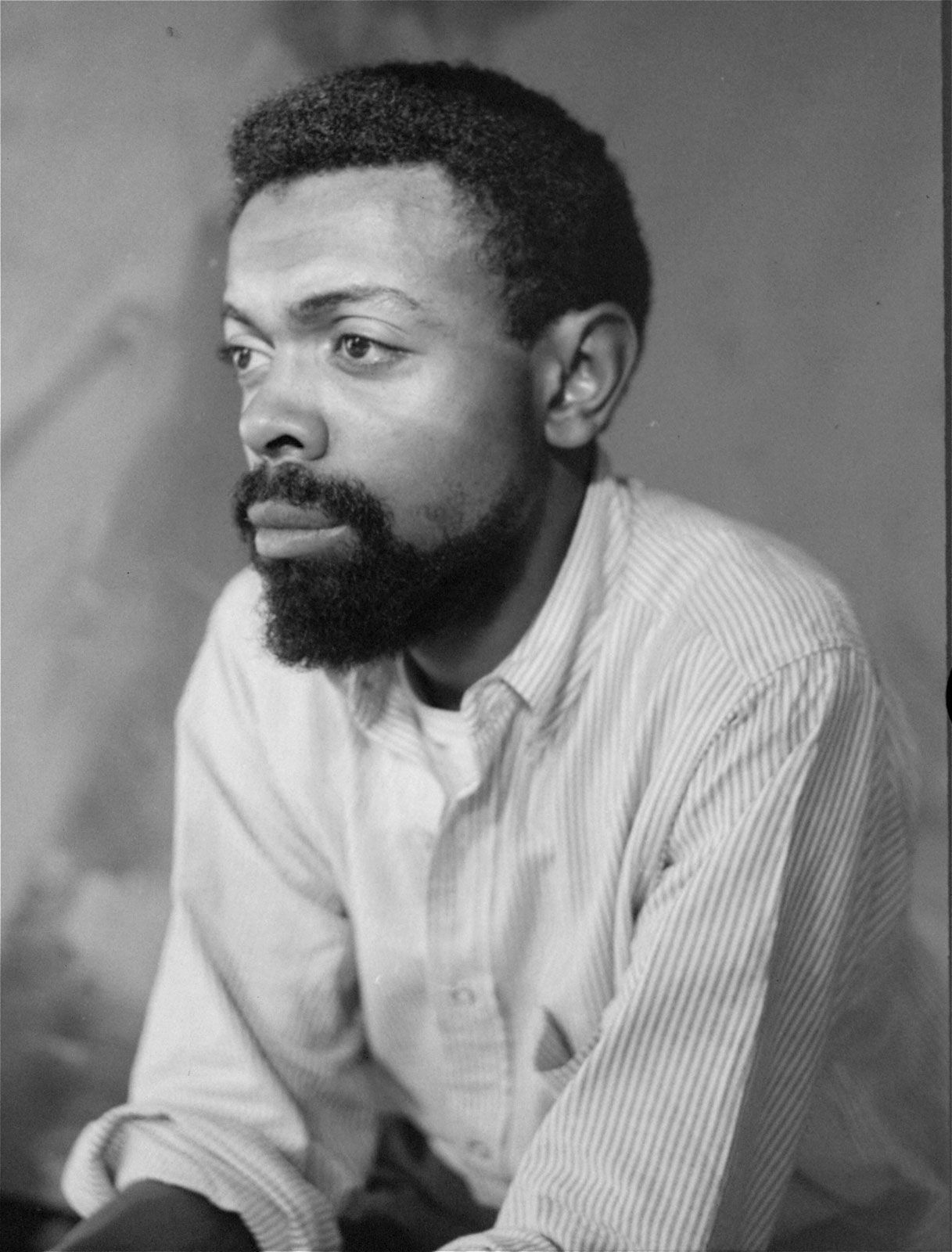
Amiri Baraka
American writerWikipedia
39
MENTIONS
27
EPISODES
22
PODCASTS
Search complete. 39 mentions across 27 episodes found for "Amiri Baraka".
Sep 15, 2026

Catherine A. JohnGUEST
Um, and it's different, but it's not separate from our African background.
Catherine A. JohnGUEST
It's a changing same, right? To borrow from Amiri Baraka's notion or Leroy Jones, right?
Mikelle CarterHOST
And so I have three more questions for you.
Catherine A. JohnGUEST
Okay.

Phil HendrieHOST
Who? John Cleland Holmes is the guy that came up with the term beat generation, by the way.
Phil HendrieHOST
The poets, Gregory Corso, Allen Ginsberg, Lawrence Ferlinghetti, Leroy Jones.
Phil HendrieHOST
This was a school of writers that they were not just going to start talking about the Norman Rockwell America that we've been through a world war.
Phil HendrieHOST
And we saw, you know, kind of like the film movies coming out.

Richard J. PowellGUEST
[laughs] That's the really important thing to remember, that, that one really cannot do this.
Richard J. PowellGUEST
On the other hand, um, I'm thinking, I have a quote in the book from Amiri Baraka, where he talks about listening to Sun Ra, um, um, in Harlem in the mid, early 1960s, and how, and how they were sitting in the room, and Sun Ra had a way of playing particular, um, um, keys, and, um, the lights would go up in a particular color, [laughs] you know? And I remember actually, and I quote this in my book, where, uh, I went to a concert for Sun Ra and Alice Coltrane in Chicago.
Richard J. PowellGUEST
And, um, and, uh, and Sun Ra, um, I guess he was miffed with the audience, and he was working with the Moog synthesizer.
Richard J. PowellGUEST
And, you know, he said, "Well, I'ma fix y'all 'cause y'all are not listening to me." And, you know, "Mm." And we're all, like, doing this.
Richard J. PowellGUEST
Or, you know, I'm never afraid to kind of incorporate music because a lot of people like music, and I do see, you know, real connections, you know, across the arts in that way.
Richard J. PowellGUEST
Um, I'm also a voracious reader, and I, I really feel that, um, m- the poets and, and the novelists, you know, um, have clues.
Richard J. PowellGUEST
I know in this book, um, I quote Toni Morrison, I quote Jean Toomer, I quote Amiri Baraka.
Richard J. PowellGUEST
I mean, to me-

Greg CarrHOST
So the, the, the Ethiopian calendar is the oldest by thousands of years.
Greg CarrHOST
So we sitting there and, and, and, and a brother said, you know... 'Cause he was talking about hanging out with Amiri Baraka back in the day.
Greg CarrHOST
They would be up in Newark.
Greg CarrHOST
They'd be up there, you know, sitting in the house and everybody's coming over.
51 MINS LATER
Greg CarrHOST
White supremacy's back must be completely broken.
Greg CarrHOST
His response to me would no doubt be, "Yeah, you're right.
Greg CarrHOST
We gotta break its back." And we all moving toward the same thing, except I see past the criminal enterprise known as United States of America in the spirit of Amiri Baraka.
Greg CarrHOST
"Whoa, what, what, man, what happened? What, what in the hell? How did we even get in that?" Says Baraka in his house in Newark, laughing about it.

VaguePANELIST
...
VaguePANELIST
Amiri Baraka, the poet.
KilHOST
Wow.
SpencePANELIST
Yep.

speaker_6SOUNDBITE_SPEAKER
I've been...
Sean KBHOST
A similar sentiment that we'll read in Amiri Baraka's poem about
AP AndyHOST
9-11.
AP AndyHOST
Holocaust meaning...

Max BlumenthalGUEST
yeah is hakeem jeffries he has a brother named shavar who i covered his race again from mayor in newark and he was totally backed by hedge funders and corporate America because they wanted to privatize the school system there.
Max BlumenthalGUEST
And he was defeated by Ross Baraka, who is the son of Amiri Baraka, famous Black radical poet, formerly known as Leroy Jones.
Max BlumenthalGUEST
And The thing that a lot of people don't know is Hakeem and Shavar Jeffries are also the sons of someone who is considered a Black radical or someone who is more close to the Black radical scene of the late 60s and 70s, Leonard Jeffries.
Max BlumenthalGUEST
And early in his career, Hakeem Jeffries wrote an incendiary essay calling Black politicians, or it was mostly about Clarence Thomas, but calling Black Republicans House Negroes.

Saul WilliamsGUEST
was absolutely crazy.
Saul WilliamsGUEST
The only thing that I related to is when I read, I don't know, Amiri Baraka or Jack Kerouac or any of those beat poets who talk about what it felt like to be at the five spot or at some place listening to Charlie Parker or witnessing the birth of bebop.
Saul WilliamsGUEST
And the way that they talk about it is the way that I felt witnessing the birth of hip hop.
Dylan GreenHOST
Yeah, no, I, you know, I can imagine.
Dylan GreenHOST
They're all phenomenal, and these are our ancestors, you know?
Saul WilliamsGUEST
Yeah, yeah, yeah, yeah, yeah.
Dylan GreenHOST
Um, but I mean, like you mentioned, you mentioned earlier, um, like Amiri Baraka and like, obviously other poets like Jack Kerouac and like, of course, like your style, like your style to me sits, uh, at the intersection of rap and poetry.
Dylan GreenHOST
Like you've done both, you do work that kind of combines both.

Patricia Elsie TuttleHOST
Paul Robeson, Angela Y. Davis, so many civil rights activists have spoken about how art is integral to equal rights.
Patricia Elsie TuttleHOST
The author writes about how some artists do not remain neutral in the face of injustice, from Amiri Baraka to local musicians in Brazilian bars to Palestinian hip-hop heads.
Patricia Elsie TuttleHOST
I just realized that this is the third book I've mentioned today that's by a poet, and something about that really makes me happy.
Patricia Elsie TuttleHOST
And this one is Songs My Mother Taught Me, Why the Artist Must Take Sides by Saul Williams.

Mustafa Santiago AliHOST
Amiri Baraka once said that an artist's role is to raise the consciousness of the people.
Mustafa Santiago AliHOST
So today, we're gonna make sure that we are bringing forward the amazing culture that exists inside of New Orleans, and also how people are integrating it to get the work done.
Sacoby WilsonHOST
That's right.
17 more episodes mention Amiri Baraka.
Create an account to see the whole feed, search across every transcript, and follow the entities you care about.