Amiodarone
MedicationWikipedia
18
MENTIONS
10
EPISODES
7
PODCASTS
Search complete. 18 mentions across 10 episodes found for "Amiodarone".
Oct 28, 2026

Niraj SharmaHOST
Other medications such as flecainide are used if the heart is otherwise normal.
Niraj SharmaHOST
Amiodarone, for example, can affect the lungs, liver, and thyroid.
Niraj SharmaHOST
Your team will explain which checks you need.
Niraj SharmaHOST
If the heart muscle is weak, treatment for that weakness is also a key part of care.

Ken BerryHOST
They eat lots of sea vegetables and kelp, and all these things are very rich sources of iodine.
Ken BerryHOST
and so if as some people have said eating more than a milligram of iodine a day is very dangerous then the japanese should be extinct and indeed any other population of people who live near the ocean who get anywhere from 8 to 15 milligrams of iodine a day they should die if it's that terrible they should all have hyperthyroidism or autoimmune thyroiditis or whatever it is that this the expert says oh if you get too much iodine it will harm you Example number two, there's a medication called amiodarone that doctors like me give to patients who have heart failure or severe heart problems.
Ken BerryHOST
Amiodarone has 75 milligrams of iodine in it.
Ken BerryHOST
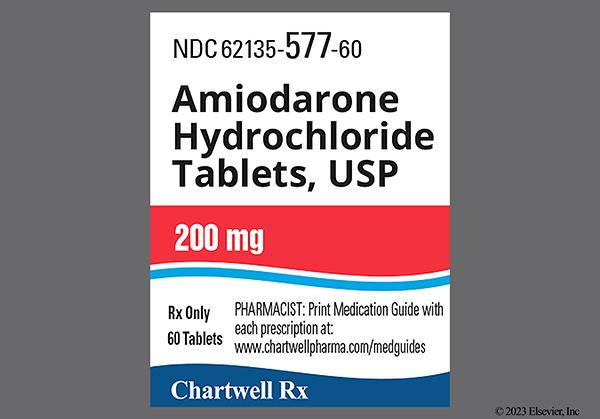
And most people take 200 milligrams of amiodarone either once or twice a day.
Ken BerryHOST
So that means the average person taking amiodarone is getting somewhere between 75 milligrams a day and 150 milligrams a day of iodine.

speaker_0NARRATOR
He pulled up the interaction checker, though he already knew.
speaker_0NARRATOR
Amiodarone inhibits the metabolism of warfarin.
speaker_0NARRATOR
The anticoagulant effect could double, triple.
speaker_0NARRATOR
Mr. Okafor could bleed into his brain by morning.

Danielle CampagneHOST
Uh, you wanna get this patient ready for transport, and you also wanna get on the f- radio and get to your, contact your base hospital.
Danielle CampagneHOST
Um, and you may be directed or you can ask for orders for Amiodarone.
Danielle CampagneHOST
For us locally, we give 150 milligrams IV over about 10 minutes.
Danielle CampagneHOST
We repeat if needed according to our protocol.

RachelHOST
Class III antiarrhythmics work via potassium channel blockade.
RachelHOST
Amiodarone and sotilol prolong repolarisation by increasing the effective refractory period in phase 3 of the cardiac action potential.
RachelHOST
Class IV antiarrhythmics work as calcium antagonists or calcium channel blockers.
RachelHOST
Slowing of calcium influx reduces the duration of phases 2 and 3 of the action potential and phase 0 of the sinoatrial node action potential.

Ken BerryHOST
It also does many things that we do not know about at all.
Ken BerryHOST
so far we've documented that 84 different tissues in your body need iodine to function properly and i put a link down below so if you want to look into this in more detail you can now the next big question is how much iodine do we need i've told you what it is i've told you why we need it now let's talk about how much the official recommended daily allowance or daily intake in the united states is 150 micrograms and a microgram is one thousand a milligram so it's a tiny amount so the average adult should get a hundred and fifty micrograms according to the federal government now even the federal government realizes that pregnant women and women who are breastfeeding need more iodine than that so the RDI for pregnant women is 220 micrograms a day and for breastfeeding or lactating women is 290 micrograms a day almost double of what it is for just a regular person now right off the bat that ought to tell you that's odd wonder why pregnant women need more if it's not that big of a deal wonder why breastfeeding women need more if it's not that big of a deal they need more because it is that big of a deal and remember so basically 150 micrograms is what the average person needs in order to make their thyroid have enough so that they don't have a goiter that I talked about earlier right a swollen thyroid but what about the other glands in your body 150 micrograms a day is it is enough for your thyroid yes it's true but what about all your salivary glands your sweat glands what about your liver your pancreas your your adrenal glands what about your ovaries and testicles they need iodine as well in order to function optimally and so it's my contention that you need more than 150 micrograms a day I think the average person needs more than 290 micrograms a day so let's talk about that so some experts recommend that you should take up to 50 milligrams a day of iodine now that seems like a little much to me that would be that would be 50,000 micrograms and the RDI is 150 so that's a that's a big jump now here just to give you a frame of reference let me give you two examples the average person living in Japan is eats from 10 to 15 milligrams or 10 to 15,000 micrograms of iodine every day because they eat such a seafood heavy diet they eat lots of seafood they eat lots of sea vegetables and kelp and all these things are very rich sources of iodine and so if as some people have said eating more than a milligram of iodine a day is very dangerous then the japanese should be extinct and indeed any other population of people who live near the ocean who get anywhere from 8 to 15 milligrams of iodine a day they should die if it's that terrible they should all have hyperthyroidism or autoimmune thyroiditis or whatever it is that this the expert says oh if you get too much iodine it will harm you Example number two, there's a medication called amiodarone that doctors like me give to patients who have heart failure or severe heart problems.
Ken BerryHOST
Amiodarone has 75 milligrams of iodine in it.
Ken BerryHOST
And most people take 200 milligrams of amiodarone either once or twice a day.
Ken BerryHOST
So that means the average person taking amiodarone is getting somewhere between 75 milligrams a day and 150 milligrams a day of iodine.