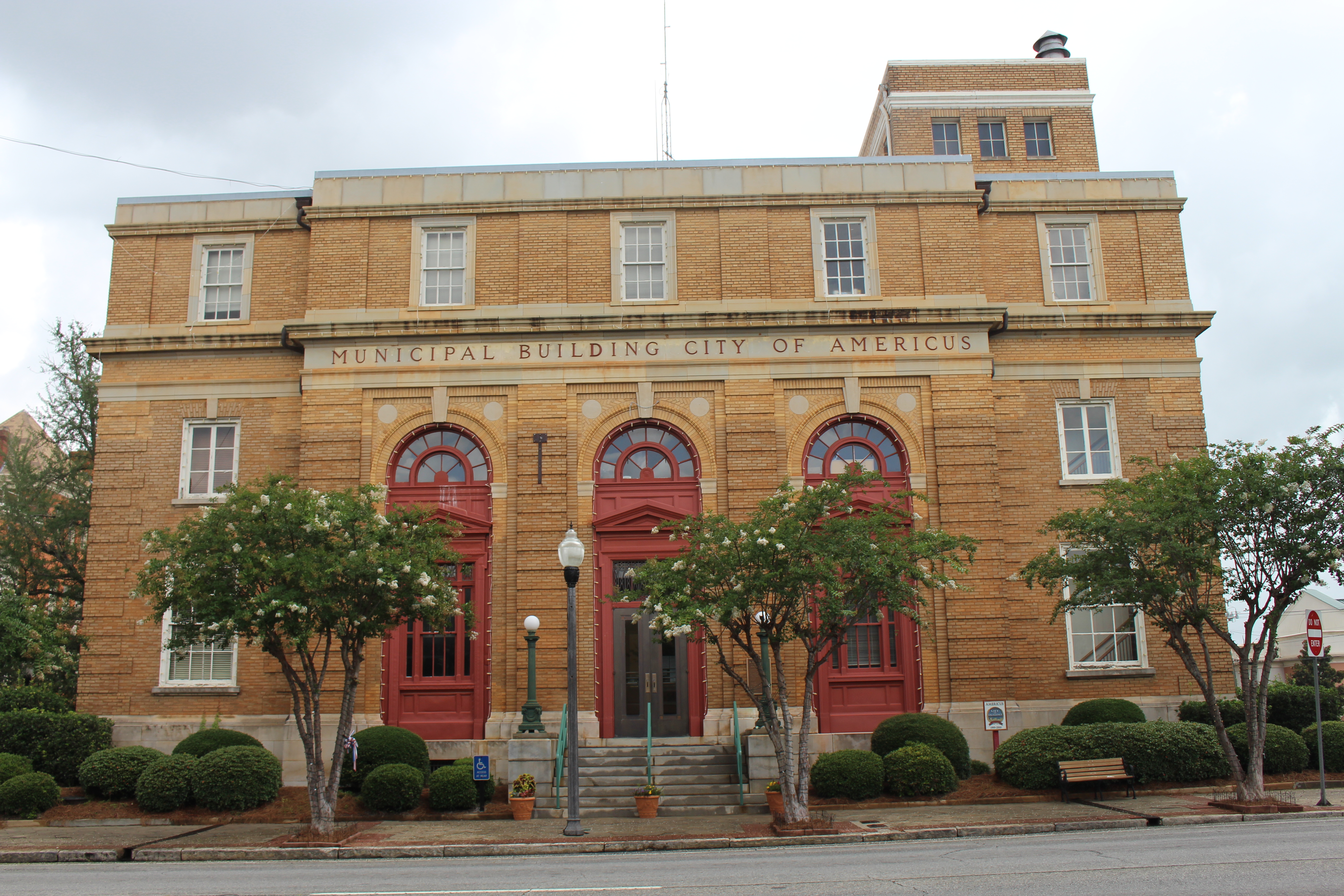
Americus
City in GeorgiaWikipedia
13
MENTIONS
8
EPISODES
7
PODCASTS
Search complete. 13 mentions across 8 episodes found for "Americus".
Sep 12, 2026

Barry LoudermilkGUEST
I live north of Atlanta.
Barry LoudermilkGUEST
This place is a couple hours south of Atlanta near Americus, Georgia.
Barry LoudermilkGUEST
And many people are familiar with the location because a major motion picture was made about this prison camp called Andersonville.
Barry LoudermilkGUEST
And Andersonville was opened by the Confederates near the end of the war because the Confederacy was starting to lose the war at that point.

Jim ShannonHOST
Yeah.
Lenny La RussaGUEST
This is Lenny La Russa from Americus, Georgia.
Lenny La RussaGUEST
Down here making new friends and learning all that I can about bourbon, and yes, I'm a new roadie and a supporter.
Jim ShannonHOST
Awesome.
Jim ShannonHOST
Yeah.
Jim ShannonHOST
So you're from Americus, Georgia.
Jim ShannonHOST
That's the home of Thirteen Colony Whiskey, so you're- they- they're in your backyard.
Lenny La RussaGUEST
This is true.

Stacy RossettiHOST
Amy Dabbs, And this one's kind of right in the middle just south of the Atlanta market south of Macon.
Stacy RossettiHOST
And it's an Americus.
Stacy RossettiHOST
And so what I'm going to do today is go through how I found it, how I funded it and how I'm running this facility.
Stacy RossettiHOST
So again, thank you so much for being here and let's get started.
8 MINS LATER
Stacy RossettiHOST
Okay.
Stacy RossettiHOST
So if you're interested, you can come over here and they're all in Georgia pretty much, I would say.
Stacy RossettiHOST
So, um, You can see here, this one right here is the one we're going to talk about, the Americas facility.
Stacy RossettiHOST
We're going to talk about this one today.

Theo VonHOST
Where is that?
Luke BryanGUEST
Man, it was up above Americus, Georgia.
Luke BryanGUEST
I'm, I'm-
Theo VonHOST
They must be damn slithering, huh? They sound like they're onto something.

William TomkoNARRATOR
He wrote a number of letters describing the voyages which he claimed to have made, and one of these was printed in a pamphlet which had a wide circulation, so that Vespucci's name came to be connected in the public mind with the new land in the west much more prominently than that of any other man.
William TomkoNARRATOR
In 1502, in a little book dealing with the new discoveries, the suggestion was made that there was nothing rightly to hinder us from calling it, the new world, Amerige, or America, i.e. the land of Americus.
William TomkoNARRATOR
And America it was thenceforth, one of the great injustices of history.
William TomkoNARRATOR
Since it had to be so, let us be thankful that it was Vespucci's first name which was elected, and not his last one.

Ray RussellHOST
We're going to look at the house show results for the first week of Georgia.
Ray RussellHOST
And March 1982, Americus, Georgia.
Ray RussellHOST
March the 2nd, it's Tom Pritchard over the Angel, Jimmy Garvin defeating Kevin Sullivan, Buzz Sawyer battling Brad Armstrong to a double countout, and the main event there in Americus, Tommy Rich teaming with Leroy Brown over the team of Super D and Outlaw Ron Bass by disqualification.
Ray RussellHOST
Now, Super D, usually teaming with the Superstar.
Ray RussellHOST
I have it on good authority, thanks to my research online, that the Masked Superstar has left for a tour of the Orient.
Rick FieldsGUEST
Yeah, this is November 1st of 1951 is when a partnership was made between Paul Jones and Fred Ward.
Rick FieldsGUEST
Now, Fred would run Macon, Columbus, Albany, Warner Robins, and Americus, Georgia.
Rick FieldsGUEST
And this lasted until July 9th, 1963.
Rick FieldsGUEST
Now, before I go any further, I will say that Fred Ward... ran these towns in the 70s into the 80s.

speaker_3NARRATOR
We left before much was accomplished, but hear that our corps captured 3,500 prisoners and 22 pieces of artillery, and the enemies, killed and wounded, amounted to twice our own.
speaker_3NARRATOR
ezra church for several days after the battle of atlanta there was a lull in military activities around this city both sides were reorganizing sherman selected major-general oliver o howard to command the army that mcpherson had led on the confederate side lieutenant-general stephen d lee replaced chettam as commander of the corps that had originally been hood's by july twenty sixth sherman had decided upon his next manoeuvre his goal was the railroads south and west of atlanta the last links between that city and the rest of the confederacy and to reach them he would swing howard's army of the tennessee around from his extreme left to his extreme right the movement began that afternoon and by nightfall on the twenty seventh howard's men were west of atlanta early the following day the advance was resumed the only effective opposition came from a small body of confederate cavalry hood was aware of sherman's new manoeuvre and determined to block it by sending the corps of lee and stewart west along the road to the little settlement of licht skillet by noon the opposing forces were in the area of a meeting-house known as ezra church about two and a half miles west of atlanta the confederates had been ordered to attack and prevent the northerners from crossing the road and lee and stewart sent their men forward in a series of assaults against the fifteenth corps the federals had not had time to entrench but they had piled up barricades of logs and church benches and these afforded some protection our skirmishers overpowered by numbers were compelled to fall back to the main line wrote a union officer followed at an interval of but a few paces by dense columns of the enemy which covered as they were by the undergrowth had advanced within forty or fifty paces of our lines when a terrific and destructive fire was opened upon them and was continued steadily until their advance was checked at the distance of some twenty to thirty paces their lines were cut down disordered and driven back some distance when they rallied and again came boldly forward to the charge but under the murderous fire of our rifles were no more able to disorder or discompose our lines than before they gained a little ground several times only to lose it inch by inch after the most terrible fighting on both sides after a very short interval which did not amount to a cessation of the battle new and largely augmented columns of the enemy came pouring in upon us with the same results however as before although their colors were planted within twenty paces for four or five hours the assaults continued but the confederates attacked piecemeal separate units rushing forward rather than striking a unified blow and all their desperate courage was not enough to overcome this handicap the southern army is estimated to have suffered about five thousand casualties in this battle federal losses were reported at six hundred end of part five part six of the road past kenesaw the atlanta campaign of eighteen sixty four by richard manning mcmurray part six the month of august although he had inflicted heavy losses on the southerners sherman seems to have become convinced that he would not be able to capture atlanta by his customary tactics hood had constructed a line of trenches that ran from atlanta southward to east point protecting the railroads the confederate fortifications were too strong to be attacked and too long to be encircled sherman brought up a battery of siege guns and shelled the city the southern artillery in atlanta replied and for several weeks helpless citizens lived in their cellars and scurried about amid bursting shells as the artillery duels started fires and smashed buildings killing soldiers and civilians indiscriminately the federal commander also decided to try cavalry raids in the hope that his horsemen could reach the railroads below atlanta and by cutting them force hood to evacuate the city late in july two expeditions were launched one under brig general george stoneman was to swing to the east to mcdonough lovejoy station and macon tearing up the railroad and destroying supplies as it went these cavalrymen were then to strike southwest to americas where they hoped to free the thirty thousand northerners held in the prisoner of war camp at andersonville the other expedition under brigadier general edward m mccook was to operate to the west and join stone men in attacking the confederate lines of communication south of atlanta from the start both raids were badly managed much of the blame must rest upon stoneman who chose to go directly to macon rather than follow orders the scattered federals were faced by a well-handled confederate force led by wheeler except for stoneman's column the northern horsemen were driven back to sherman's lines after destroying some confederate supplies stoneman reached the vicinity of macon where on july thirty one he was attacked by the southerners and captured along with five hundred of his men somehow during these busy weeks sherman found time to write a letter to miss emily hoffman of baltimore the fiance of the dead mcpherson i owe you heartfelt sympathy he wrote adding i yield to none of earth but yourself the right to excel me in lamentations for our dead hero better the bride of mcpherson dead than the wife of the richest merchant of baltimore sherman described the fallen leader of the army of the tennessee who had been a close friend as well as a trusted subordinate as the personification of knighthood and added that while life lasts i will delight in the memory of that bright particular star on august tenth hood perhaps thinking that the defeat of stoneman and mccook had weakened sherman's cavalry struck out at his opponent's line of supply he sent cavalry commander wheeler with four thousand men to destroy the railroad north of marietta and to disrupt sherman's communication with the north although wheeler was able to make some temporary breaks in the line he was unable to reduce substantially the flow of supplies to sherman's armies the federal commander had built strong fortifications at the most strategic points on the railroad and his efficient repair crews quickly rebuilt those parts of the track that wheeler could reach and damage Eventually the Confederate cavalry drifted into Tennessee and did not rejoin Hood until the campaign was over.
speaker_3NARRATOR
Many students of the war regard Wheeler's mission as a mistake because the absence of the cavalry deprived Hood of the best means of keeping posted on Sherman's activities and thus proved fatal to the army at Atlanta.
speaker_3NARRATOR
Wheeler's departure led Sherman to send out a third cavalry expedition commanded by brigadier-general judson kilpatrick the northerners reached the railroads below atlanta and on august eighteen twenty succeeded in tearing up sections of the track on the twentieth they were driven away kilpatrick reported to sherman that the railroad had been so thoroughly wrecked that it would take at least ten days to repair it however on the following day the federal saw trains bring supplies into the city from the south clearly the northern cavalry was not strong enough to destroy hood's lines of supply new plans would have to be tried if the unionists were to capture atlanta meanwhile a curious kind of optimism was developing in the southern ranks many confederates did not see the hard battles of late july as defeats rather they viewed them as successful efforts to halt the progress of flanking columns that had threatened the city's lines of supply one officer wrote on august fourth about the battles of atlanta and ezra church general hood watches his flanks closely and has twice whipped the flanking columns when sherman made no new efforts to flank the city and when the northern cavalry raids were beaten off one after another many men came to believe that atlanta had been saved in mid-august a texan informed his home folk that affairs are brightening here people and army seem more confident of success at about the same time a mississippian wrote that the enemy seems checked in his flanking operations on our left as he has made no progress in that direction for the last four or five days on august twenty eighth an alabamian wrote his wife that it required hard fighting to check the enemy here after having pursued us so far at the very end of august there came exciting news for the southerners sherman had fallen back the northerners were gone from in front of atlanta many thought wheeler's cavalry had cut off sherman's supplies and that this had forced the federal commander to lift the siege joyous confederates swarmed out of the city to romp over the abandoned northern trenches the scales have turned in favor of the south wrote captain thomas j key of arkansas and the abolitionists are moving to the rear johnsborough some southerners suspected in eighteen sixty four what we now know sherman had not retreated rather he had concluded that only his infantry could effectively break hood's lines of supply and had resolved to move almost all of his forces to the southwest of the city the movement began on august twenty five one corps was sent back to the chattahoochee bridgehead to guard the railroad that connected sherman with the north the remaining federal troops pulled out of their trenches and marched away to the west and south by noon on the twenty eighth howard's army of the tennessee had reached fairburn a small station on the atlanta and west point railroad thirteen miles southwest of east point Later that afternoon, Thomas troops occupied Red Oak on the railroad five miles to the northeast.